
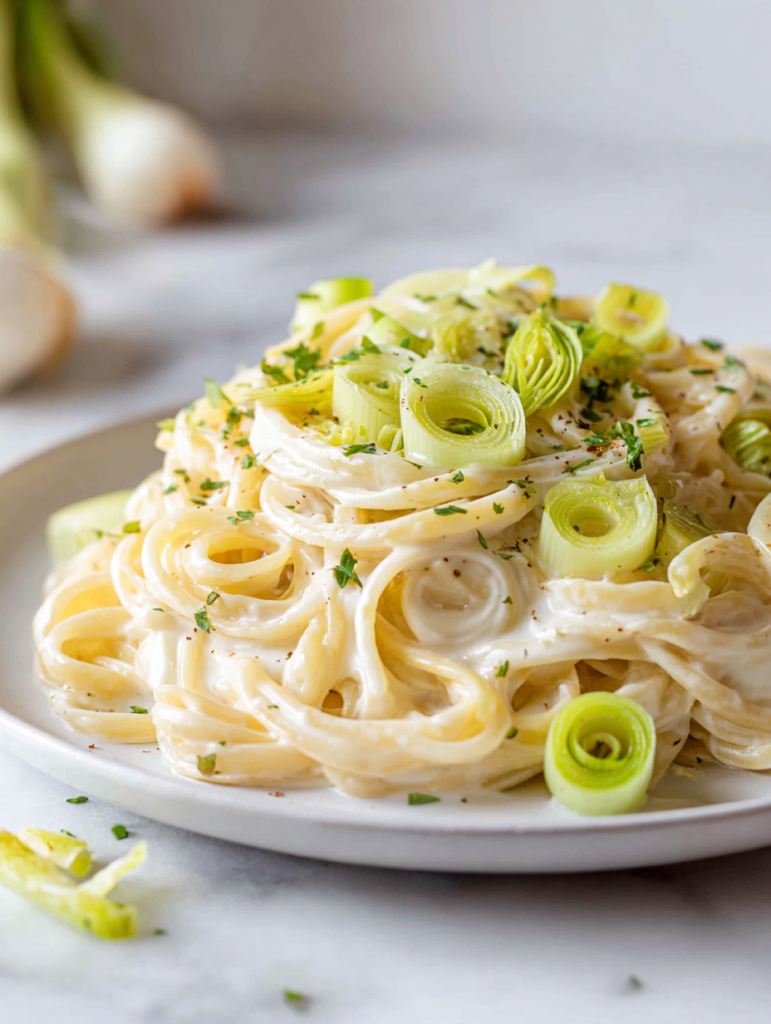
There’s something about the gentle sweetness of leeks that feels like a whisper from childhood, especially when cooked down into a silky, creamy sauce. This recipe takes that nostalgic flavor and turns it into a comforting pasta dish that’s simple but deeply satisfying. It’s like a quiet weekend moment, slowed down and made richer with just a few ingredients.
I love how the leeks soften and melt into the sauce, releasing a sweet, almost caramelized aroma that fills the kitchen. It’s a dish that invites you to sit back and savor, whether you’re craving a quiet dinner or a way to bring a little warmth to a hectic evening.
This creamy leek pasta isn’t fancy—just honest, homey food that’s easy to throw together, yet feels special. It’s a reminder that sometimes, the simplest ingredients cooked with care can bring the biggest comfort.
Focusing on the nostalgic comfort of childhood, this recipe elevates simple leeks and pasta into a creamy dish that feels like a warm hug, perfect for slow weekends or quiet evenings.
The inspiration behind this dish
- This recipe came from a lazy Sunday afternoon spent rummaging through the fridge and finding a bunch of leeks that needed using up. I remembered how my grandma used to cook leeks into everything—soup, omelets, even just buttered on bread. That mellow, sweet aroma when they soften is like a quiet hug from the kitchen.
- One evening, I threw together some pasta with those leeks, a splash of cream, and a pinch of nutmeg—simple, but unexpectedly luxurious. It was one of those moments where I realized how humble ingredients can turn into something memorable, especially when cooked with patience and a little love.
- Now, I keep this dish in my back pocket for nights when I want comfort but don’t want to fuss. It’s a reminder that simple things—leeks, pasta, a splash of cream—can come together into a quiet, satisfying moment.
Ingredient breakdown: key components
- Leeks: I love how their gentle sweetness becomes rich and mellow when cooked down. Use firm, fresh leeks; avoid slimy ones. Sauté until they’re soft and translucent, the aroma should be sweet and slightly caramelized.
- Heavy Cream: It’s the backbone of that silky texture. I prefer full-fat for richness, but you can swap with half-and-half for a lighter feel. Watch it gently bubble to avoid splitting—look for a slight shimmer and aroma of toasted dairy.
- Pasta: I usually go for wide, flat shapes like pappardelle or fettuccine. Cook until al dente; it should have a slight resistance when bitten. Reserve some pasta water—it’s magic for adjusting the sauce’s creaminess.
- Butter: Adds a subtle richness and helps sauté the leeks. Use unsalted, and add at the end for a glossy finish. It should melt quickly, leaving a fragrant, slightly nutty scent in the pan.
- Lemon Juice: Brightens everything. Freshly squeezed is best—squeeze just before adding to keep that zesty, citrusy punch. Look for a shimmer of juice that’s just enough to lift the dish’s sweetness.
- Nutmeg: Just a pinch enhances the creamy flavor. Freshly grated if possible—its warm, slightly spicy aroma makes all the difference. Add a tiny sprinkle at the end to avoid overpowering.
- Parsley: Fresh, chopped parsley adds a vibrant, herbal note. Chop finely and sprinkle over the finished dish. It should shimmer with freshness and provide a slight crunch with each bite.
Spotlight on key ingredients
Leeks:
- I love how their gentle sweetness becomes rich and mellow when cooked down. Use firm, fresh leeks; avoid slimy ones. Sauté until they’re soft and translucent, the aroma should be sweet and slightly caramelized.
- Heavy Cream: It’s the backbone of that silky texture. I prefer full-fat for richness, but you can swap with half-and-half for a lighter feel. Watch it gently bubble to avoid splitting—look for a slight shimmer and aroma of toasted dairy.
Pasta & Lemon Juice:
- Pasta: I usually go for wide, flat shapes like pappardelle or fettuccine. Cook until al dente; it should have a slight resistance when bitten. Reserve some pasta water—it’s magic for adjusting the sauce’s creaminess.
- Lemon Juice: Brightens everything. Freshly squeezed is best—squeeze just before adding to keep that zesty, citrusy punch. Look for a shimmer of juice that’s just enough to lift the dish’s sweetness.
Notes for ingredient swaps
- Dairy-Free: Swap heavy cream for coconut milk or cashew cream. It won’t be as rich, but still velvety and flavorful.
- Vegan: Use olive oil instead of butter and plant-based cream alternatives. Keep in mind, flavor will be slightly different.
- Gluten-Free: Choose gluten-free pasta—brown rice or chickpea varieties work well. Watch cooking time carefully to avoid mushiness.
- Lemon Variations: Lime or orange juice can brighten the dish, but may alter the flavor profile slightly. Use sparingly.
- Herb Choices: Swap parsley for chives or tarragon for a different herbal note. Fresh herbs really lift the dish.
- Leek Alternatives: Shallots or green onions can work in a pinch. They add a milder, slightly sharper flavor.
- Add-Ins: Crumbled cooked bacon or sautéed mushrooms can add umami and texture—add at the end for best results.
Equipment & Tools
- Large pot: Boil pasta and water.
- Colander: Drain cooked pasta.
- Deep sauté pan: Cook leeks and sauce.
- Wooden spoon: Stir ingredients gently.
- Measuring cups/spoons: Accurately measure liquids and spices.
- Knife & cutting board: Prep leeks.
- Microplane/grater: Grate nutmeg.
- Ladle: Add pasta water or cream.
Guide to Creamy Leek Pasta
- Equipment & Tools: Boil water pot (large), colander, sauté pan (deep, non-stick), wooden spoon, measuring cups and spoons, sharp knife, cutting board, microplane or grater, ladle.
- Fill a large pot with water, add a generous pinch of salt, and bring to a rolling boil (around 100°C/212°F).
- While water heats, trim the leeks: cut off the root end and dark green tops, leaving the tender white and pale green parts. Slice into thin half-moons.
- When water boils, cook pasta until just al dente (check package, usually 8-10 min). Reserve about 1 cup pasta water, then drain.
- In the sauté pan over medium heat (about 160°C/320°F), melt 2 tbsp unsalted butter. Add sliced leeks and a pinch of salt. Cook slowly, stirring occasionally, until soft and translucent, about 8 minutes. They should smell sweet and look glossy.
- Turn the heat lower, add 1/2 cup heavy cream, and stir to combine. Let it gently warm, about 2 minutes, until it shimmers slightly. If it’s bubbling too vigorously, reduce heat.
- Add a squeeze of fresh lemon juice (about 1 tsp) and a pinch of grated nutmeg. Stir well. Taste and adjust seasoning—should be bright yet mellow.
- Toss in the cooked pasta, mixing thoroughly. If the sauce feels thick, loosen with reserved pasta water, a tablespoon at a time, until it coats the pasta smoothly.
- Check texture: the sauce should be silky and clingy. It should look glossy and vibrant. If it’s too runny, cook a minute longer, stirring constantly.
- Remove from heat. Rest for 1-2 minutes to let flavors meld. Finish with a sprinkle of chopped parsley and a final squeeze of lemon if needed.
- Plate the pasta, spooning sauce generously. Serve immediately while warm and fragrant.
Let the pasta rest for 1-2 minutes off heat to meld flavors. Finish with fresh parsley and a squeeze of lemon. Serve immediately, while the sauce is silky and fragrant.
How to Know It’s Done
- Leeks are soft, translucent, and sweet-smelling.
- Cream bubbles gently with a shimmering surface, not boiling vigorously.
- Pasta is just al dente, with a slight resistance when bitten.
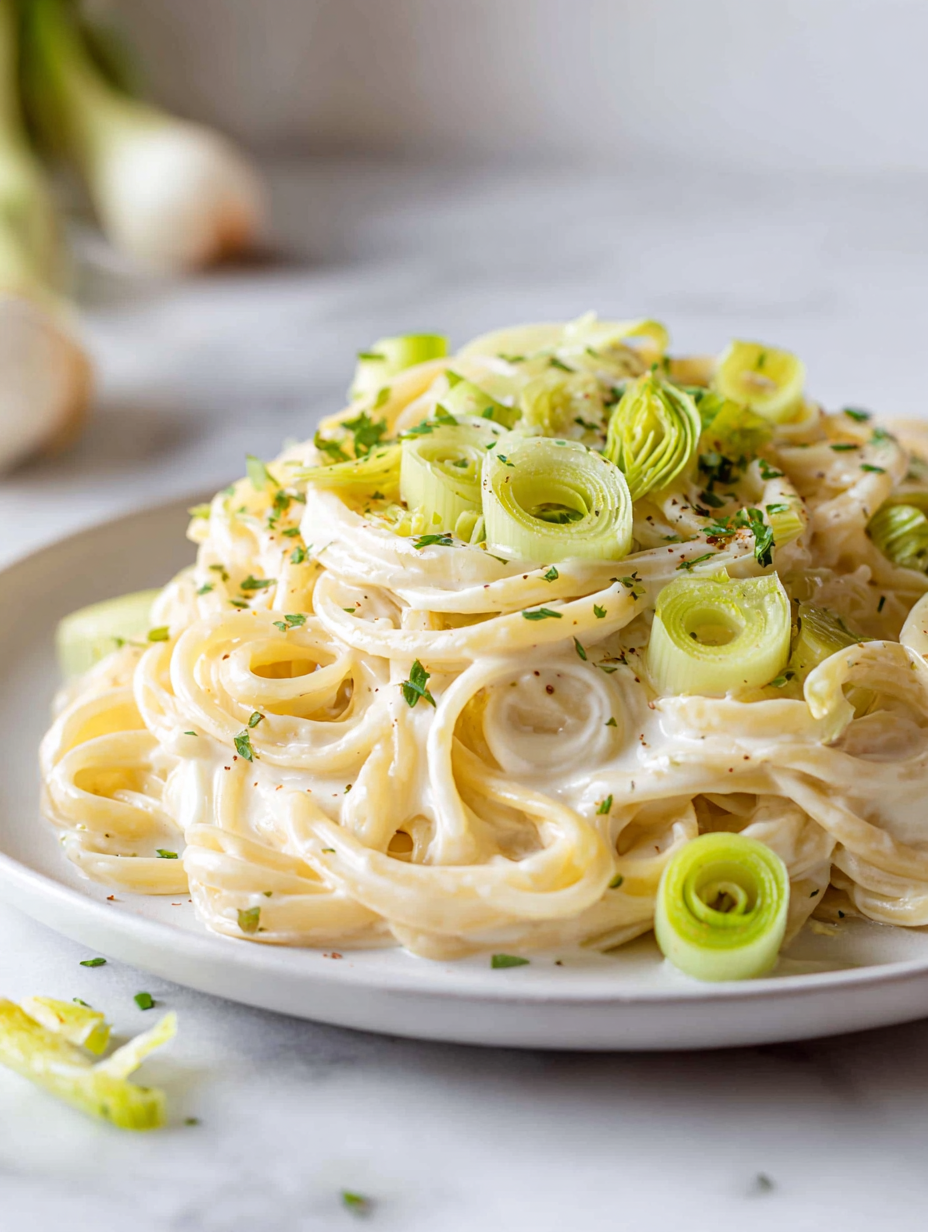
Creamy Leek Pasta
Ingredients
Equipment
Method
- Slice the trimmed leeks into thin half-moons, making sure they are clean and free of grit.
- Bring a large pot of salted water to a rolling boil, then add the pasta and cook until just al dente, about 8-10 minutes. Reserve about 1/2 cup of pasta water, then drain and set aside.
- While the pasta cooks, melt the butter in a deep sauté pan over medium heat. Add the sliced leeks and a pinch of salt, then cook slowly, stirring occasionally, until they are soft, translucent, and fragrant, about 8 minutes.
- Pour in the heavy cream, stirring gently, and warm until the mixture shimmers slightly, about 2 minutes. Be careful not to let it boil vigorously.
- Add a teaspoon of fresh lemon juice and a quarter teaspoon of grated nutmeg to the sauce, stirring well to combine. Taste and adjust seasoning if needed.
- Gently fold the cooked pasta into the sauce, tossing to coat evenly. If the sauce feels too thick, loosen it with a little of the reserved pasta water, a tablespoon at a time, until silky and smooth.
- Remove from heat and sprinkle with chopped parsley. Give it a final gentle toss to distribute the herbs and brighten the dish with fresh flavor.
- Serve immediately, spooning the creamy leek pasta into bowls and savoring the rich, tender leeks coated in silky sauce with a fresh herbal finish.
Tips & Tricks for Perfect Creamy Leek Pasta
- Bolded Mini-Head: Use medium heat to gently cook leeks; too high and they brown too quickly, losing sweetness.
- Bolded Mini-Head: Sauté leeks slowly until translucent and tender; the aroma should turn sweet and slightly caramelized.
- Bolded Mini-Head: When adding cream, keep the heat gentle; a vigorous boil can cause curdling, look for a soft shimmer.
- Bolded Mini-Head: Reserve pasta water before draining; it’s starchy and perfect for loosening or enriching the sauce.
- Bolded Mini-Head: Finish with fresh lemon juice just off the heat; it brightens and enhances the creamy depth without dulling.
- Bolded Mini-Head: Use a wide, shallow pan for even heat distribution; it helps the leeks soften uniformly and reduces splatters.
- Bolded Mini-Head: Stir gently when combining pasta and sauce; this prevents breaking the pasta and promotes silky coating.
Common mistakes and how to fix them
- FORGOT to stir leeks continuously → Stir gently to prevent burning and promote even softening.
- DUMPED all pasta water at once → Add reserved water gradually, checking for silky consistency.
- OVER-TORCHED cream → Reduce heat immediately and stir to prevent splitting and curdling.
- USED cold butter → Let butter come to room temp before adding for smooth melting and gloss.
Quick Fixes and Pantry Swaps
- When sauce is too thick, splash in hot pasta water and stir gently.
- If leeks burn, lower heat and add a splash of water to deglaze.
- Splash some lemon juice if sauce is dull or flat.
- Patch overcooked pasta with a little reserved water for silkiness.
- Shield from direct heat if cream curdles; stir vigorously and reduce heat.
Prep, store, and reheat tips
- Prep the leeks: wash, trim, and slice ahead; keep in an airtight container in the fridge for up to 24 hours. The sweet aroma intensifies as they sit.
- Cook the pasta al dente, toss with a little oil to prevent sticking, and store in a sealed container for up to 1 day. Reheat briefly in boiling water or hot water bath.
- Prepare the sauce components—measure cream, lemon, and nutmeg in advance. Keep refrigerated, and bring to room temperature before combining for a smoother finish.
- Reheating leftovers gently in a skillet over low heat, stirring constantly, helps restore silkiness. The sauce may thicken; loosen with a splash of reserved pasta water or milk.
- For best flavor, consume within 2 days. The leeks may lose some sweetness, but the dish remains comforting and satisfying when reheated carefully.
Top questions about Creamy Leek Pasta
1. How do I choose good leeks?
Use firm, fresh leeks with crisp white parts. Avoid slimy or wilted ones for the best sweetness and texture.
2. How long should I cook the leeks?
Cook the leeks slowly over medium heat until translucent and fragrant, about 8 minutes, to develop their sweet aroma.
3. Can I use lighter cream?
Use full-fat heavy cream for a richer, silkier sauce. Half-and-half can work but will be less creamy.
4. Why save pasta water?
Reserve some pasta water before draining; it’s starchy and helps loosen or thicken the sauce easily.
5. When should I add lemon juice?
Add lemon juice at the end, off heat, to brighten the dish with a fresh, citrusy zing.
6. How do I know when pasta is done?
Cook pasta until just al dente, with a slight bite, so it holds up when combined with the sauce.
7. How should I mix the pasta?
Stir gently when mixing pasta and sauce to prevent breaking the noodles and to keep the sauce silky.
8. What if the sauce curdles?
If the sauce splits or curdles, lower the heat and stir vigorously to bring it back together.
9. How do I finish the dish?
Finish with fresh parsley and a squeeze of lemon for brightness and color just before serving.
10. How do I reheat the pasta?
Reheat leftovers gently in a skillet over low heat, stirring constantly, and loosen with a splash of pasta water if needed.
This dish feels like a quiet moment of nostalgia, reminding me of simple Sunday afternoons in the kitchen. The gentle aroma of leeks melting into creamy sauce has a way of making a meal feel like an old, comforting story.
Sharing this recipe isn’t just about the taste—it’s about slowing down and appreciating the humble ingredients that, when cooked with care, become something truly satisfying. Sometimes, the best dishes are the ones that whisper stories of home and quiet joy.

I’m Mahek Manchanda, the curious heart behind Dramatically Stirring. Before this space existed, my life revolved around kitchens that were loud, demanding, and endlessly alive. I didn’t arrive at cooking through a single dramatic moment.