
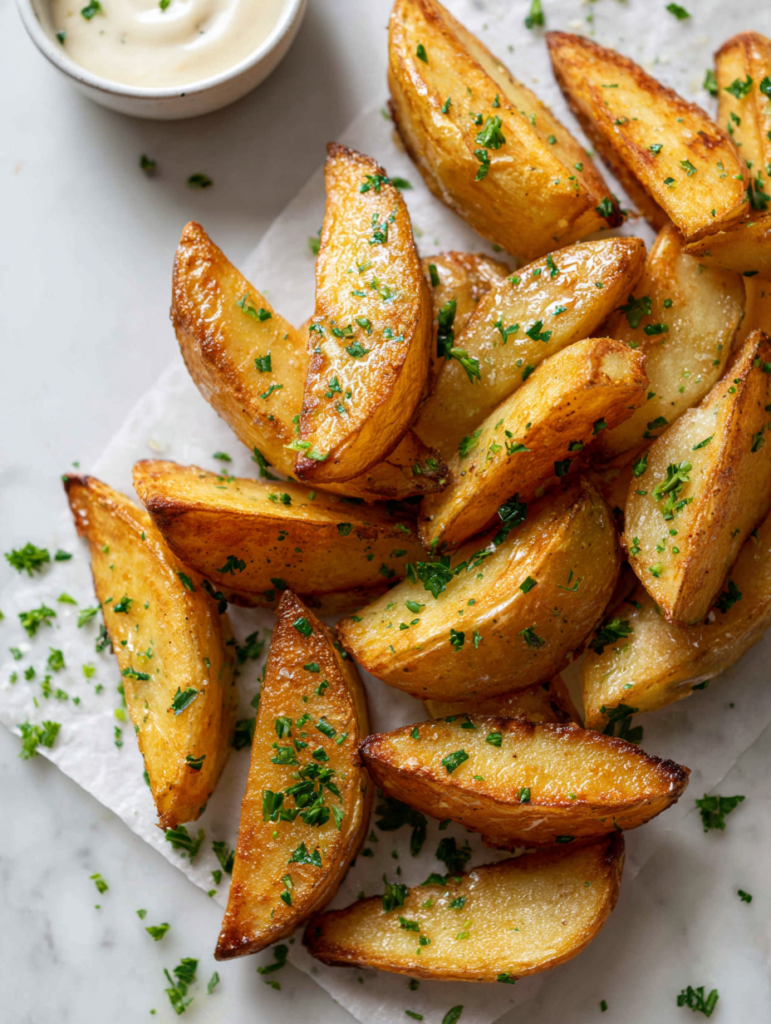
Fried potato wedges often get a bad rap for being just… fried potatoes. But when you focus on the technique—especially double-frying—they become something else entirely. The secret is in that moment when they’re crispy on the outside but still pillow-soft inside, a balance that’s easy to miss if you rush.
I’ve spent years trying to crack the code on perfect wedges, experimenting with different cuts, oils, and frying times. What finally clicked was a simple, overlooked detail: the second fry. It’s a quick flash that transforms ordinary into extraordinary, turning each wedge into a little crispy jewel that makes any snack or side feel special.
Focusing on the overlooked art of achieving perfectly crispy exterior while keeping the potatoes fluffy inside, using a unique double-frying technique that transforms simple wedges into irresistible bites.
The story behind this recipe
- This recipe started out as a way to make leftovers feel special. I remember the first time I double-fried wedges, thinking I was just trying for crunch, but what I got was a revelation. That crispy outside and fluffy inside made me realize how much technique can elevate simple ingredients. It’s one of those dishes that’s more about the process than the ingredients, but boy, does it pay off every single time.
- There’s a chaotic charm to perfecting these wedges. I’ve burned oil, overcooked, under-seasoned, but each mistake brought me closer to that perfect bite. It’s a recipe born from frustration and stubbornness, a reminder that sometimes, the best snacks come from a little mess and a lot of tasting.
- heading: The story behind this recipe
Ingredient breakdown
- Russet potatoes: I favor these for their starchy, fluffy interior that crisps up beautifully. If you want less fluff, try Yukon Gold, but expect a creamier bite.
- Oil for frying: I use a neutral oil like vegetable or canola because it gets hot without smoking. For a more distinct flavor, sesame oil adds a nutty aroma—use sparingly.
- Salt: I add it after frying to enhance the crispness. If you prefer a seasoned crust, sprinkle some before the second fry but be cautious with the salt quantity.
- Optional spices: Paprika, garlic powder, or cayenne—these bring flavor and color. I love a smoky paprika for a rich hue and deep aroma that hits me as soon as I bite.
- Vinegar or lemon juice: A splash right after frying brightens the flavor and cuts through the oiliness. It’s a quick way to add a tangy punch that lifts the whole dish.
- Breadcrumbs or cornmeal (if coating): I sometimes dust the wedges with a little before frying for extra crunch. Keep it light—too much can weigh down the crispness.
- Fresh herbs (like parsley): Sprinkle on top after frying for a burst of color and freshness. The herbs’ bright scent makes the wedges feel lively and inviting.
Spotlight on key ingredients
Potatoes:
- Russet potatoes: I favor these for their starchy, fluffy interior that crisps up beautifully. If you want less fluff, try Yukon Gold, but expect a creamier bite.
- Oil for frying: I use a neutral oil like vegetable or canola because it gets hot without smoking. For a more distinct flavor, sesame oil adds a nutty aroma—use sparingly.
Seasonings:
- Salt: I add it after frying to enhance the crispness. If you prefer a seasoned crust, sprinkle some before the second fry but be cautious with the salt quantity.
- Optional spices: Paprika, garlic powder, or cayenne—these bring flavor and color. I love a smoky paprika for a rich hue and deep aroma that hits me as soon as I bite.
Notes for ingredient swaps
- Dairy-Free: Skip butter or cream; use oil for frying. The crispening remains but misses that rich, milky aroma.
- Vegan: Use vegetable or avocado oil instead of animal fats. Still crispy, but watch for smoke points to prevent burning.
- Gluten-Free: Opt for cornstarch or rice flour dusted on wedges before frying. It adds crunch without wheat-based coating.
- Low-Oil: Bake wedges at 200°C (392°F) on a parchment-lined tray for a healthier, still tasty alternative—less crunch, more soft interior.
- Herb Variations: Add fresh rosemary or thyme to the oil for aromatic infusions. Be mindful: herbs can burn quickly and turn bitter.
- Spice Mixes: Swap traditional paprika for smoked chipotle or cumin for a different smoky or earthy punch. Adjust quantity to taste.
- Acid Boost: Instead of vinegar or lemon, splash with a dash of apple cider vinegar or lime juice for a different bright, tangy note.
Equipment & Tools
- Heavy-bottomed pan: Ensures even heat distribution for consistent frying.
- Thermometer: Monitors oil temperature precisely for double frying.
- Slotted spoon: Removes wedges smoothly, draining excess oil.
- Baking sheet with paper towels: Catches excess oil and keeps wedges crispy during resting.
Step-by-step guide to crispy wedges
- Gather your equipment: a large heavy-bottomed pan, a slotted spoon, a thermometer, and a baking sheet lined with paper towels for draining.
- Choose the right potatoes: russets work best for their starchy, fluffy interior. Wash and cut into wedges about 1.5 inches thick, aiming for uniform size for even cooking.
- Preheat your oil: fill your pan with about 2 inches of oil. Heat to 160°C (320°F). Use a thermometer for accuracy; the oil should shimmer but not smoke.
- Blanch the wedges: carefully add the potatoes to the hot oil. Fry for 4-5 minutes until they are just tender and light in color. Remove and drain on paper towels. This step sets the interior.
- Increase the oil temperature: raise heat to 190°C (375°F). Wait until the oil is back up to temp, shimmering and slightly crackling around the wedges.
- Fry for the second time: in batches, fry the wedges again for 2-3 minutes until golden brown and crispy. Shake the pan gently to prevent sticking. Watch for a deep, rich color.
- Check for doneness: wedges should be crisp on the outside, fluffy inside, with a deep amber hue. The crackling sound should be lively but not overly aggressive.
- Remove and drain: lift wedges out with a slotted spoon, drain excess oil on paper towels. Immediately sprinkle with sea salt or your preferred seasoning while hot.
- Rest briefly: let the wedges sit for 1-2 minutes to settle and finish crisping. Serve hot for maximum crunch and flavor.
- Plate and enjoy: arrange on a warm platter, garnish with herbs if desired, and serve with your favorite dips or sauces.
Let the wedges rest on paper towels for a minute. Serve immediately with dips or sides. For extra crunch, sprinkle with finishing salt or herbs just before plating.
How to Know It’s Done
- Color: deep golden brown with a crackly exterior.
- Texture: outside crispy, inside fluffy and tender.
- Appearance: wedges hold their shape without breaking apart during frying.
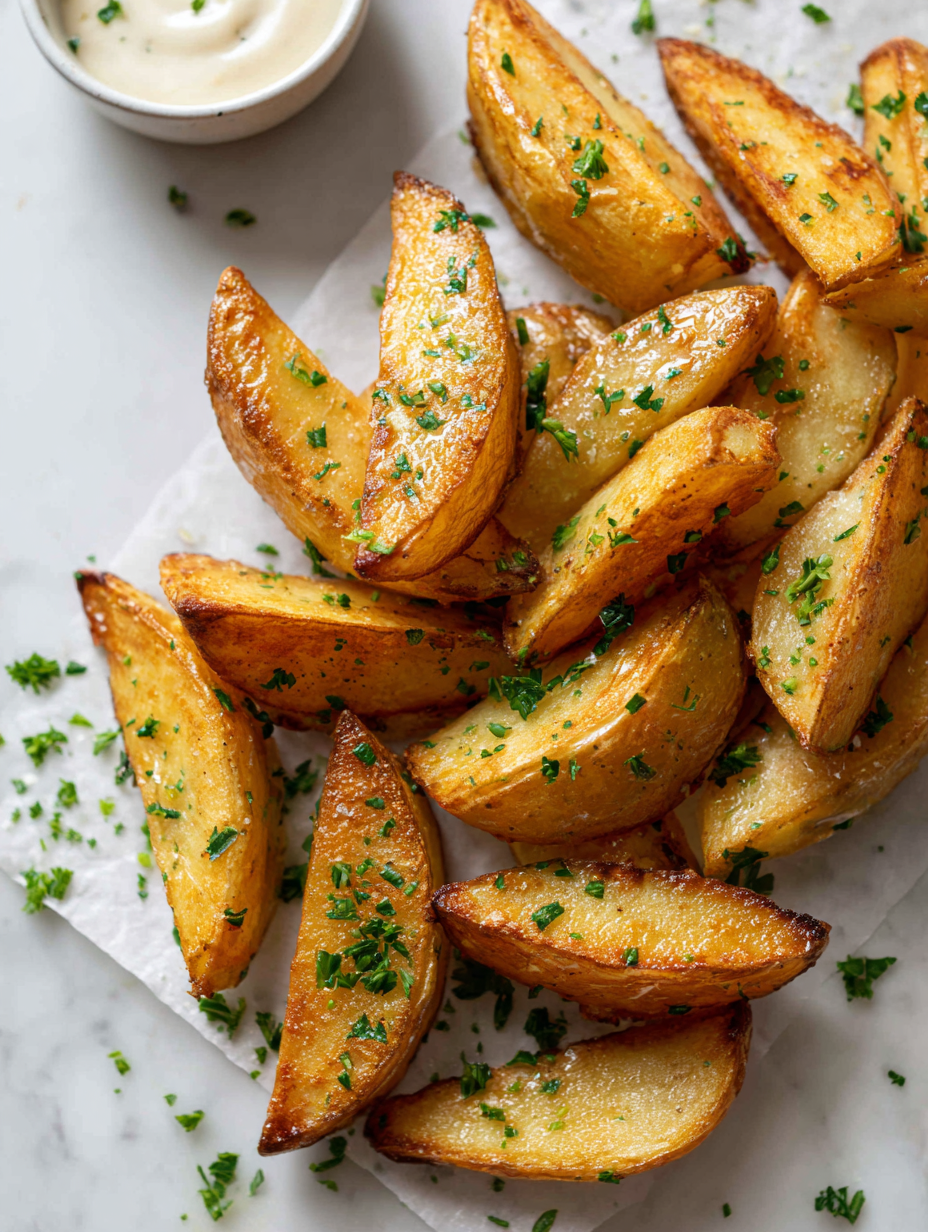
Double-Fried Crispy Potato Wedges
Ingredients
Equipment
Method
- Start by washing and drying your russet potatoes thoroughly, then cut each into evenly sized wedges about 1.5 inches thick for uniform cooking.
- Pour about 2 inches of oil into your heavy-bottomed pan and heat it gently to 160°C (320°F). Use a thermometer to monitor the temperature closely.
- Carefully add the potato wedges to the hot oil, working in batches if needed to avoid crowding. Fry for about 4-5 minutes until they are tender but not browned, and the oil is bubbling gently around them.
- Use a slotted spoon to remove the wedges from the oil and drain on paper towels. Let them cool slightly as you prepare for the second fry.
- Increase the oil temperature to 190°C (375°F). Once hot, carefully add the wedges back into the oil in batches, frying for another 2-3 minutes until they are deep golden and crispy. Shake the pan gently to promote even browning.
- Remove the wedges with a slotted spoon and place them on fresh paper towels to drain excess oil. Immediately sprinkle with salt and optional spices like paprika while still hot.
- Spritz the wedges with a splash of vinegar or lemon juice for a bright, tangy finish. Garnish with chopped fresh herbs if desired and serve immediately to enjoy their crispy exterior and fluffy interior.
Notes
Tips for perfect fried wedges
- Double fry for texture: The first fry sets the interior, the second builds that irresistible crispy crust.
- Maintain consistent oil temp: Keep the oil at 160°C for the first fry, then raise to 190°C for crisping—use a thermometer.
- Dry potatoes thoroughly: Pat wedges dry before frying to prevent oil splatters and ensure even crispness.
- Don’t overcrowd the pan: Fry in batches to keep oil temperature stable and wedges crispy, not soggy.
- Use a gentle jiggle: Shake the pan slightly during the second fry to prevent wedges from sticking and to promote even browning.
- Salt immediately after frying: Sprinkle on hot wedges to enhance flavor and help crisp the exterior further.
- Rest briefly before serving: Let wedges sit for a minute on paper towels; they’ll finish crisping and cool slightly for better texture.
Common mistakes and how to fix them
- FORGOT to preheat oil before frying → Always preheat to 160°C (320°F) for even cooking.
- DUMPED wedges into hot oil too quickly → Add wedges gently to prevent splattering and sticking.
- OVER-TORCHED the second fry → Remove wedges once they are deep golden and crackly, not burnt.
- FAILED to dry potatoes thoroughly → Pat wedges dry to avoid oil splatters and uneven crisping.
Quick fixes and pantry swaps
- If oil smokes, splash in a little water to cool and calm the heat.
- When wedges stick, gently shake the pan or use a slotted spoon to free them.
- Splash vinegar or lemon juice immediately after frying for a bright flavor boost.
- Patch over burnt spots by removing wedges and lowering the heat for the next batch.
- Shield oil splatters with a lid or splatter guard to keep your stovetop clean.
Prep, store, and reheat tips
- Prep the potato wedges: cut and rinse ahead, then store in water in the fridge for up to 24 hours to prevent browning.
- Blanch the wedges: fry once at 160°C (320°F), then cool completely and refrigerate for up to 24 hours before second fry.
- Store fried wedges: keep in an airtight container in the fridge for up to 2 days. Reheat until crispy and hot, about 3-4 minutes in a hot oven or air fryer.
- Reheating tips: for best texture, reheat in a 200°C (392°F) oven or air fryer until crackly and hot inside. Expect a slight loss of initial crispness but still satisfying.
Top questions about fried potato wedges
1. Can I use other types of potatoes?
Use russet potatoes for the best fluffy interior that crisps up nicely. Yukon Golds can work if you prefer a creamier bite, but the texture won’t be as light and airy.
2. Can I bake instead of fry?
Yes, you can bake these wedges at 200°C (392°F) for about 25-30 minutes. They won’t be as crispy as fried, but they’ll still be tasty and healthier.
3. How do I know when they’re done?
Freshly cooked wedges should be crispy on the outside and fluffy inside. Check the color—deep golden brown is ideal—and listen for a crackling sound during frying.
4. Why double fry the wedges?
Fry the wedges twice—first at 160°C (320°F) until tender, then at 190°C (375°F) until golden and crispy. Rest briefly on paper towels before serving.
5. Should I dry the potatoes before frying?
Always dry your potato wedges thoroughly before frying to prevent splatters and ensure even crisping. Pat them with a clean towel or paper towels.
6. What oil is best for frying?
Use a neutral oil like vegetable or canola for frying. For a smoky aroma, try a splash of sesame oil sparingly—just remember it has a strong scent.
7. When should I add salt?
Adjust seasoning after frying by sprinkling salt or spices immediately while wedges are hot. This helps them stick and enhances flavor.
8. How do I prevent wedges from sticking?
To prevent sticking, fry in small batches and don’t overcrowd the pan. Keep the oil hot and shake gently during second fry for even crispiness.
9. What if they burn?
If wedges burn during the second fry, lower the heat slightly and remove burnt pieces immediately. Keep an eye on color and smell to avoid overcooking.
10. How do I reheat fried wedges?
Reheat leftovers in a hot oven or air fryer at 200°C (392°F) for 3-4 minutes until crisp. Avoid microwaving as it makes them soggy.
These wedges are more than just a snack—they’re a reminder that simple techniques can elevate humble ingredients into something memorable. Each crispy bite carries the story of patience, experimentation, and a bit of messy joy in the kitchen.
Whenever I make these, I’m struck by how a small tweak—like that second fry—can turn a basic side into a real highlight. They’re perfect for sharing, for lazy weekends, or when you just need a comforting, crispy bite to get you through the day.

Hi, I am Elias William Carter! The cook, writer, and self-proclaimed flavor enthusiast behind Dramatically Stirring. Food has always been my love language- my way of showing care, curiosity, and creativity all at once. I grew up in the heart of North Carolina, in a house where the kitchen was always alive with noise and aroma