
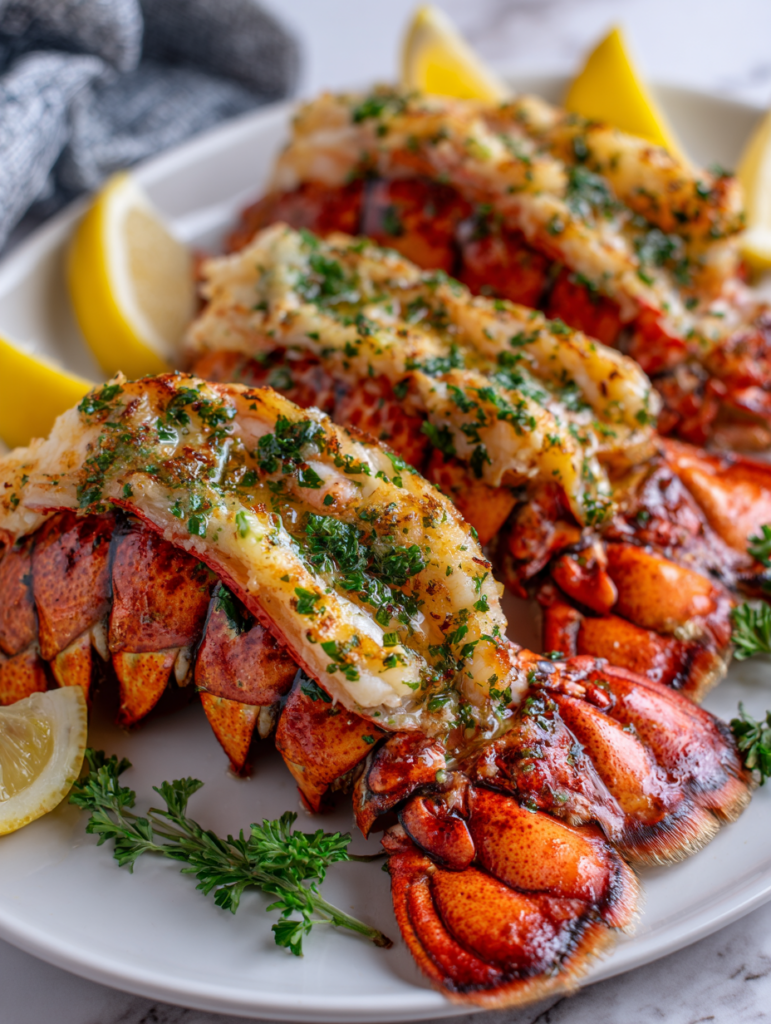
Lobster tails often get a reputation for being fancy but complicated. Honestly, with a simple garlic herb butter, they become approachable yet indulgent, perfect for a weekend treat or special dinner. I love how the fragrant garlic and fresh herbs turn the lobster into something that feels both luxurious and homey at the same time.
This recipe is all about showcasing the lobster’s natural sweetness without drowning it in heavy sauces. Using fresh garlic, butter, and a handful of herbs, I keep it straightforward—letting the ingredients do the talking. It’s a reminder that sometimes, the simplest preparations yield the most memorable bites.
Focusing on the underrated charm of lobster tails cooked simply but elevated with a fragrant garlic herb butter, highlighting the importance of technique and fresh ingredients over complex sauces.
The story behind this recipe
- I remember the first time I cooked lobster tails outdoors, flames licking the shell as I brushed them with garlic-herb butter. That moment, smelling the sea mingling with sizzling herbs, made me realize how simple ingredients can turn into something extraordinary. Since then, I try to keep it straightforward but flavorful, letting the lobster shine.
- Every time I make this dish, I think back to those summer evenings when friends gathered around, sharing stories over a shared plate of buttery lobster. It’s a dish that’s about the little things: the crackle of butter, the bright pop of lemon, the tender meat that’s just right. That’s what keeps me coming back to this recipe, again and again.
- heading: The story behind this recipe
Key ingredients and tips
- Lobster tail: I love how the shell turns bright red and crackles slightly when perfectly cooked; you want that firm, opaque meat. Skip overcooking—it turns rubbery, so aim for just right.
- Garlic: Fresh garlic is queen here. It turns sweet and fragrant when sautéed, but if it burns, it turns bitter fast. Keep your heat moderate and stir constantly.
- Herbs: Parsley and thyme add brightness. Fresh herbs give a vibrant punch, but dried can work in a pinch—just use less, about half as much.
- Butter: Use unsalted butter for control. It melts into a fragrant pool of richness, and I like adding a squeeze of lemon to brighten it up. Skip margarine for the best flavor.
- Lemon: Bright, zesty, and essential for cutting through the richness. I zest before juicing to get every aromatic bit, then drizzle over just before serving.
- Olive oil: Just a touch for searing; adds a subtle fruitiness. If you don’t have olive oil, a light vegetable oil works, but skip overly smoky oils—they’ll overpower the delicate lobster.
- Sea salt: Use flaky sea salt to enhance natural sweetness. Sprinkle it generously but taste as you go—over-salting can drown the lobster’s subtle flavor.
Spotlight on key ingredients
Garlic:
- Lobster tail: Its shell turns a vivid red and crackles as it cooks, signaling perfect heat. The meat inside should be firm, opaque, and juicy—avoid overcooking or it gets rubbery.
- Fresh garlic becomes sweet and fragrant when sautéed, but if it chars or burns, it turns bitter fast. Keep the heat moderate and stir constantly to avoid this.
Herbs:
- Butter: It melts into a fragrant, silky pool that coats the lobster meat beautifully, adding richness. When combined with lemon, it brightens everything up without overpowering.
- Parsley and thyme add fresh, aromatic notes. They release their brightness and a hint of earthiness when cooked gently, giving the dish its lively finish.
Notes for ingredient swaps
- Dairy-Free: Swap butter for coconut oil or a dairy-free margarine. Expect a slightly different richness, but still flavorful.
- Herb Variations: Use basil or tarragon instead of parsley and thyme. They bring a fresh, slightly different aromatic punch.
- Garlic Alternatives: Roasted garlic for a sweeter, mellow flavor or garlic powder in a pinch—just reduce the quantity to avoid overpowering.
- Lobster Substitute: King crab legs or large shrimp can work if lobster isn’t available. They cook faster and have a different texture.
- Lemon Twist: Lime or orange zest and juice can brighten the dish with a slightly different citrus note—use sparingly.
- Oil Options: Avocado oil or light vegetable oil can replace olive oil for searing—neutral flavors with high smoke points.
- Salt: Flaked sea salt is best, but fine kosher salt works. Adjust quantity to prevent over-salting.
Equipment & Tools
- Sharp kitchen shears or knife: To cut along the lobster shell cleanly.
- Tongs: To handle hot lobster shells safely.
- Small brush: To apply the garlic herb butter evenly.
- Heavy skillet or ovenproof pan: To sear and cook the lobster evenly.
- Thermometer: To check lobster’s internal temperature for perfect doneness.
- Paper towels: To pat dry and keep the lobster from steaming.
- Lemon wedges: For finishing and brightening the flavor.
Step-by-step guide to garlic herb lobster
- Equipment & Tools: Grab a sharp, sturdy kitchen shears or a knife to cut the lobster shell. Tongs for handling hot shells. A small brush for butter. A heavy skillet or ovenproof pan. A thermometer for checking temperature. Ready some paper towels and lemon wedges for finishing.
- Prepare the lobster: Thaw if frozen, then cut along the top shell from the base to the tip, exposing the meat. Use shears or a knife. Carefully lift the meat slightly, keeping it attached at the tail end, and rest it on top of the shell. Pat dry with paper towels.
- Make garlic herb butter: Melt ½ cup unsalted butter over low heat (about 50°C/122°F). Mince 4 garlic cloves finely, then add. Stir in 2 tbsp chopped parsley, 1 tsp thyme, and a pinch of salt. Cook gently until fragrant, about 2 mins. Remove from heat.
- Preheat pan: Heat your skillet over medium (about 160°C/320°F) until hot. It should shimmer but not smoke. Brush the exposed lobster meat generously with the garlic herb butter, reserving some for finishing.
- Sear the lobster: Place the lobster tails shell side down. Cook for about 3-4 mins until the shell turns bright red and crackles slightly. Flip carefully, then cook for another 2-3 mins. If using oven, transfer to 200°C/390°F and bake for 8-10 mins, basting with more butter halfway.
- Check doneness: The lobster meat should be opaque and firm to the touch. The shell will be vividly red. Use a thermometer—aim for around 60°C/140°F in the thickest part. The aroma should be fragrant and buttery.
- Rest & plate: Let the lobster rest for 1 minute. Drizzle with remaining garlic herb butter, squeeze fresh lemon over, and garnish with extra herbs. Serve immediately with lemon wedges.
- Final touch: Ensure the lobster meat is tender and juicy. The shell should be bright red and crackle slightly. The butter should be fragrant and slightly bubbling at the edges. The meat jiggles slightly but is firm.
- Serve with: Extra lemon and a side of crusty bread or simple greens for a full experience.
Let the lobster rest for 1 minute after cooking. Drizzle with extra garlic herb butter, squeeze fresh lemon over, and garnish with herbs. Serve immediately for best flavor and texture.
How to Know It’s Done
- The shell is bright red and crackling, indicating proper heat and doneness.
- Lobster meat is opaque, firm, and slightly bounces back when pressed.
- A fragrant garlic-herb aroma fills the air, with butter bubbling gently around the shell.
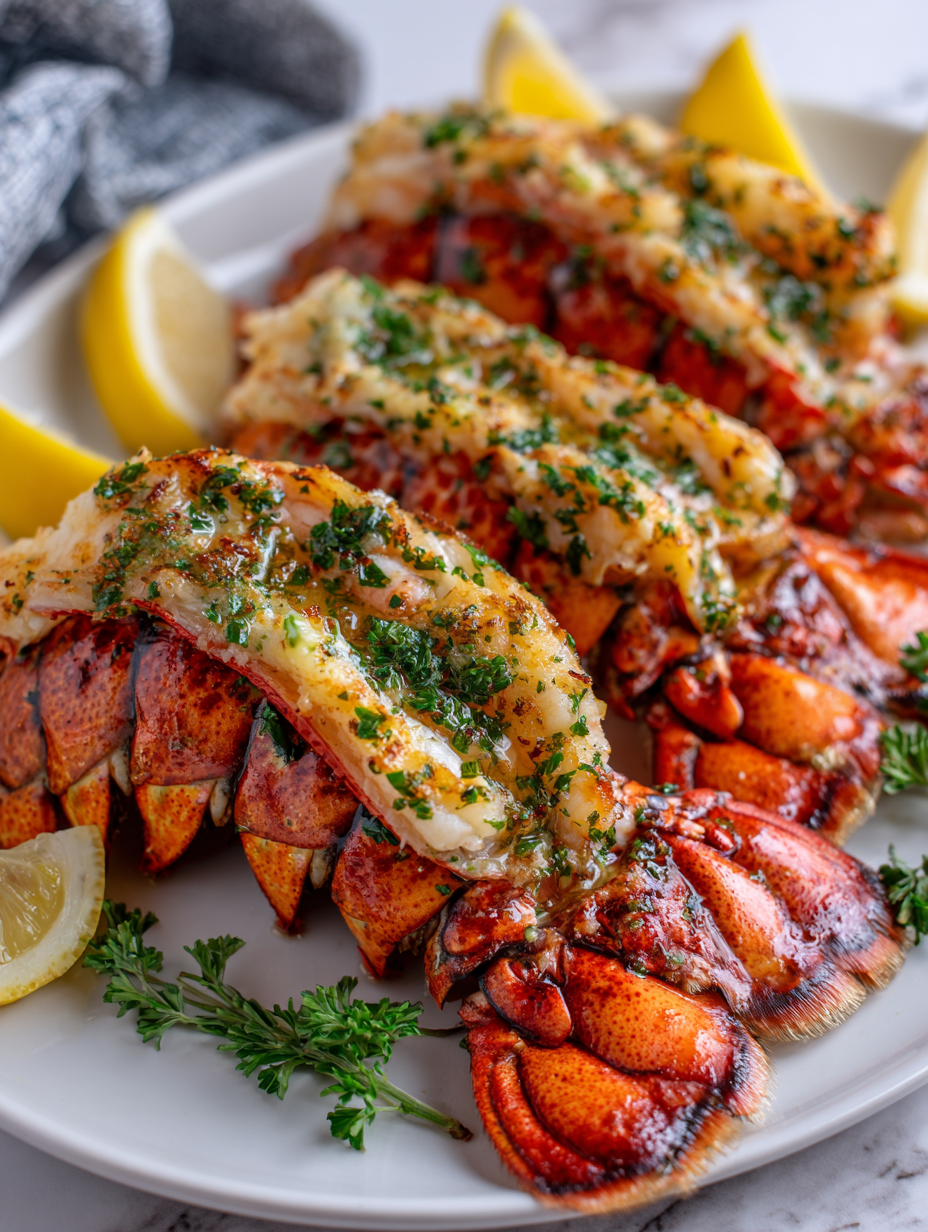
Garlic Herb Lobster Tails
Ingredients
Equipment
Method
- Use sharp kitchen shears or a knife to carefully cut along the top shell of each lobster tail from the base to the tip, exposing the meat. Gently lift the meat slightly, keeping it attached at the tail end, and rest it on top of the shell. Pat the lobster dry with paper towels to remove excess moisture.
- Melt the butter in a small saucepan over low heat. Finely mince the garlic and add it to the butter, stirring gently until fragrant, about 2 minutes. Stir in chopped parsley, thyme, and a pinch of sea salt. This fragrant garlic herb butter will be used for basting and finishing.
- Preheat your heavy skillet or ovenproof pan over medium heat until shimmering but not smoking. Using a small brush, generously coat the exposed lobster meat with the garlic herb butter, reserving some for later.
- Place the lobster tails shell side down in the hot pan. Sear for 3-4 minutes until the shells turn bright red and crackle slightly, signaling they're cooking through. Flip the tails carefully with tongs, and cook for another 2-3 minutes, basting occasionally with more garlic butter.
- If you prefer to bake, transfer the lobster tails to a preheated oven at 200°C (390°F) and bake for 8-10 minutes, basting with garlic butter halfway through, until the meat is opaque and firm.
- Check the lobster for doneness: the shell should be vividly red and crackling, and the meat should be opaque, firm, and slightly bouncing back when pressed. Use a thermometer to ensure the internal temperature reaches about 60°C (140°F). Remove from heat.
- Let the lobster rest for a minute, then drizzle with the remaining garlic herb butter. Squeeze fresh lemon juice over the meat, and garnish with extra herbs if desired.
- Serve immediately with lemon wedges on the side for an extra bright flavor, and enjoy the tender, buttery lobster with its fragrant herbal notes.
Pro tips for perfect lobster
- Use a moderate heat—too high and garlic burns, too low and lobster won’t sear properly.
- Apply butter with a small brush—this ensures even coating and prevents excess pooling.
- Sear shell side down first—this traps juices and gives a vibrant, crackling shell appearance.
- Check for opacity and firm texture—use a thermometer to hit around 60°C/140°F for perfect doneness.
- Rest lobster for a minute after cooking—this helps juices redistribute, keeping it tender.
Common mistakes and how to fix them
- FORGOT to adjust heat → Lobster shell might burn, keep heat moderate and watch closely.
- DUMPED too much butter → Reserve some for finishing, avoid oversaturating the lobster.
- OVER-TORCHED shell → Sear just until shell turns bright red and crackles, not burnt.
- MISSED internal temp → Check for 60°C/140°F in thickest part to ensure perfect doneness.
Quick fixes and pantry swaps
- When shells crackle too loudly, splash a little water to reduce smoke and cool the pan.
- If butter smokes excessively, lower heat immediately and add a splash of cold water to calm it.
- Dumped too much lemon juice? Rinse lobster briefly and pat dry before reheating to prevent sogginess.
- Overcooked lobster? Patch with a quick brush of warm garlic-herb butter and cover to reheat gently.
- Shield lobster from direct flame if shell turns too dark—use indirect heat or move to cooler pan area.
Prep, store, and reheat tips
- Prep the lobster tails: cut and clean them a day ahead, keeping them covered in the fridge. The smell of seafood can get strong if left too long.
- Make the garlic herb butter in advance; store it in an airtight container in the fridge for up to 2 days. Reheat gently until just melted, then use.
- Store cooked lobster in an airtight container in the fridge for up to 24 hours. The meat may lose some juiciness but remains tender if kept properly covered.
- Reheat gently in a skillet over low heat, basting with warm butter, until just heated through—avoid overheating to prevent rubbery texture.
Top questions about garlic herb lobster
1. How do I know when the lobster is cooked properly?
Look for the shell to turn a vibrant red and crackle slightly. The meat should be opaque and firm, not translucent or mushy. Use a thermometer to ensure it reaches around 60°C/140°F in the thickest part.
2. What should fresh garlic smell like when cooking?
Fresh garlic releases a sweet and fragrant aroma when sautéed. If it burns, it turns bitter and can ruin the dish. Keep the heat moderate and stir constantly to avoid burning.
3. Can I use salted butter or margarine instead?
Use unsalted butter for better control over saltiness. It melts into a rich, silky pool that coats the lobster meat. Adding a squeeze of lemon brightens the flavor and balances the richness.
4. Can I replace parsley and thyme with other herbs?
Yes, you can substitute other herbs like basil or tarragon. They add a different aromatic punch but keep the overall fresh, bright flavor of the dish.
5. How do I prepare frozen lobster tails?
Lobster tails are best thawed if frozen, then cut along the top shell with sharp scissors or a knife. Be careful to keep the meat attached at the tail end and pat dry before cooking.
6. Should I sear shell side up or down first?
Sear the lobster shell side down first to trap juices and create a crackling, colorful shell. Cook for about 3-4 minutes until the shell turns bright red and crackles, then flip and cook a few more minutes.
7. How long should I cook lobster tails?
Overcooking leads to rubbery meat and dull flavor. Check for opacity, firm texture, and a bright shell. Use a thermometer to hit around 60°C/140°F, and remove from heat promptly.
8. Can I prepare this dish ahead of time?
Store the prepped lobster in the fridge covered with plastic wrap for up to 24 hours. Garlic butter can be made ahead and kept refrigerated for 2 days. Reheat gently in a warm skillet.
9. What if the butter or shells smoke too much?
If the butter starts to smoke excessively, lower the heat immediately and add a splash of cold water to calm it. If shells crackle too loudly, splash a little water to reduce smoke and cool the pan.
10. How do I fix overcooked or burnt lobster?
If lobster meat turns rubbery, brush it with warm garlic-herb butter, cover, and reheat gently. For burnt shells, shield or move to indirect heat. For soggy lobster, serve immediately or reheat carefully.
Cooking this garlic herb lobster tail is a reminder that simple ingredients, handled with care, create moments worth savoring. The fragrant butter, bright lemon, and tender meat come together quickly, making it perfect for a spontaneous celebration or a quiet weekend treat.
It’s a dish that demands attention but rewards patience with a burst of flavor and texture. Sharing it with someone special, or just enjoying it solo, turns a humble shell into a memorable experience that lingers long after the last bite.

Hi, I am Elias William Carter! The cook, writer, and self-proclaimed flavor enthusiast behind Dramatically Stirring. Food has always been my love language- my way of showing care, curiosity, and creativity all at once. I grew up in the heart of North Carolina, in a house where the kitchen was always alive with noise and aroma