
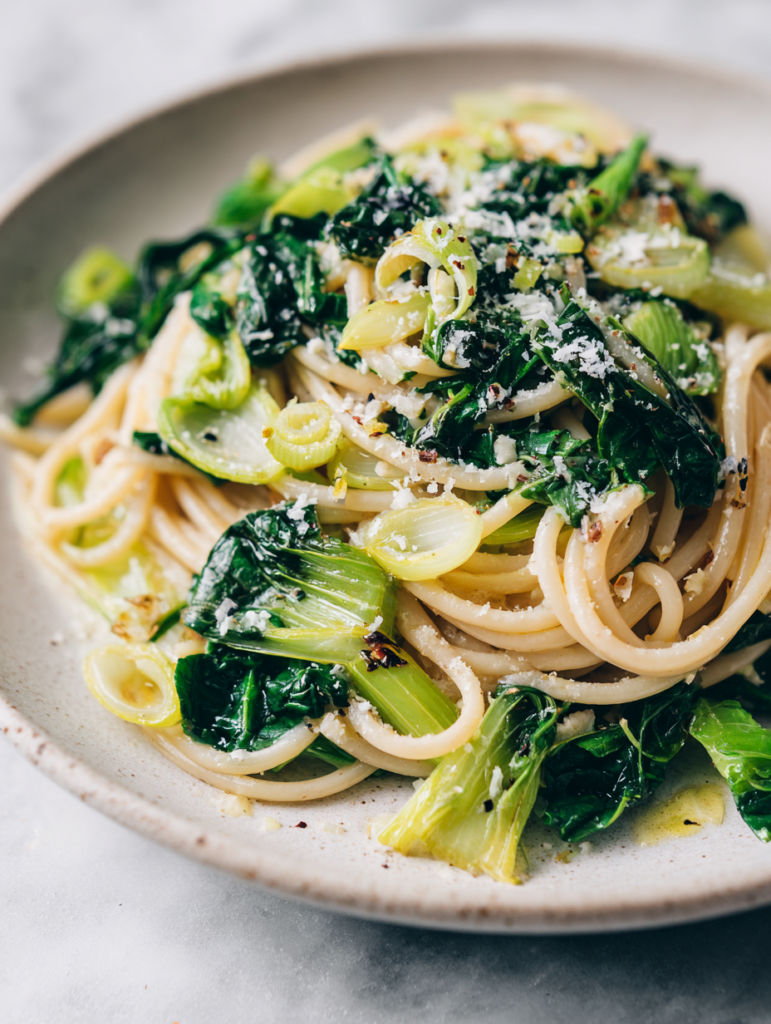
In the chaos of everyday life, I find myself craving something straightforward yet satisfying—a dish that reminds me of quiet mornings and simple joys. This leek and spinach pasta does just that. It’s the kind of meal I turn to when I want to reclaim honest, unpretentious cooking amidst the noise.
There’s a comfort in chopping leeks and wilting spinach, knowing these humble ingredients come together so effortlessly. It’s not about perfection; it’s about the small acts of making something nourishing with your own hands. And honestly, it’s the kind of dish that feels like a warm hug on a busy weeknight.
Using this dish as a way to reclaim simple, honest cooking when life feels chaotic, emphasizing the comfort of familiar flavors married with a touch of a personal twist.
The story behind this recipe
This recipe came from a night when I was overwhelmed with too many things on my plate, but still craving something comforting and quick. I remembered a simple meal my grandmother used to make, where humble ingredients came together effortlessly and felt like a small act of kindness. That moment of nostalgia pushed me to keep it straightforward, letting the vegetables shine without fuss. Now, it’s my go-to when I need a reminder that sometimes the simplest dishes carry the most warmth.
Ingredient breakdown
- Leeks: I love how their gentle sweetness deepens when cooked slowly, turning translucent and fragrant. Use only the white and light green parts for a milder, sweeter flavor—skip the tough dark greens unless you plan to sauté longer.
- Spinach: Fresh spinach wilts quickly and adds a vibrant, earthy note. If you want more bite, add it just before serving so it keeps some of its texture and bright color. Frozen works in a pinch, just squeeze out excess moisture.
- Pasta: I prefer a short, sturdy shape like orecchiette or fusilli—they hold onto the sauce better. Cook until just al dente; it’ll finish absorbing flavors as it rests in the sauce. Don’t rinse the pasta—starchy water helps the sauce cling.
- Olive Oil: Use good-quality extra virgin—it makes a noticeable difference in flavor. I warm it gently to coax out a fruity, fragrant aroma that perfumes the leek and spinach. Skip it for a more neutral oil if you prefer a lighter finish.
- Garlic: I always mince it fine so it disperses evenly and infuses every bite. When it hits the hot oil, it should sizzle gently—be careful not to burn it, or it turns bitter. A quick stir keeps the aroma bright and inviting.
- Lemon Juice: Brightens everything with a zingy contrast. I add it right at the end for a fresh burst—if you want a richer taste, skip it or use a splash of white wine instead. The lemon makes the greens pop.
- Parmesan: I grate it fresh over the dish just before serving—melts into the warm pasta, creating a creamy, salty finish. For a vegan version, nutritional yeast adds a cheesy note without the dairy. Use sparingly; it can overpower.
Spotlight on key ingredients
Leek:
- Leeks: I love how their gentle sweetness deepens when cooked slowly, turning translucent and fragrant. Use only the white and light green parts for a milder, sweeter flavor—skip the tough dark greens unless you plan to sauté longer.
- Spinach: Fresh spinach wilts quickly and adds a vibrant, earthy note. If you want more bite, add it just before serving so it keeps some of its texture and bright color. Frozen works in a pinch, just squeeze out excess moisture.
Spinach:
- Its bright green color and earthy aroma make the dish lively. When cooked, it wilts fast, releasing moisture that sweetens the sauce. Watch for over-wilting—aim for a tender, vibrant green, not limp leaves.
- ingredient
Notes for ingredient swaps
- Dairy-Free: Swap Parmesan for nutritional yeast or vegan cheese. It won’t be as rich, but still flavorful.
- Gluten-Free: Use gluten-free pasta—look for rice or chickpea varieties. They cook similarly but might have a slightly different texture.
- Oil: Olive oil works best for flavor, but avocado or sunflower oil can be milder options if preferred.
- Lemon Juice: Lime juice can give a slightly different citrus brightness—less sharp, but still fresh.
- Spinach: Swiss chard or kale can stand in when spinach isn’t available—just adjust cooking time and texture slightly.
- Garlic: Shallots or leeks can add a milder, sweeter note—use the same amount, but cook a bit longer to soften.
- Pasta: Whole wheat or legume-based pasta adds fiber and protein—cooks just as quick, but may have a nuttier taste.
Equipment & Tools
- Large pot: Boil pasta efficiently and evenly.
- Deep skillet or wide pan: Sauté vegetables and toss pasta in a single layer.
- Wooden spoon: Stir ingredients gently without scratching pans.
- Grater: Freshly grate Parmesan for maximum flavor.
Step-by-step guide to this dish
- Gather your equipment: a large pot for boiling pasta, a deep skillet or wide pan for sautéing, a wooden spoon, and a grater for cheese. Fill the pot with water, add salt generously, and bring to a rolling boil at 100°C (212°F).
- While water heats, clean and slice the leeks thinly—about 0.5 cm (¼ inch). Rinse well to remove grit. Set aside.
- Heat 2 tablespoons of good-quality olive oil over medium heat (about 160°C/320°F). Add the sliced leeks and a pinch of salt. Cook gently, stirring occasionally, until they turn translucent and soften—about 8 minutes. They should smell sweet and slightly caramelized.
- Meanwhile, add your pasta to the boiling water. Cook until just al dente, about 1-2 minutes less than package instructions—aim for a firm bite. Reserve a cup of starchy pasta water before draining.
- Push the leeks slightly to one side of the pan. Add 2 minced garlic cloves to the cleared space. Sauté gently until fragrant, about 30 seconds, avoiding browning. If garlic turns bitter or burns, lower heat immediately.
- Add a generous handful of fresh spinach (about 2 cups) to the pan with the leeks. Stir until wilted, about 1-2 minutes. The spinach should turn bright green and release a fresh aroma.
- Drain the pasta, then add it to the skillet with the leeks and spinach. Toss well, adding a splash of reserved pasta water to loosen the sauce and help it cling. Cook for another minute until everything is heated through and slightly glossy.
- Finish with a squeeze of lemon juice (about 1 teaspoon) and a handful of freshly grated Parmesan. Toss to combine. The lemon should brighten the greens, and the cheese will melt into the sauce, creating a creamy finish.
- Taste and adjust seasoning with more salt, pepper, or lemon if needed. Remove from heat and let rest for 2 minutes. Serve immediately, garnished with extra Parmesan if desired.
Serve immediately while warm. Garnish with extra cheese or lemon zest if desired. No need to rest; just plate and enjoy the fresh flavors.
How to Know It’s Done
- Leeks: should be translucent, fragrant, and slightly caramelized.
- Pasta: al dente, with a slight bite and starchy water used to thicken the sauce.
- Greens: wilted, vibrant, and tender without excess moisture.
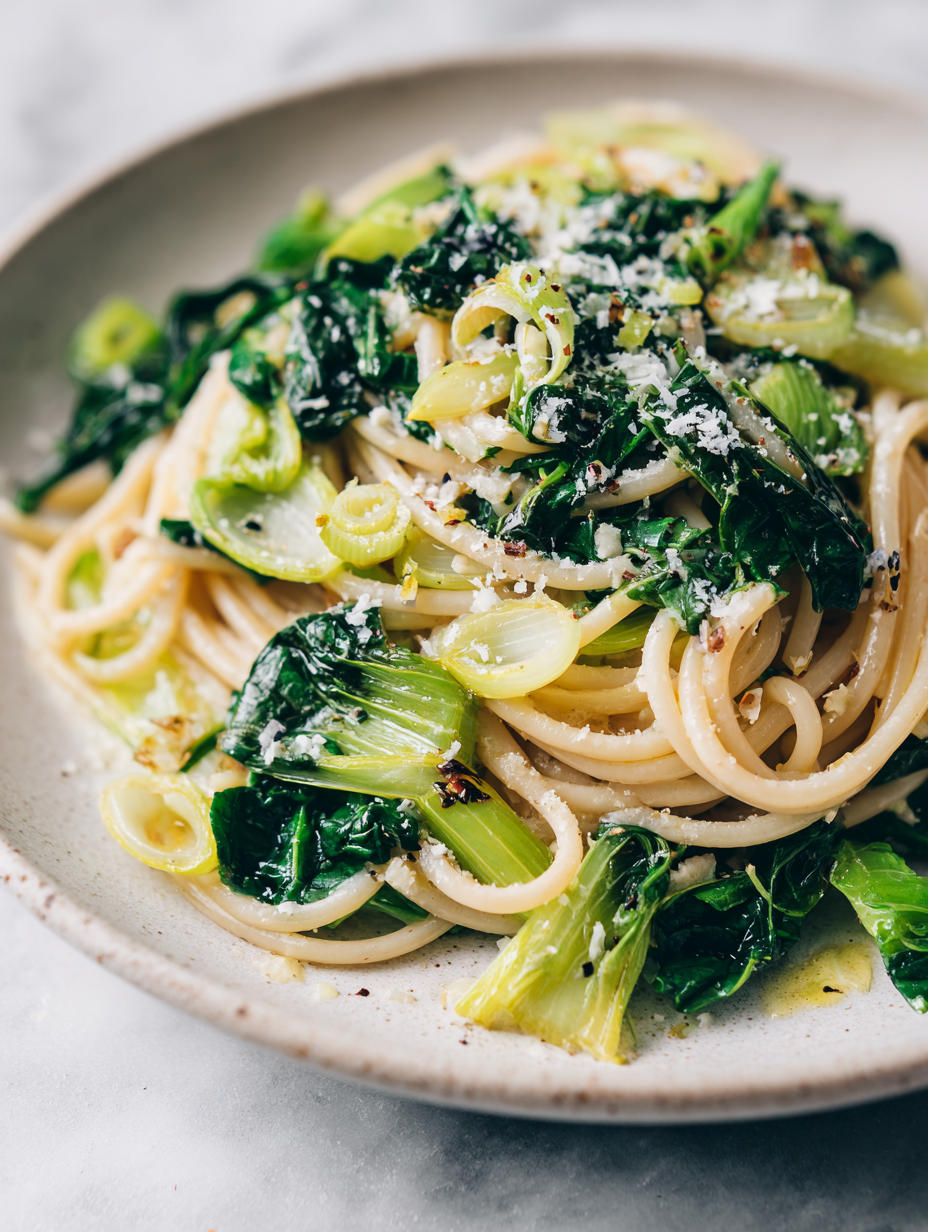
Leek and Spinach Pasta
Ingredients
Equipment
Method
- Start by filling your large pot with water, adding a generous pinch of salt, and bringing it to a rolling boil. Meanwhile, peel and thinly slice the leeks, rinsing them well to remove any grit. Set aside.
- Heat the olive oil in a deep skillet or wide pan over medium heat until it shimmers and begins to smell fragrant. Add the sliced leeks and a pinch of salt, then cook gently, stirring occasionally, until they turn translucent and slightly caramelized, about 8 minutes. You should hear a gentle sizzle and see the leeks soften and turn golden at the edges.
- While the leeks cook, add your pasta to the boiling water. Cook until just al dente—about 1-2 minutes less than package directions. Reserve a cup of starchy pasta water before draining the pasta and set aside.
- Push the cooked leeks to one side of the pan. Add the minced garlic to the empty space and sauté for about 30 seconds, stirring constantly, until it becomes fragrant and slightly golden. Be careful not to burn it—if it browns too quickly, lower the heat.
- Stir in the fresh spinach, a handful at a time, until it wilts and turns bright green—about 1-2 minutes. The spinach releases moisture and infuses the aroma of garlic and leek, creating a vibrant base for the dish.
- Drain the pasta and add it to the skillet with the sautéed vegetables. Toss everything together, adding a splash of the reserved pasta water to loosen the mixture and help the flavors cling to the noodles. Cook for another minute until everything is heated through and slightly glossy.
- Finish by squeezing the lemon juice over the pasta and sprinkling the freshly grated Parmesan on top. Toss gently to combine, allowing the cheese to melt into the warm pasta and brighten the dish with a fresh citrus note.
- Taste and adjust with more salt, pepper, or lemon if desired. Serve immediately, garnished with extra Parmesan if you like. The dish should be vibrant, creamy, and just tender—ready to enjoy!
Pro tips for perfect pasta
- Bolded mini-head: Use medium heat when sautéing leeks for a gentle, sweet caramelization—avoid high heat to prevent burning.
- Bolded mini-head: When cooking pasta, stir occasionally and cook until just al dente—starchy water is your friend for sauce binding.
- Bolded mini-head: Add garlic towards the end of sautéing leeks; it releases aroma without turning bitter if cooked too long.
- Bolded mini-head: Wilt spinach quickly over high heat for vibrant color; overcooking makes it dull and watery, so keep an eye on it.
- Bolded mini-head: Finish with a squeeze of lemon right before serving to brighten the greens and add a fresh tang.
- Bolded mini-head: Reserve pasta water before draining—its starchy goodness helps create a silky, cohesive sauce.
- Bolded mini-head: Grate cheese just before adding; fresh cheese melts better and enhances the dish’s creamy texture.
Common mistakes and how to fix them
- FORGOT to stir the leeks? Keep stirring gently to prevent sticking or burning.
- DUMPED too much water from spinach? Squeeze out excess moisture thoroughly before adding.
- OVER-TORCHED garlic? Lower heat immediately to avoid bitterness and burnt flavor.
- MISSED the pasta water reserve? Always save a cup—it helps loosen the sauce perfectly.
Quick fixes and pantry swaps
- When sauce is too thick, splash in hot water and stir to loosen it.
- If pasta sticks, add a drizzle of oil and toss gently.
- Splash vinegar if greens taste dull or bitter after cooking.
- Patch over burnt garlic with fresh garlic and a touch of lemon zest.
- Shield over-salted dish with a splash of pasta water or a squeeze of lemon.
Prep, store, and reheat tips
- Pre-chop leeks and wash spinach ahead; store in airtight containers in the fridge for up to 24 hours, keeping greens crisp and clean.
- Cook the pasta al dente in advance; toss with a little oil to prevent sticking, then cool and refrigerate for up to 2 days.
- Reheat leftovers gently in a pan over low heat, adding a splash of water or broth to refresh the sauce and prevent drying out. Expect the greens to soften further and flavors to meld.
- For longer storage, freeze the cooked pasta and sautéed vegetables separately; reheat in a pan, adjusting seasoning as needed. Be aware that texture might change slightly after freezing.
- Reheating will intensify the garlic and leek aroma, making the dish even more inviting—just watch for overcooking the greens or drying out the pasta.
Top questions about leek and spinach pasta
1. How do I clean leeks properly?
Leeks can be gritty; rinse them well under cold water and slice carefully to remove dirt trapped between layers.
2. Can I use frozen spinach instead of fresh?
Yes, frozen spinach works fine. Just squeeze out excess moisture before adding to prevent a watery dish.
3. How do I know when the pasta is done?
Cook pasta until just al dente—firm but not hard. It will soften slightly as it rests in the sauce.
4. When should I add lemon juice?
Add lemon juice at the end to keep the bright, fresh flavor. Too early, and it can lose its zing.
5. Can I substitute a different oil?
Use high-quality olive oil for a fragrant, fruity base. It makes a real difference in flavor.
6. What if my sauce gets too thick?
If the sauce is too thick, splash in reserved pasta water and stir gently until it loosens.
7. How do I prevent overcooking the greens?
Overcooking greens makes them dull and mushy. Wilt spinach quickly over high heat for vibrant color.
8. Why should I save pasta water?
Save a cup of pasta water before draining. It’s starchy and helps the sauce cling beautifully.
9. Can I make this vegan?
For a vegan version, skip Parmesan and use nutritional yeast. It adds cheesy flavor without dairy.
10. Any tips for sautéing leeks?
Stir the leeks often while sautéing to prevent sticking and ensure even caramelization.
This leek and spinach pasta is a reminder that simple ingredients can create something truly comforting. It’s perfect for busy nights when you want nourishing without fuss. The gentle sweetness of leeks combined with the bright greens makes each bite feel like a small celebration.
In the end, it’s about those quiet moments in the kitchen—sautéing, tasting, adjusting. No matter how chaotic life gets, this dish offers a little space for honest, straightforward cooking that feels right.

I’m Mahek Manchanda, the curious heart behind Dramatically Stirring. Before this space existed, my life revolved around kitchens that were loud, demanding, and endlessly alive. I didn’t arrive at cooking through a single dramatic moment.