
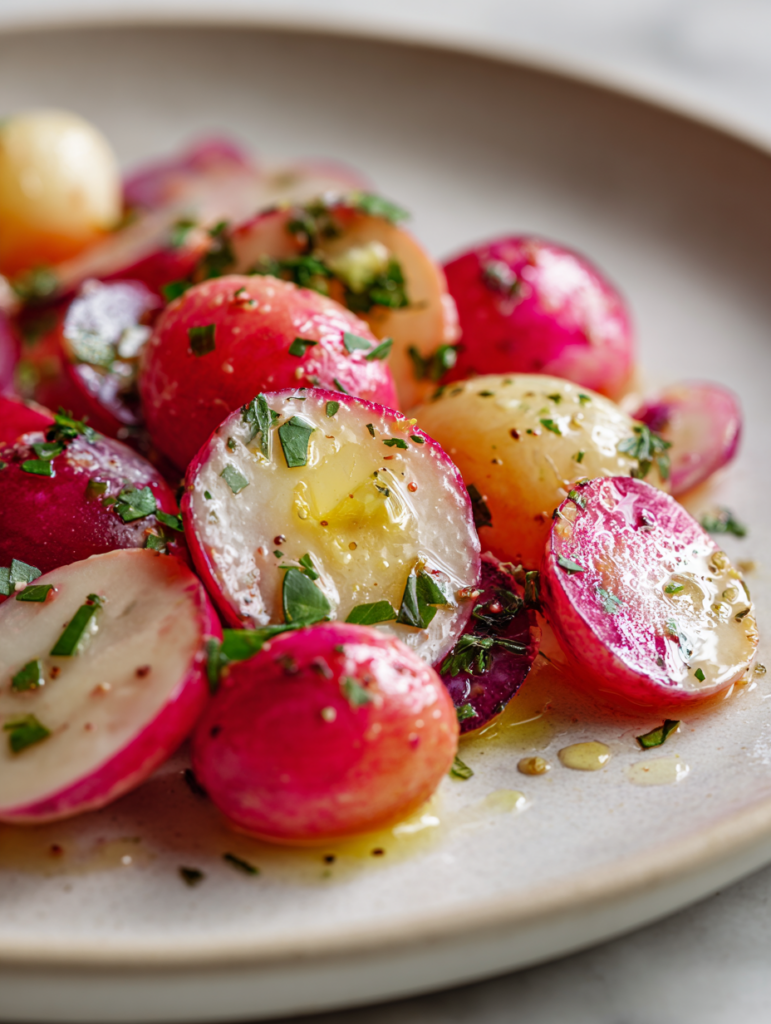
Radishes often get a bad rap as just crunchy salad toppings, but when you sauté them in butter, they turn into something unexpectedly luxurious. It’s like peeling back a layer of their sharp, peppery edge to reveal a tender, slightly sweet core. I love how simple ingredients—good butter, fresh radishes—can come together in a quick skillet and make you forget about fussiness.
This dish is my go-to when I want something quick that feels indulgent without any fuss. It’s the kind of thing that makes me smile because it’s humble yet elegant, a little reminder that sometimes, less is more. Plus, it’s perfect for those moments when you need a vegetable side that actually steals the show, even alongside richer mains. The smell of melting butter mingling with the radish’s fresh bite? Pure comfort.
Transforming a humble vegetable into a luxurious treat by focusing on the simple elegance of butter and the radish’s natural peppery brightness.
The story behind this recipe
- I first stumbled upon sautéed radishes during a hectic week when I needed a quick veggie side that felt a little special. Watching those bright, peppery little bulbs turn tender and glossy in butter was a surprise—like discovering a hidden gem in my fridge. It’s funny how something so simple can become a tiny, savory revelation.
- One chilly evening, I threw these radishes into the pan while thinking about childhood summers—those fleeting moments of crunch and sharpness paired with butter’s warm, mellow richness. It’s become a little ritual now, a way to remind myself that even the simplest ingredients can carry a story, a moment of quiet joy.
- heading: The story behind this recipe
Key ingredients and tips
- Radishes: I love the crunch and sharp pepperiness they bring, but slicing them thinner helps them soften faster and absorb butter more evenly. You might prefer thicker slices for more bite.
- Butter: Rich, creamy, and essential for that glossy, luscious coating. Using good quality butter makes a noticeable difference—if you want a dairy-free version, a splash of olive oil gives a milder flavor.
- Salt: Just a pinch to enhance the radish’s natural brightness. I often add a tiny sprinkle of flaky sea salt at the end for extra texture and sparkle.
- Pepper: Freshly ground black pepper adds a subtle heat and depth. If you like a bit more punch, a dusting of crushed red pepper flakes can elevate the dish.
- Lemon juice (optional): A squeeze brightens everything up and cuts through the richness. If you don’t have lemon, a splash of vinegar works—just watch for sharpness.
- Garlic (optional): A minced clove added early in cooking infuses a warm aroma. Skip if you want pure radish flavor or if garlic isn’t your thing.
- Fresh herbs (like parsley or dill): Chopped herbs added just before serving lift the dish with fresh, vibrant notes. Feel free to experiment based on what’s in your fridge.
Spotlight on key ingredients
Radishes:
- I love how their crisp bite and peppery zing mellow and sweeten as they cook, becoming tender yet still lively on the palate.
- Their bright, juicy flesh releases a subtle ooze of spicy juice when sliced, and they soften quickly, transforming into silky, flavor-rich bites.
Butter:
- It melts into a glossy coating that amplifies the radish’s natural sweetness and adds a rich, nutty aroma that fills the kitchen.
- When heated, it crackles and browns, giving the dish a toasty undertone that complements the radish’s sharpness.
Notes for ingredient swaps
- Dairy-Free: Swap butter for olive oil or coconut oil. Expect a lighter, fruitier flavor with less richness.
- Vegan: Use a plant-based butter or margarine. The dish will still be luscious but slightly less creamy.
- Salt: If you prefer less sodium, reduce the salt or try a pinch of smoked salt for depth.
- Pepper: Black pepper can be replaced with white pepper for a milder, less visually noticeable spice.
- Lemon Juice: Replace with a splash of vinegar or a squeeze of lime for a different bright tang.
- Herbs: If parsley or dill aren’t available, chopped chives or basil add fresh, herbal notes.
- Garlic: Omit garlic if you want pure radish flavor, or substitute with shallots for a milder sweetness.
Equipment & Tools
- Skillet: To evenly cook and caramelize the radishes in butter.
- Knife: To slice the radishes into thin, uniform rounds.
- Cutting board: To provide a stable surface for slicing.
- Spatula or tongs: To turn and stir the radishes gently during cooking.
Step-by-step guide to sautéed radishes
- Gather your equipment: a skillet (preferably cast iron or stainless steel), a sharp knife, a cutting board, and a spatula or tongs for flipping.
- Wash the radishes thoroughly under cold water to remove any dirt. Pat them dry with a towel.
- Slice the radishes into thin, even rounds about 3-4mm thick. Thinner slices will soften faster and absorb butter better.
- Heat the skillet over medium heat to approximately 160°C (320°F). Add 1-2 tablespoons of good quality unsalted butter and let it melt until it begins to foam.
- Add the sliced radishes to the skillet in a single layer. Cook without moving for about 2 minutes until the edges start to turn translucent and slightly golden.
- Gently stir or flip the radishes using a spatula or tongs. Continue cooking for another 3-4 minutes, until they are tender but still hold a slight bite, and the butter is fragrant and slightly nutty.
- If the radishes start to stick or brown too quickly, lower the heat slightly or add a splash of water or broth to deglaze and steam them a bit.
- Season generously with sea salt and freshly ground black pepper during cooking. For extra flavor, add a small minced garlic clove in the last minute if desired.
- Check for doneness: the radishes should be tender and glossy, with a slight smoky aroma. They should jiggle slightly when shaken in the pan.
- Remove from heat. Let them rest for about 1 minute to allow flavors to settle. Plate immediately, drizzled with a squeeze of lemon or a sprinkle of fresh herbs if using.
Transfer the radishes to a plate. Let rest for 1 minute. Finish with a squeeze of lemon or fresh herbs for brightness. Serve warm, ideally immediately while glossy and tender.
How to Know It’s Done
- Radishes are tender and glossy with a slightly smoky aroma.
- Edges are golden and slightly translucent.
- Radishes jiggle slightly when shaken in the pan.
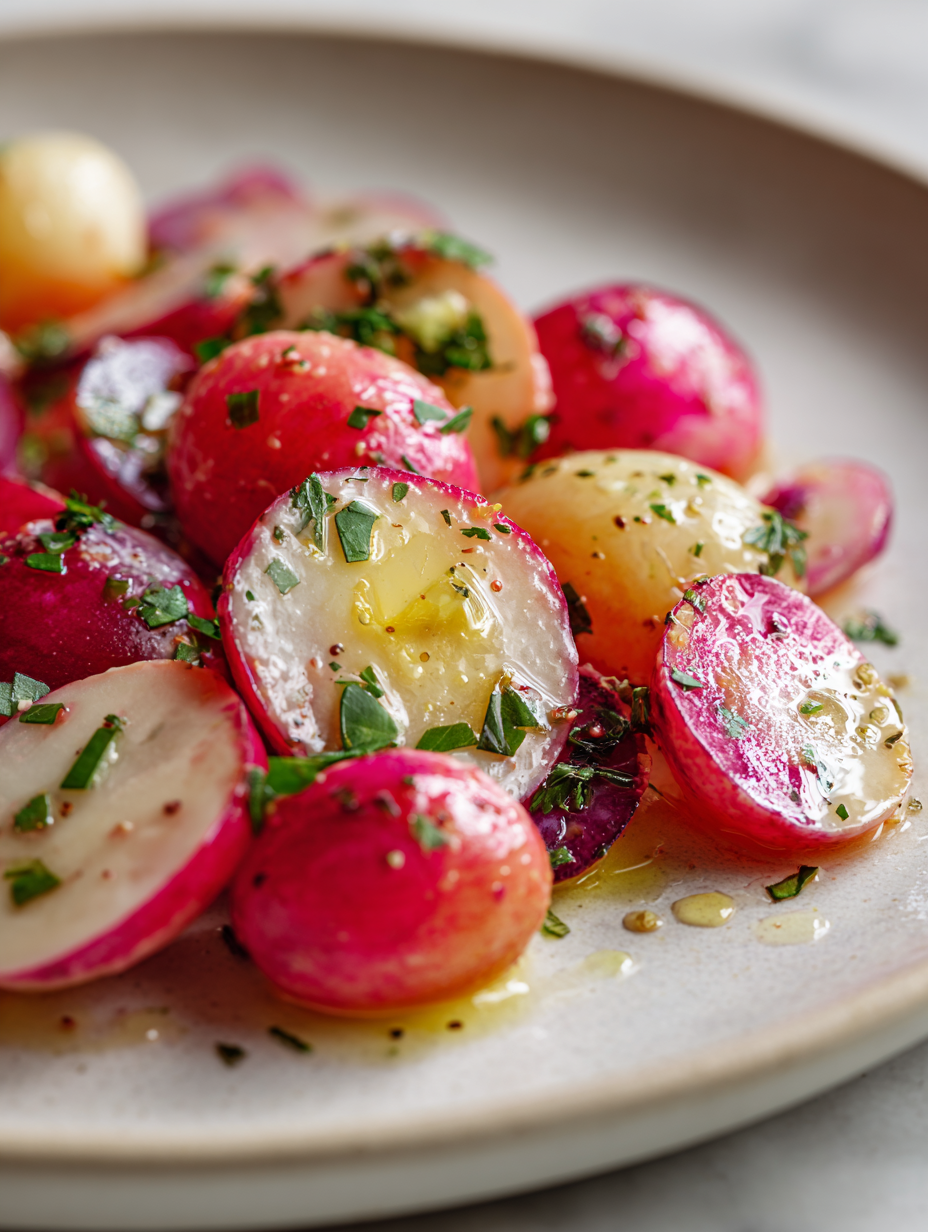
Sautéed Radishes in Butter
Ingredients
Equipment
Method
- Start by washing the radishes thoroughly under cold water to remove any dirt, then pat them dry. Slice the radishes into thin, even rounds about 3-4mm thick for quick, even cooking.
- Heat your skillet over medium heat until hot, then add the butter. Let it melt and bubble gently, filling your kitchen with a warm, nutty aroma.
- Add the sliced radishes in a single layer. Let them cook undisturbed for about 2 minutes, until their edges start to turn translucent and golden at the bottom.
- Gently stir or flip the radishes using a spatula or tongs, ensuring all slices get coated in butter. Continue cooking for another 3-4 minutes, until they soften and become glossy, with a faint caramelized aroma.
- If using garlic, add the minced clove now, stirring for about 30 seconds until fragrant. Season generously with sea salt and freshly ground black pepper, tasting as you go.
- Once the radishes are tender and glossy, remove the skillet from heat. Squeeze fresh lemon juice over the radishes for brightness, and sprinkle with chopped herbs for a fresh, vibrant finish.
- Transfer the radishes to a serving plate. Serve immediately while they're warm, tender, and beautifully glazed with butter, garnished with extra herbs or a pinch of flaky salt if desired.
Notes
Pro tips for perfect sautéed radishes
- Use a hot pan → Sizzle indicates proper heat for quick, even cooking.
- Slice radishes thinly → Ensures tender, evenly cooked slices with a delicate bite.
- Add butter early → Creates a glossy, flavorful coating, watch for gentle bubbling.
- Stir gently → Prevents breaking slices and promotes even browning.
- Finish with a quick squeeze of lemon → Brightens flavors and enhances freshness.
- Keep an eye on heat → Too hot burns butter; too low prolongs cooking and dulls color.
- Rest briefly before serving → Lets flavors settle and radishes firm up slightly.
Common mistakes and how to fix them
- FORGOT to heat the pan properly → Ensure butter sizzles before adding radishes.
- DUMPED all radishes at once → Add in batches for even cooking and color.
- OVER-TORCHED butter → Lower heat if butter starts to brown too quickly.
- MISSED to slice evenly → Use a sharp knife for uniform thickness, for consistent tenderness.
Quick fixes and pantry swaps
- When radishes are soggy, splash vinegar to brighten and crisp them up.
- If butter burns, patch with a splash of cold water and lower heat immediately.
- DUMPED all radishes at once? Rescue by stirring quickly to prevent uneven cooking.
- Over-torched butter? Shield with a splash of oil and reduce heat for a milder aroma.
- Splash in a pinch of lemon juice if radishes are dull or too spicy, adding shimmer and brightness.
Prep, store, and reheat tips
- Prep the radishes: Wash and slice thinly ahead of time; store in an airtight container in the fridge for up to 24 hours. They stay crisp and vibrant, ready to cook.
- Refrigerate cooked radishes: Keep leftovers in a sealed container for up to 2 days. The butter may solidify, but gently reheating restores their glossy appearance and tender texture.
- Reheating tips: Warm in a skillet over low heat or in the microwave at 50% power, stirring occasionally. Expect the flavor to mellow slightly and the radishes to soften further.
- Flavor changes: The radishes will lose some of their sharp bite and become more mellow and sweet with storage. The butter may absorb fridge odors if not well sealed, so keep airtight.
Top questions about sautéed radishes
1. What do sautéed radishes taste like?
Radishes are crunchy and peppery raw, but when sautéed in butter, they soften into tender, sweet, and slightly smoky bites. The heat mellows their sharpness, revealing a subtle sweetness that balances their natural zing.
2. How do I choose the right radishes?
Use fresh, firm radishes for the best texture. Thinner slices cook faster and become more tender, so aim for about 3-4mm slices. Avoid overripe or limp radishes, which won’t hold up well.
3. How can I tell when radishes are cooked properly?
Cooking radishes in butter releases a rich aroma and creates a glossy, flavorful coating. They should be tender but still have a slight bite, with golden edges and a fragrant, nutty smell when done.
4. What if my radishes burn or stick?
If the radishes turn dark or burn, reduce the heat immediately and add a splash of water or broth to deglaze. To prevent sticking, keep the slices evenly spaced in the pan and stir gently.
5. Can I make this recipe dairy-free?
You can substitute olive oil or coconut oil for butter if you want a dairy-free version. Keep in mind that olive oil gives a lighter, fruitier flavor, while coconut adds a subtle sweetness.
6. How do I add brightness to the dish?
Adding a squeeze of lemon or a splash of vinegar brightens the dish, balancing the richness of the butter and enhancing the radish’s natural zing. Fresh herbs like parsley or dill add a vibrant finish.
7. How do I adjust for more crunch or softness?
Radishes soften rapidly; if you prefer more crunch, cook them for less time or slice them thicker. For a softer texture, cook a bit longer until they are fully tender and glossy.
8. How long can I store and reheat cooked radishes?
Store leftovers in an airtight container in the fridge for up to 2 days. Reheat gently in a skillet over low heat until warmed through, stirring occasionally. The flavor mellows slightly after refrigeration.
9. How do I fix soggy or burnt radishes?
If your butter starts to brown too quickly, lower the heat or add a small splash of water or oil. To fix soggy radishes, reheat in a hot pan to help evaporate excess moisture and restore gloss.
10. What are the best techniques for even cooking?
Using a sharp knife and slicing evenly helps radishes cook uniformly. Keep the heat moderate (around 160°C/320°F) and stir gently to prevent breaking slices or over-browning.
Sautéed radishes with butter might seem like a simple side, but their tender, glossy bites carry a quiet depth that’s easy to overlook. It’s a small reminder that humble ingredients can offer moments of unexpected richness, especially in busy seasons or when you need a quick veggie fix. The aroma of melting butter mingling with radish’s peppery brightness is hard to forget, even after the plate is cleared.
In a world full of complicated recipes, this dish keeps it real—fast, honest, and deeply satisfying. It’s the kind of thing you’ll keep coming back to, especially when you want something flavorful that doesn’t ask for fuss or fancy ingredients. Sometimes, the simplest tweaks make all the difference, and that’s what makes this radish dish worth a second look.

I’m Mahek Manchanda, the curious heart behind Dramatically Stirring. Before this space existed, my life revolved around kitchens that were loud, demanding, and endlessly alive. I didn’t arrive at cooking through a single dramatic moment.