
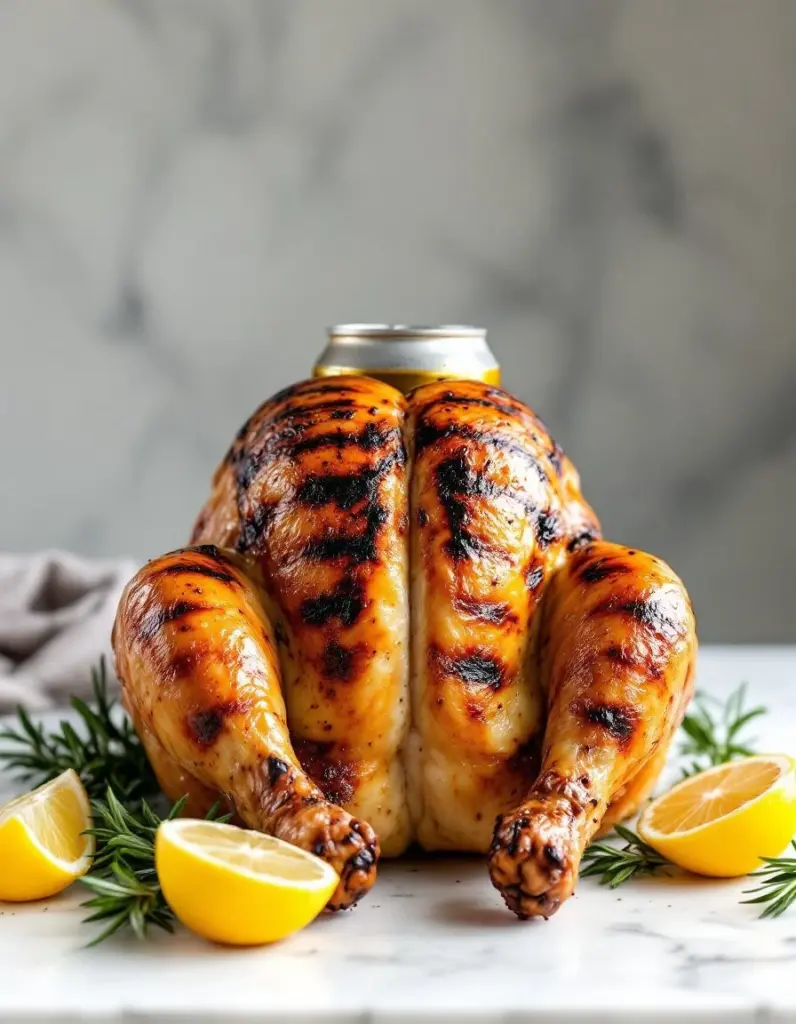
Getting the chicken onto the grill involves wrestling it over the hot grates, balancing the can upright while trying not to spill extra liquid. The sound of the skin crackling as it hits the heat is loud and immediate, like a small firework.
You’ll need to hold the bird steady, sometimes shifting it to prevent it from tipping or sticking, and keep a close eye on the flame flare-ups. It’s a messy, tactile process that demands your attention and a bit of patience, especially when basting or flipping.
The crackle and hiss of the chicken skin as it hits the hot grill, the way the juices sizzle when pierced, and the messy, sticky drips of marinade that spill over the sides—this is all about the raw, tactile joy of roasting a whole bird over open flame.
What goes into this dish
- Whole chicken: I prefer a fresh, organic bird for better flavor and juiciness, but a frozen one works if thawed thoroughly; watch out for the icy pockets that can steam rather than roast.
- Beer: A light lager or wheat beer adds a mild malty aroma and keeps the meat moist, but you can swap in apple cider or broth if beer isn’t your thing—just avoid super dark beers that might overpower.
- Salt and pepper: Basic but essential—don’t skimp on seasoning; consider a coarse sea salt and cracked black pepper for a crispy skin and punch of flavor.
- Herbs and spices: I toss in garlic powder, paprika, and a pinch of cayenne for smoky, spicy notes, but a lemon zest and thyme work beautifully if you want brighter, fresher flavors.
- Oil or butter: A light coating of oil helps skin crisp up; I use vegetable oil, but olive oil or even bacon fat can add extra richness and depth to that crackly crust.
- Additional aromatics: Onions, lemon wedges, or herbs stuffed inside the cavity boost aroma and flavor, but skip them if you want a cleaner, more straightforward roasted chicken.
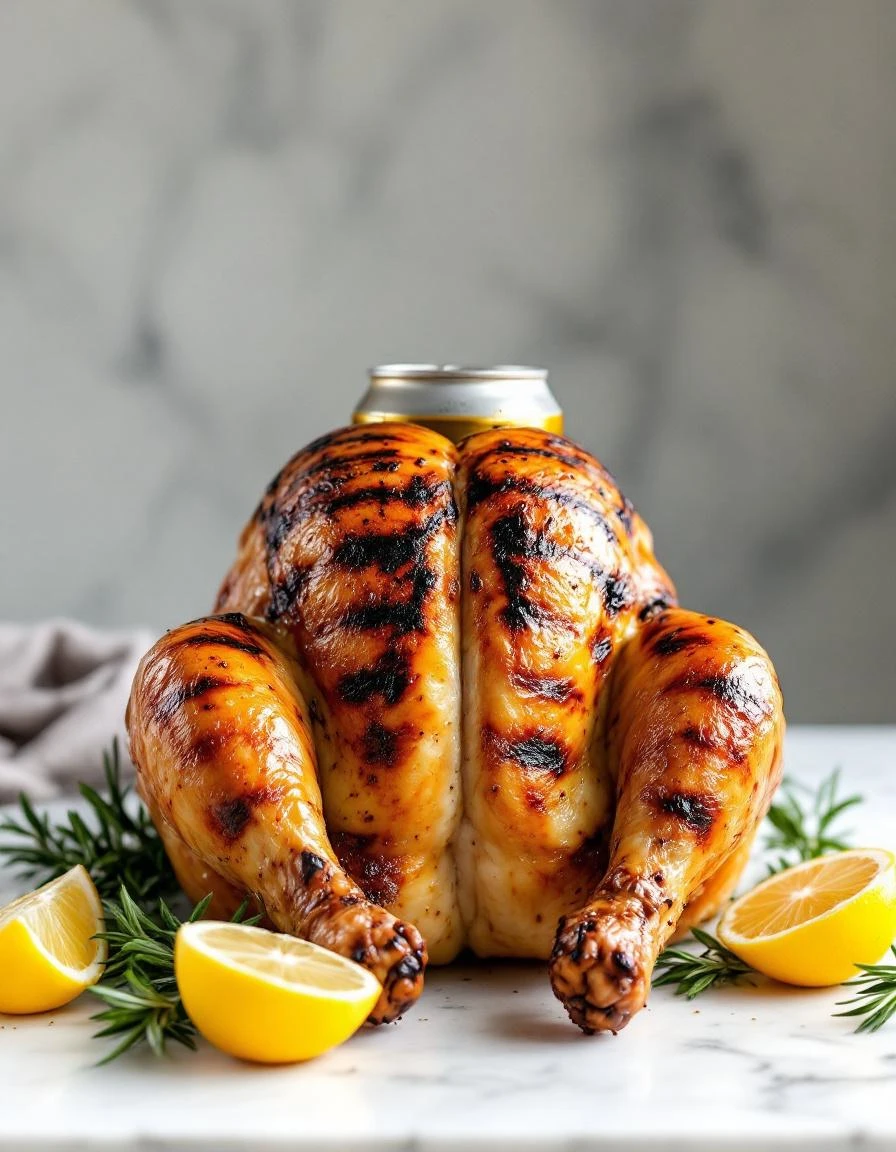
Grilled Beer-Can Whole Chicken
Ingredients
Equipment
Method
- Preheat your grill to medium-high heat, aiming for around 375°F. While heating, prepare the chicken by removing any excess fat or skin, then pat it dry with paper towels—this helps achieve crispy skin.
- Rub the chicken all over with oil, then generously season with salt, pepper, paprika, garlic, and cayenne. Massage the spices into the skin and cavity, and stuff the lemon wedge inside the cavity for added flavor.
- Open the can of beer and drink or discard about a quarter of it—this prevents overflow during cooking. Place the chicken upright over the can, inserting the can into the cavity, ensuring the bird is stable and balanced.
- Brush the outside of the chicken with a little oil to promote crispness. Carefully transfer the bird onto the grill, positioning it upright over the heat source, and close the lid.
- Cook the chicken over indirect heat, maintaining a steady temperature. Listen for the crackling skin and sizzling juices; rotate or adjust the bird as needed to prevent flare-ups and ensure even cooking.
- Grill for about 60 minutes, or until the internal temperature reaches 165°F in the thickest part of the thigh. The skin should turn a deep golden brown and become crispy to the touch.
- Use tongs to carefully remove the chicken from the grill, placing it on a cutting board or platter. Let it rest for 10 minutes, allowing juices to redistribute and the skin to firm up.
- Gently lift the chicken off the can, observing the crispy skin and moist interior. Carve and serve immediately to enjoy the crackling skin and juicy meat.
Common Mistakes and How to Fix
- FORGOT to remove excess fat: Trim excess skin or fat to prevent flare-ups and smoky drips.
- DUMPED marinade too early: Wait for the skin to dry and develop a crispy exterior before roasting.
- OVER-TORCHED the skin: Keep an eye on the heat to avoid burning or overly blackened skin.
- MISSED internal temp: Use a thermometer, aiming for 165°F in the thickest part of the thigh.
Make-Ahead and Storage Tips
- You can prep the chicken (clean, season, and stuff) a day ahead—keeps things simple on the day of grilling.
- Refrigerate the seasoned bird uncovered for up to 24 hours; this helps dry out the skin for better crispness.
- The marinade or dry rub flavors intensify overnight, giving the meat a richer, more complex taste.
- Cooked chicken can be stored in the fridge for up to 3 days; reheat thoroughly until the skin is crackly again.
- Reheating in the oven at 350°F with a drizzle of oil helps restore crispness and keeps the meat juicy—use sensory cues to judge doneness.
- Avoid freezing the whole cooked chicken; freeze leftovers for up to 2 months, then reheat gently to prevent drying out.
FAQs
1. How does the skin become so crispy?
The smell of roasted chicken skin crackling over the hot grill is unmistakable—rich, slightly smoky, and inviting. When you bite in, the skin gives a satisfying crunch, releasing juices that are warm and savory on your tongue.
2. Why put a beer can inside the chicken?
Using a can of beer keeps the chicken moist and adds a subtle malty aroma. The liquid bubbles softly as it heats, steaming the bird from the inside out, while the outside crisps up with a golden hue.
3. Can I make this ahead of time?
Prepping the chicken the night before allows the rub to penetrate and the skin to dry out, making it extra crispy. Keep it uncovered in the fridge so the skin dries and the flavors deepen overnight.
4. What if the skin burns?
If the skin starts to burn or blacken too quickly, lower the heat or move the bird to a cooler part of the grill. This prevents bitter, charred bites and keeps the skin tender and flavorful.
5. How to reheat without losing crunch?
Reheat leftovers in an oven at 350°F, uncovered. The aroma of smoky, crispy skin will start to emerge as the exterior crisps up again, and the meat stays juicy inside.

I’m Mahek Manchanda, the curious heart behind Dramatically Stirring. Before this space existed, my life revolved around kitchens that were loud, demanding, and endlessly alive. I didn’t arrive at cooking through a single dramatic moment.