
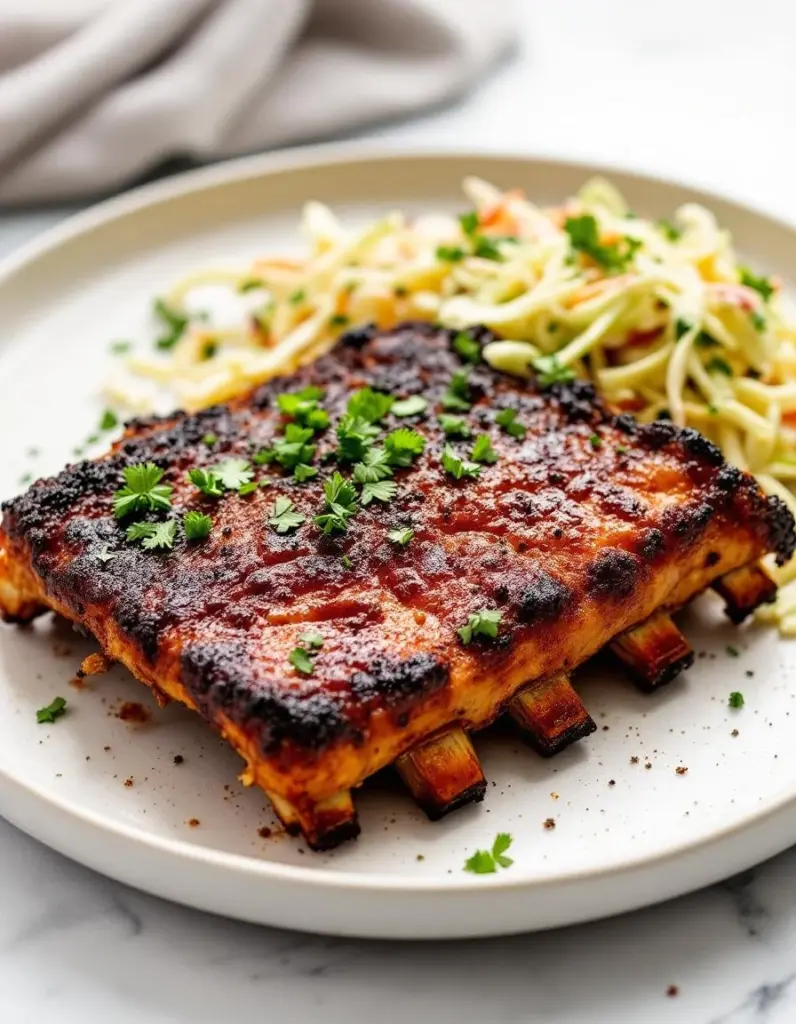
Getting these ribs from fridge to smoker means dealing with a thick, sticky layer of rub that clings to every curve. You’ll be scrubbing your hands and wiping down surfaces, getting ready for that slow, smoky burn. It’s messy but honest work, no shortcuts here.
As they cook, you’ll hear the crackle of bark forming, smell the deep, smoky aroma filling the air. When it’s time to eat, expect a satisfying bite that’s tender yet with a resistant chew, the kind that makes you want to chew again.
The crack of the bark as you bite into the ribs, the smoky aroma curling up with each chew.
Gotta Have These Ingredients
- Pork ribs: I like to use center-cut spare ribs for that meaty bite, but baby backs are leaner and easier to handle. The fat renders down to keep the meat juicy and tender, with a smoky aroma that fills the kitchen.
- Dry rub: A mix of salt, sugar, smoked paprika, garlic powder, and cayenne. I double the sugar for a caramelized bark, but you can cut back if you prefer less sweetness. The rub should feel gritty and clingy, smelling peppery and spicy.
- Wood chips: Hickory or apple wood—your call. Soak them for 30 minutes before tossing onto the coals. The smoke should be thick and fragrant, curling up and around the ribs, imparting that classic smoky flavor.
- Vinegar spray: A splash of apple cider vinegar in a spray bottle helps keep the meat moist during long sessions. It adds a bright tang that cuts through the richness, especially if you skip the sauce.
- Barbecue sauce (optional): Thick, sticky, sweet, and tangy. I prefer homemade, but store-bought works. Brush it on during the last 30 minutes for a glossy, caramelized glaze that crackles as it cools.
- Aluminum foil: Heavy-duty foil for wrapping the ribs halfway through to lock in moisture. Wrap tightly, then back in the smoker for tender, falling-off-the-bone bites. It’s the secret to that melt-in-your-mouth texture.
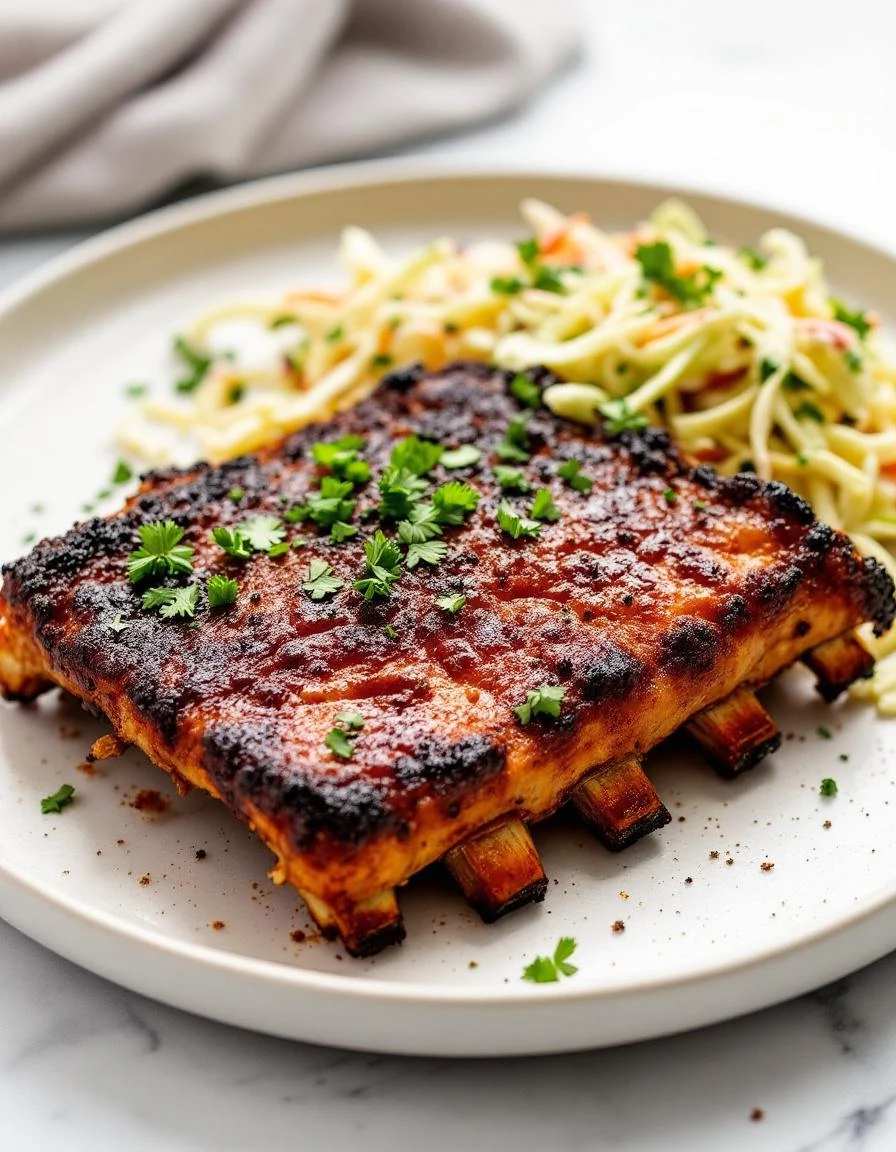
Smoked Pork Ribs with Classic Dry Rub
Ingredients
Equipment
Method
- Remove the thin membrane from the back of the ribs by slipping a paper towel underneath and peeling it off to ensure tender bites.
- Mix salt, brown sugar, smoked paprika, garlic powder, and cayenne pepper in a bowl until well combined to create the dry rub.
- Generously sprinkle the dry rub all over the ribs, pressing it into the meat so it clings evenly. Let the ribs sit at room temperature for 20 minutes to absorb flavors.
- Preheat your smoker or grill to about 225°F, and add soaked wood chips directly onto the coals or in the smoker box to produce thick, fragrant smoke.
- Place the ribs on the smoker grates, bone side down, and close the lid. Smoke for approximately 3 hours, spritzing with apple cider vinegar every hour to keep the meat moist and enhance smoky flavor.
- After 3 hours, wrap the ribs tightly in heavy-duty aluminum foil, adding a splash of vinegar inside before sealing, to lock in moisture. Return to the smoker and cook for another 2 hours.
- Carefully remove the foil-wrapped ribs from the smoker, and if desired, brush with barbecue sauce. Place them back on the grill or smoker for an additional 30 minutes to caramelize the glaze and develop a crispy bark.
- Once the ribs are glossy, fragrant, and have a crackling crust, remove them from the heat and let rest for 15 minutes to reabsorb juices.
- Slice the ribs between the bones with a sharp knife, revealing tender, smoky meat with a flavorful crust. Serve hot and enjoy the satisfying chew and aroma.
Common Mistakes and How to Fix Them
- FORGOT to remove the membrane: It causes tough bites. Use a paper towel to grip and peel.
- DUMPED too much wood chips at once: Creates overwhelming smoke. Add chips gradually for steady flavor.
- OVER-TORCHED the ribs: Leads to bitter, burnt crust. Keep an eye on your heat and smoke level.
- CANCELLED the resting period: Ribs need to rest 15-20 minutes post-cook to reabsorb juices.
Make-Ahead and Storage Tips
- Prepping the ribs a day ahead saves time; apply the dry rub, wrap tightly, and refrigerate for up to 24 hours. The flavors deepen and the surface firms up, making for easier smoking.
- The ribs can be smoked and stored in the fridge for 3-4 days. Keep them wrapped in foil or in an airtight container to retain moisture and smoky aroma.
- Freezing cooked ribs is fine for up to 2 months. Wrap tightly in plastic wrap and foil, then thaw overnight in the fridge before reheating.
- Flavors mellow and merge during storage. Expect a slightly richer smoky aroma after a day or two, but the meat may lose some of its initial juiciness.
- Reheat ribs slowly in the oven at 275°F, wrapped in foil. Check for a warm, tender bite and a slight crackle on the surface—avoid overheating to prevent drying out.
FAQs
1. How does the smoke influence the flavor?
The smoky aroma fills your nose as you lift the lid, and the tender meat gives a satisfying, resistant chew. Expect a rich, porky flavor that lingers on your tongue, with a hint of charred bark crackling as you bite.
2. What texture should I aim for?
The ribs should feel firm yet give slightly when pressed, with a juicy, almost melt-in-your-mouth texture. You’ll notice a smoky, savory scent that makes your mouth water before the first bite.
3. How do I know when they’re done?
Use a sharp knife to cut through the bark and meat. You’ll hear a gentle crunch of caramelized rub, then see juicy pink smoke ring around the edges, with tender meat ready to pull apart.
4. How should I reheat leftovers?
Reheat in a low oven, wrapped in foil, until the meat is warm and the bark crackles slightly under your fingertips. The aroma should be inviting, with a hint of smoky sweetness wafting up.
5. Can I prepare these ahead?
Yes, the rub and smoke flavor deepen after resting. The meat becomes more tender, and the smoky aroma intensifies, making each bite richer and more satisfying as the juices settle.

I’m Mahek Manchanda, the curious heart behind Dramatically Stirring. Before this space existed, my life revolved around kitchens that were loud, demanding, and endlessly alive. I didn’t arrive at cooking through a single dramatic moment.