
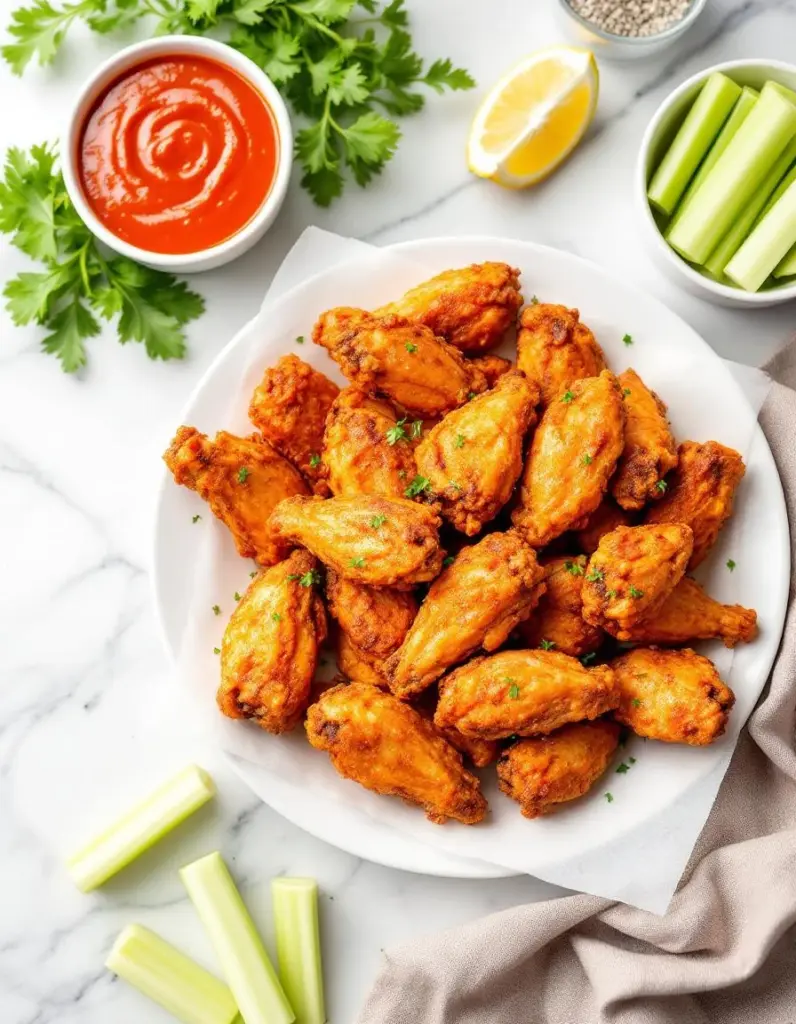
Frying these wings means standing over hot oil, hearing that sizzle as they hit the pan, and fighting the urge to toss them before they get that perfect golden crust. It’s a hands-on, messy process, with oil splatters and time spent flipping each piece for even crispness.
Once out, they’re coated in a sticky, spicy sauce that clings to every nook and cranny. You end up with fingers coated in fiery red and sauce that drips down your wrist, making the messy part unavoidable and part of the charm.
the satisfying crunch of crispy skin giving way to tender, juicy meat inside, with each bite echoing the messy, flavorful coating that clings to your fingers.
What goes into this dish
- Chicken wings: I favor fresh, skin-on wings for the crispy skin and juicy meat; if frozen, thaw thoroughly first or the skin won’t crisp up right. Skip the skinless for that crunch.
- Hot sauce: I use Frank’s because it’s vinegary and bright, but Sriracha or homemade buffalo sauce work if you want a different kick—just watch the heat level and acidity.
- Butter: I melt unsalted butter for richness, but olive oil can be a lighter alternative if you’re watching calories or just don’t keep butter handy; it won’t have that same sheen though.
- Vinegar: I add a splash of white vinegar for tang, but apple cider vinegar gives a slightly sweeter, fruitier note—skip it if you prefer a milder sauce.
- Garlic powder: I rely on garlic powder for convenience and intense flavor, but fresh minced garlic gives a more pungent, aromatic punch—add it in during the sauce simmer.
- Celery sticks: I serve with crisp, cold celery for crunch and a cooling contrast; if you don’t have it, cucumber or carrot sticks are fine but less traditional.
- Salt and pepper: I season the wings before frying and at the end for balance. Adjust the salt to taste—be careful not to oversalt if your sauce is already salty.
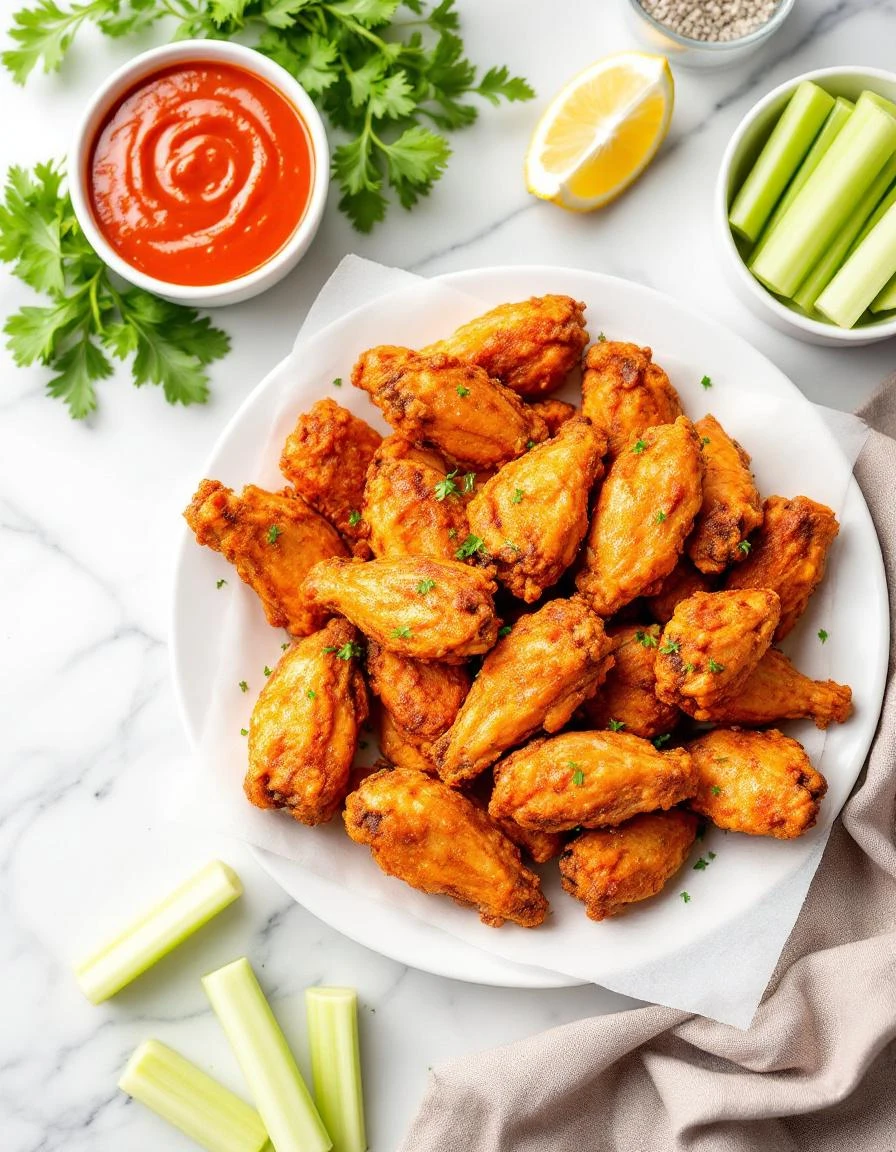
Crispy Buffalo Chicken Wings
Ingredients
Equipment
Method
- Pat the chicken wings dry thoroughly with paper towels to remove excess moisture, which helps achieve crispy skin during frying.
- In a large mixing bowl, combine the flour, salt, and black pepper. Toss the wings in this mixture until evenly coated; this creates a flavorful, crispy exterior.
- Heat the oil in your deep fryer or heavy-bottomed pot over medium-high heat until it reaches about 375°F (190°C). Carefully lower the wings into the hot oil, working in batches if necessary to avoid overcrowding.
- Fry the wings for about 8-10 minutes, turning occasionally with tongs, until they’re golden brown and crispy. The sizzling sound will mellow as they cook and the aroma of fried chicken will fill your kitchen.
- Use tongs to remove the wings from the oil, and set them on a paper towel-lined plate to drain any excess oil.
- In a small saucepan, melt the butter over low heat, then whisk in the hot sauce, white vinegar, and garlic powder until smooth and well combined. Bring to a gentle simmer for 1-2 minutes, then remove from heat.
- Place the crispy wings in a large mixing bowl, pour the spicy sauce over them, and toss gently to coat each piece evenly with the fiery, sticky sauce.
- Slice the celery sticks into sticks and serve them alongside the sauced wings for a refreshing crunch and cooling contrast.
- Arrange the coated wings on a platter, sprinkle with additional salt and pepper if desired, and serve immediately for maximum crunch and flavor.
Common mistakes and how to fix them
- FORGOT to dry wings thoroughly, resulting in soggy skin; fix by patting dry with paper towels before frying.
- DUMPED sauce directly on hot wings, causing splatters; fix by tossing gently in a large bowl.
- OVER-TORCHED the sauce or wings, leading to burnt flavor; fix by controlling heat and monitoring closely.
- MISSED seasoning step before frying, resulting in bland wings; fix by seasoning wings generously before cooking.
Make-Ahead and Storage Tips
- You can prep the wings a day ahead—dry and season them, then keep covered in the fridge for up to 24 hours. No need to season too early if frying soon after.
- Sauces can be made a day in advance; store in an airtight container in the fridge for up to 2 days. Reheat gently on the stove, stirring occasionally, until warm and bubbling.
- Frozen wings are best cooked within 3 months; thaw thoroughly in the fridge overnight for even crispness. Avoid refreezing once thawed.
- The spicy, tangy sauce tastes even better after a day—flavors meld and intensify. Just reheat and toss with wings right before serving.
- Reheating wings in the oven or air fryer keeps the crispness intact. Cook at 375°F for 8-10 minutes, checking for that satisfying crunch, with a smoky aroma rising as they heat.
FAQs
1. What do buffalo wings taste like?
Buffalo wings are spicy and tangy, with a vinegary kick that hits the back of your throat, balanced by the richness of butter and crispy skin. The texture is crispy outside, tender inside, with a smoky aroma from the hot sauce.
2. Can I use frozen wings?
Use fresh chicken wings for maximum crunch. If frozen, thaw completely—wet wings won’t crisp up well. For sauce, Frank’s hot sauce is classic, but Sriracha or homemade can add different spice layers.
3. How do I reheat leftovers?
Reheat wings in the oven or air fryer at 375°F for about 8-10 minutes. Expect that satisfying crackle as the skin re-crisps and the aroma of spice and butter intensifies.
4. Should I sauce the wings hot or cooled?
Don’t toss the wings in sauce immediately after frying—let them rest for a minute to avoid sogginess. Gently toss in sauce to keep that crispy bite intact.
5. Can I make the sauce in advance?
The sauce is best made fresh but can be prepared a day ahead. Keep it covered in the fridge. Reheat gently and stir before tossing with wings for maximum flavor and aroma.

I’m Mahek Manchanda, the curious heart behind Dramatically Stirring. Before this space existed, my life revolved around kitchens that were loud, demanding, and endlessly alive. I didn’t arrive at cooking through a single dramatic moment.