
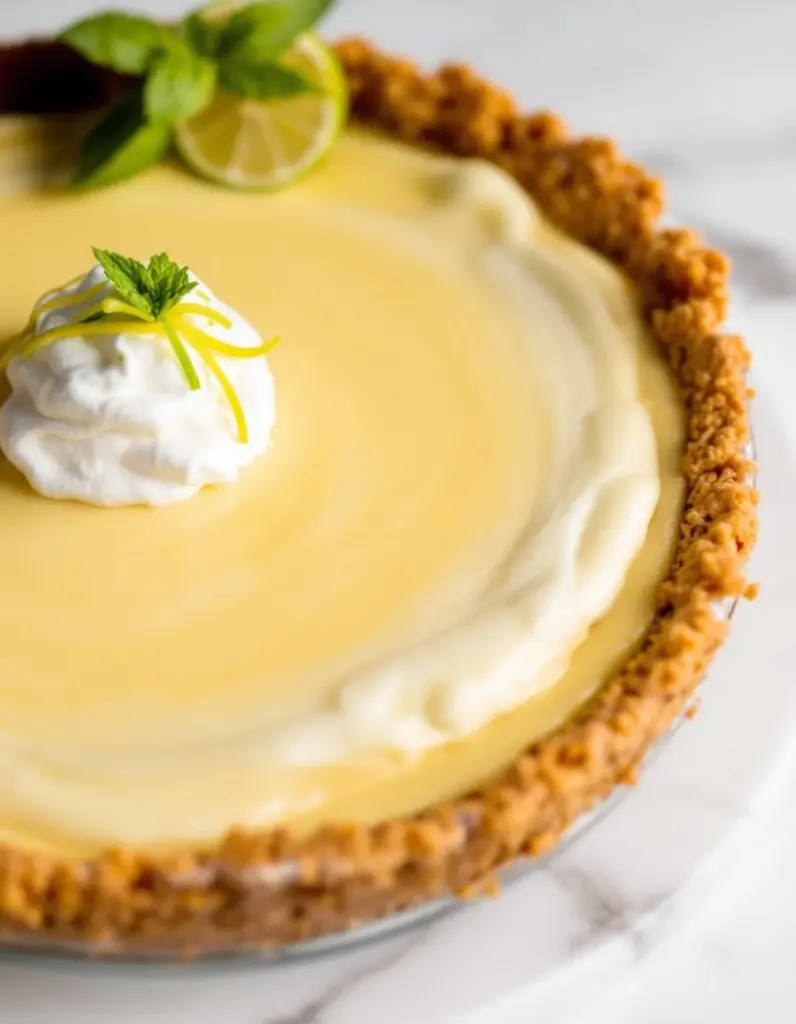
The first thing I do is crack open the can of sweetened condensed milk, feeling the sticky warmth as I pour it into the bowl. The sharp scent of lime zest hits me as I grate it, all while the tart, bright juice waits in a glass beside it.
Mixing the filling, I squeeze the limes over a fine sieve, watching the juice stream in and catch the pulp. The tang hits my nose as I stir, the texture thickening and turning slightly glossy, ready to pour into the crust.
the initial crack of the graham cracker crust as I press it into the pan, feeling the crumbs give way and settle, a satisfying sound that promises a sturdy base for that tart, tangy filling.
What goes into this dish
- Graham cracker crumbs: I crush them by hand, feeling the gritty texture, then press into the pan. Swap for digestive biscuits if you want a milder sweetness, but skip the smoky flavor of graham if you prefer lighter crust.
- Sweetened condensed milk: This creamy, sticky stuff is the backbone, bringing richness and sweetness. If out, try evaporated milk plus sugar, but expect a thinner, less luscious filling.
- Key limes: Their bright, almost floral aroma hits me as I zest and juice. Use regular limes if unavailable, but the filling won’t have the same vivid tartness or that signature aroma.
- Egg yolks: Whisk them in to give the filling body and a silky texture. For a vegan version, try coconut milk with a cornstarch slurry; it won’t set quite the same, but still tasty.
- Key lime juice: I squeeze until my hands sting, bright and tangy with a hint of bitterness. Lemon juice can work in a pinch, but it’s missing that punch of authentic lime zest’s aroma.
- Optional: Lime zest: Adds a fragrant, almost piney brightness. Skip if you’re out, but the filling might lack that intense citrus aroma and layered tartness.
- Salt: Just a pinch to balance the sweetness and enhance the lime’s vibrancy. Use sea salt for a cleaner taste, or omit if you’re going for a minimalist flavor profile.
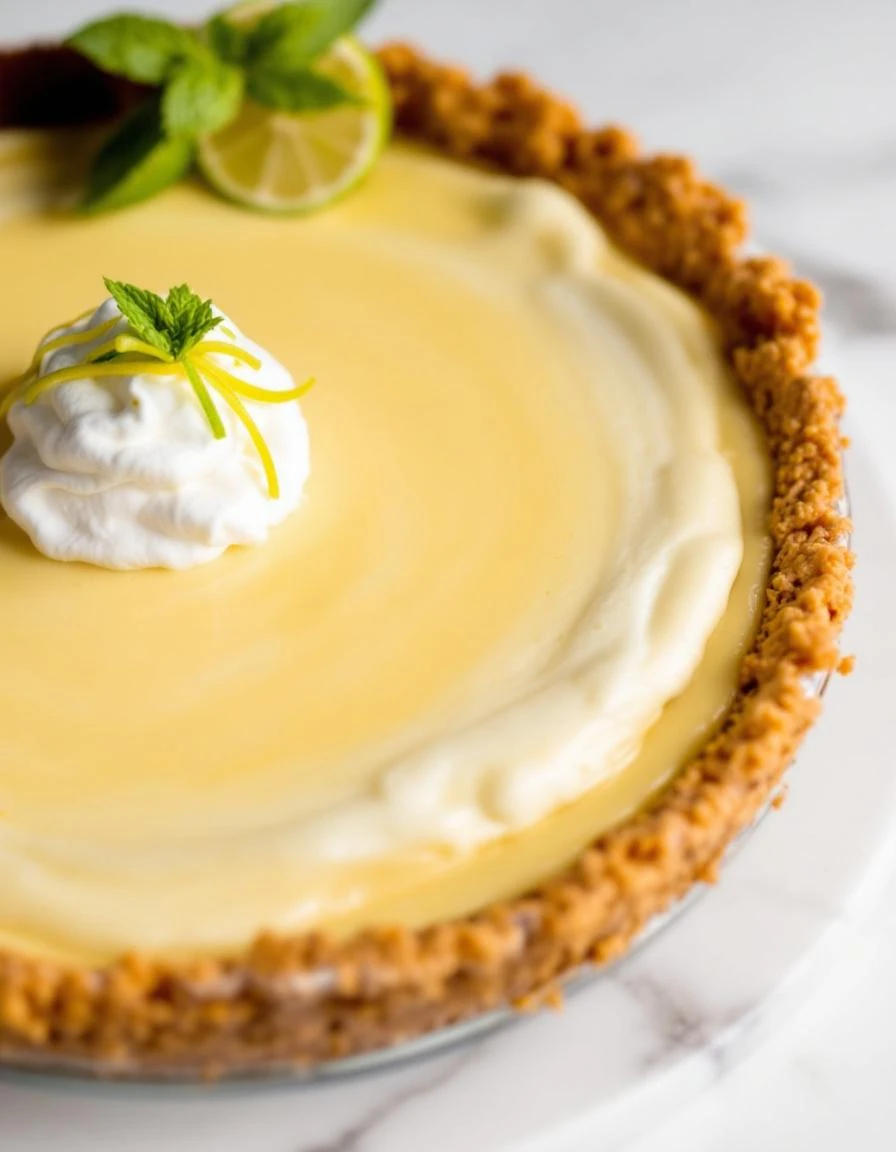
Key Lime Pie
Ingredients
Equipment
Method
- Combine the graham cracker crumbs, sugar, and a pinch of salt in a bowl, then pour in the melted butter. Mix until the crumbs are evenly coated and resemble wet sand.
- Press the crumb mixture firmly into the bottom and up the sides of a pie pan, creating an even crust. Use the back of a spoon to smooth the surface, then refrigerate for 15 minutes to firm up.
- Preheat your oven to 350°F (175°C). Bake the crust for about 8-10 minutes until it’s golden and fragrant, then let it cool completely.
- While the crust cools, grate the lime zest and set aside. Squeeze the lime juice through a fine sieve to catch the pulp, ensuring a smooth, bright liquid.
- In a mixing bowl, whisk the egg yolks until smooth and slightly thickened. Slowly add the sweetened condensed milk, whisking continuously to combine.
- Gradually pour in the lime juice while whisking, watching the mixture thicken and turn a pale, glossy yellow. Add lime zest and stir well.
- Pour the lime filling into the cooled crust, smoothing the top with a spatula. Tap the pan lightly on the counter to remove air bubbles.
- Bake the pie at 350°F (175°C) for 8-10 minutes until the filling is set but still slightly wobbly in the center. Let it cool at room temperature for 30 minutes.
- Refrigerate the pie for at least 4 hours or overnight to allow the filling to fully set and develop its tart flavor.
- Slice the pie with a sharp knife, serve chilled, and enjoy the vibrant, creamy texture topped with a hint of lime zest or whipped cream if desired.
Common mistakes and how to fix them
- FORGOT to chill the crust: It’ll crumble when pressed; fix by refrigerating for 30 minutes before pressing.
- DUMPED the lime juice: It loses brightness; add it gradually and taste for that sharp, fresh punch.
- OVER-TORCHED the crust edges: They turn bitter; shield with foil or check oven early to prevent burning.
- MISSED the filling’s setting point: It stays runny; bake a few minutes longer or chill until fully firm.
Make-Ahead and Storage Tips
- Prepare the crust and bake it a day ahead; it firms up better overnight in the fridge.
- Filling can be made a day in advance; keep it covered in the fridge for up to 24 hours, flavors mellow and meld.
- Pie tastes best after chilling at least 4 hours, but overnight is ideal for fully setting the filling.
- Freezing the assembled pie for up to 2 months works; thaw in the fridge overnight before serving.
- Refrigerate leftovers for up to 3 days; the filling may soften slightly, but the bright lime flavor persists.
- When reheating, serve cold or let it sit at room temp for 15 minutes to soften the crust and enhance aroma.
FAQs
1. Can I use bottled lime juice?
Bolded short questions cut straight to the point. Answers are plain, practical, and sensory-aware, focusing on real-world tips and tricks.
2. How do I know when the pie is set?
Yes, but fresh lime juice adds a sharp, bright aroma and a more authentic tartness that bottled juice can’t match.
3. Can I make this gluten-free?
The filling should be firm to the touch and slightly wobbly in the center, like a loose jelly that’s just about to firm up.
4. What if my crust is soggy?
Use gluten-free graham crackers or digestive biscuits for the crust, and ensure any thickener in the filling is gluten-free.
5. How long can I store leftover pie?
Bake the crust longer or at a slightly higher temperature, and let it cool completely before adding the filling.

I’m Mahek Manchanda, the curious heart behind Dramatically Stirring. Before this space existed, my life revolved around kitchens that were loud, demanding, and endlessly alive. I didn’t arrive at cooking through a single dramatic moment.