
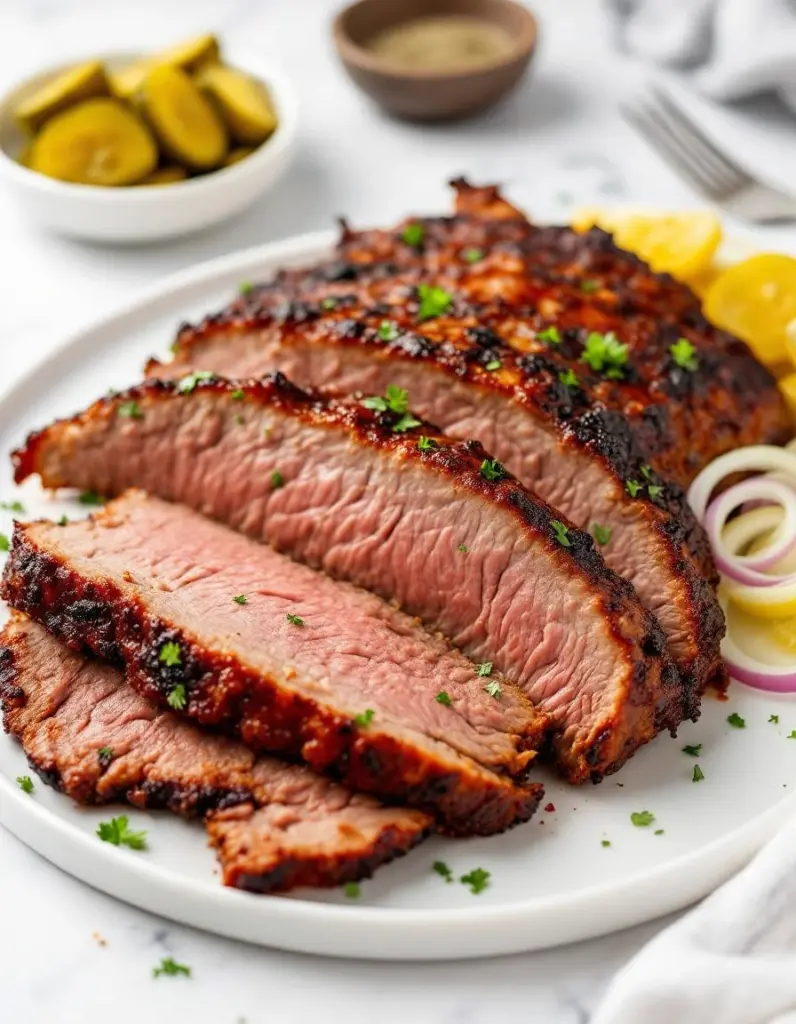
Searing a thick layer of fat on the brisket’s surface, I hear it sizzle and crackle as it hits the hot smoker. It’s a messy, greasy process—brush off the drips, keep your workspace ready for splatters.
Watching the smoke curl around the meat, I keep an eye on the temperature and the bark forming. Every hour, I spritz it with a vinegar-based mix to keep the surface moist and flavorful, fighting the dry heat.
Listening to the crackle of the fat cap as it renders, the sound echoing in the quiet smoker—it’s the real start of the smoke’s magic.
What goes into this dish
- Packer’s choice brisket: I go for a well-marbled cut, the fat melts into the meat during smoking, creating that rich, juicy bite. If you prefer leaner, trim some fat, but you might lose a bit of that melt-in-your-mouth quality.
- Wood chips: Hickory or oak are my go-tos for that deep, smoky aroma that lingers. If you want a milder smoke, switch to fruit woods like apple or cherry, but don’t skip soaking them first—smoke loves moisture.
- Rub spices: A simple mix of salt, pepper, paprika, and garlic powder gives a bold bark. Add a touch of cayenne if you like a hint of heat, or swap in cumin for earthiness—just keep it balanced.
- Vinegar spritz: I use apple cider vinegar diluted with water to keep the surface moist and punch up the flavor. Skip it if you prefer a drier bark, but your crust might turn less glossy and a little drier.
- Beef broth or apple juice: I mop with a mixture to add moisture and a subtle sweetness. If you want a more intense smoky flavor, go heavier on the broth; for milder, use less and focus on the smoke.
- Salt for curing: I season generously, letting the salt penetrate overnight. If you’re short on time, a quick rub still works, but the flavor won’t be as deep or evenly distributed.
- Optional: chili flakes or brown sugar: I sprinkle these for a sweet-spicy contrast, especially if I want a more complex bark. Skip if you’re not into bold flavors, but don’t skip the sugar entirely—it balances the smoke.
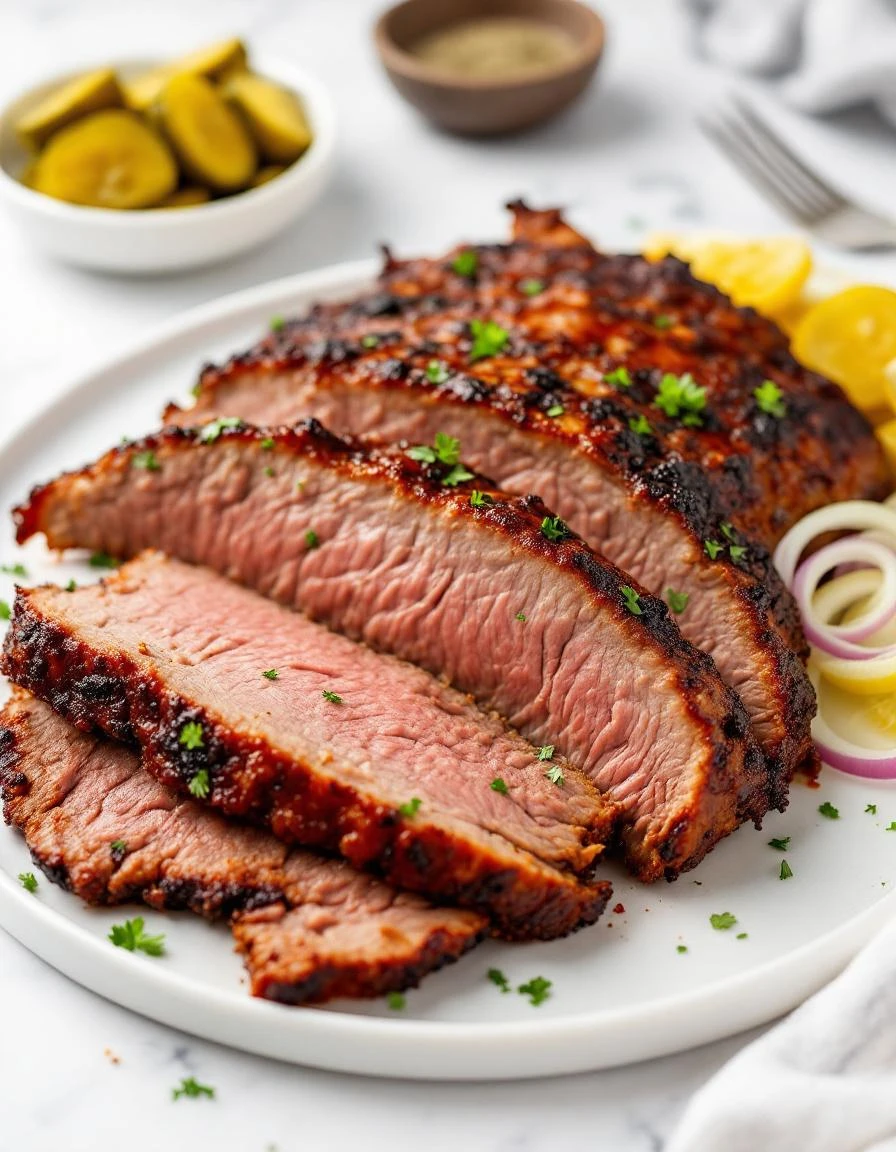
Smoked Beef Brisket
Ingredients
Equipment
Method
- Begin by trimming the brisket, leaving a thick fat cap to promote flavor and moisture during smoking.
- Mix together salt, pepper, paprika, and garlic powder to create your dry rub. Generously apply it all over the brisket, pressing into the meat for even coverage.
- Place the brisket on a rack, cover, and let it rest in the refrigerator for at least an hour or overnight for deeper flavor.
- Preheat your smoker to 225°F, then soak the wood chips in water for about 30 minutes before adding them to your heat source.
- Place the brisket fat side up on the smoker grate, insert a meat thermometer, and begin smoking, maintaining steady temperature.
- Every hour, spritz the brisket with a mixture of diluted apple cider vinegar to keep the surface moist and help develop a glossy crust.
- Monitor the internal temperature, aiming for around 165°F before wrapping in foil or butcher paper to continue cooking.
- Once the brisket reaches about 195-205°F, carefully remove it from the smoker and let it rest, wrapped loosely in foil, for at least 30 minutes to allow the juices to redistribute.
- Unwrap the brisket and slice against the grain, revealing a tender, juicy interior with a flavorful bark.
- Serve the brisket slices with your preferred sides, enjoying the smoky aroma and melt-in-your-mouth texture.
Common Mistakes and How to Fix Them
- FORGOT to keep the smoker temperature steady → Use a reliable thermometer and check regularly.
- DUMPED the marinade or rub too early → Let the meat rest with rub at least an hour before smoking.
- OVER-TORCHED the bark → Wrap the brisket in foil earlier if it darkens too quickly.
- MISSED resting time → Rest the brisket at least 30 minutes to let juices redistribute.
Make-Ahead and Storage Tips
- You can smoke the brisket a day ahead. Once cooled, wrap it tightly in foil or butcher paper and refrigerate for up to 3 days.
- For longer storage, freeze the brisket wrapped in plastic wrap and foil—up to 2 months without significant flavor loss.
- Reheat slowly in a low oven (around 250°F). Cover with foil to retain moisture and prevent drying out.
- Expect some flavor mellowing after refrigeration. A quick re-season or spritz before reheating can restore some of the original punch.
- Let the brisket come to room temperature before reheating to ensure even heating and maintain tenderness.
FAQs
1. How does smoked brisket smell and feel?
The smoke flavor hits your nose first—deep, earthy, with a hint of charred wood. The brisket itself feels tender, almost melting, with a smoky crust that crackles when you bite into it.
2. What should I expect in texture and aroma?
It’s a complex aroma of hickory smoke, mingled with savory-spiced meat. The bark has a slightly sticky, crisp texture, giving way to juicy, tender meat that resists the fork at first bite.
3. How do I prevent the bark from burning?
Use a reliable thermometer to monitor the smoker’s temp, aiming for around 225°F. If the bark darkens too quickly, wrap it in foil—this stops the burn, keeps the moisture in, and still lets the smoke do its thing.
4. Why is resting the brisket important?
Let the brisket rest wrapped in foil or butcher paper for at least 30 minutes after smoking. This relaxes the fibers, keeps the juices in, and improves flavor with every bite.
5. How should I reheat leftover brisket?
Reheat slowly in a low oven, around 250°F, covered with foil. Check every 15 minutes—watch for it to heat through, smelling warm and smoky, with a slight sheen of juices reappearing on the surface.

I’m Mahek Manchanda, the curious heart behind Dramatically Stirring. Before this space existed, my life revolved around kitchens that were loud, demanding, and endlessly alive. I didn’t arrive at cooking through a single dramatic moment.