
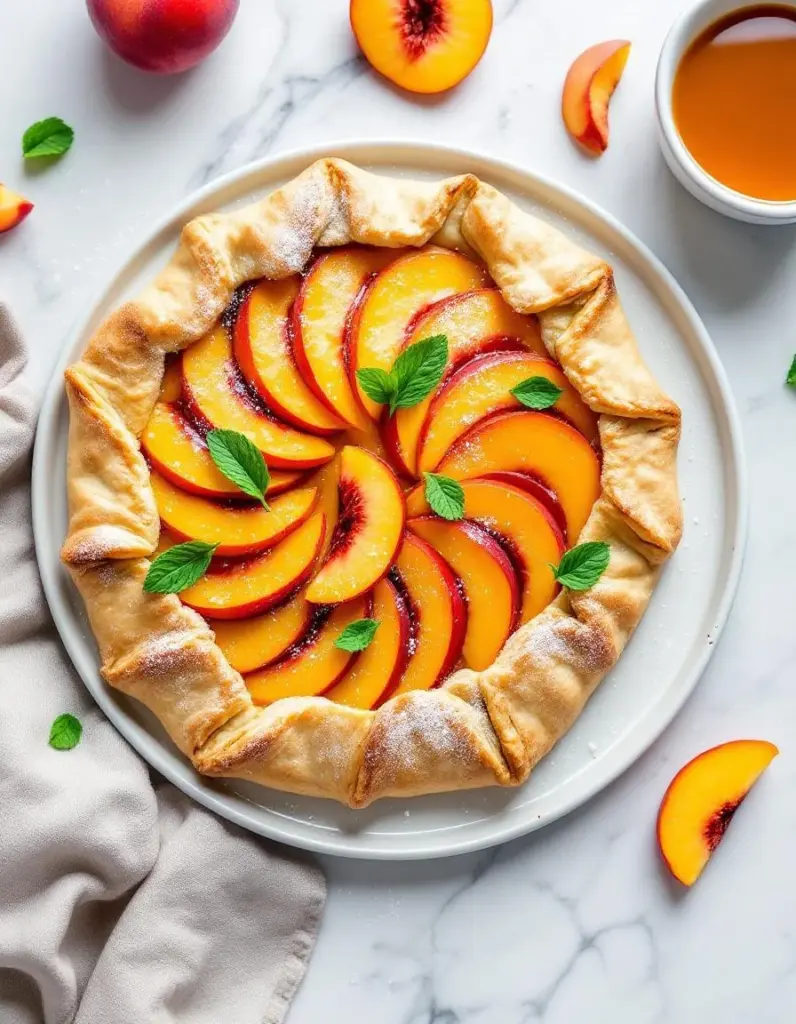
Making a peach galette is all about that messy, hands-on prep—rolling dough, pinching edges, and trying not to get sticky peach juice everywhere. The crust feels flaky and slightly rough under your fingertips as you fold it around the fruit, no perfect edges required.
Once it’s in the oven, you’ll hear that gentle bubbling from the peaches and the crackling of the crust turning golden. It’s a slow, noisy process that demands your attention, but the scent of baked fruit and butter fills the kitchen, signaling it’s almost ready.
the satisfying crunch of the flaky crust as you cut into the warm galette, the slight crackle and crumble under your knife, revealing the tender, juicy peaches inside.
What goes into this dish
- Peach: Juicy, fragrant, a bit fuzzy—make sure they’re ripe but firm. Swap in nectarines if peaches aren’t in season, but expect a slightly different aroma and sweetness.
- Flour: I use all-purpose for the crust, it’s reliable and easy to work with. You can try pastry flour for a more tender crust, but don’t skip the chill time to keep it flaky.
- Butter: Cold, cubed butter makes the crust flaky and rich. If you’re out, a solid vegetable shortening can work, but the crust won’t have quite the same buttery snap.
- Sugar: A sprinkle of coarse sugar on top adds crunch and sweetness. Use brown sugar for a deeper, caramel note, or skip it for a less sweet, more fruit-forward galette.
- Lemon juice: A splash brightens the peaches and keeps them from browning. Lime juice is a good substitute if lemon’s missing, but avoid vinegar—it’s too sharp.
- Egg wash: Beaten egg brushed on the crust gives that shiny, golden finish. Milk or cream can work in a pinch, but it won’t give quite the same color or gloss.
- Optional: Almond extract or vanilla: just a hint enhances the fruit’s aroma. Skip if you want a more straightforward peach flavor, but a little extra warmth never hurts.
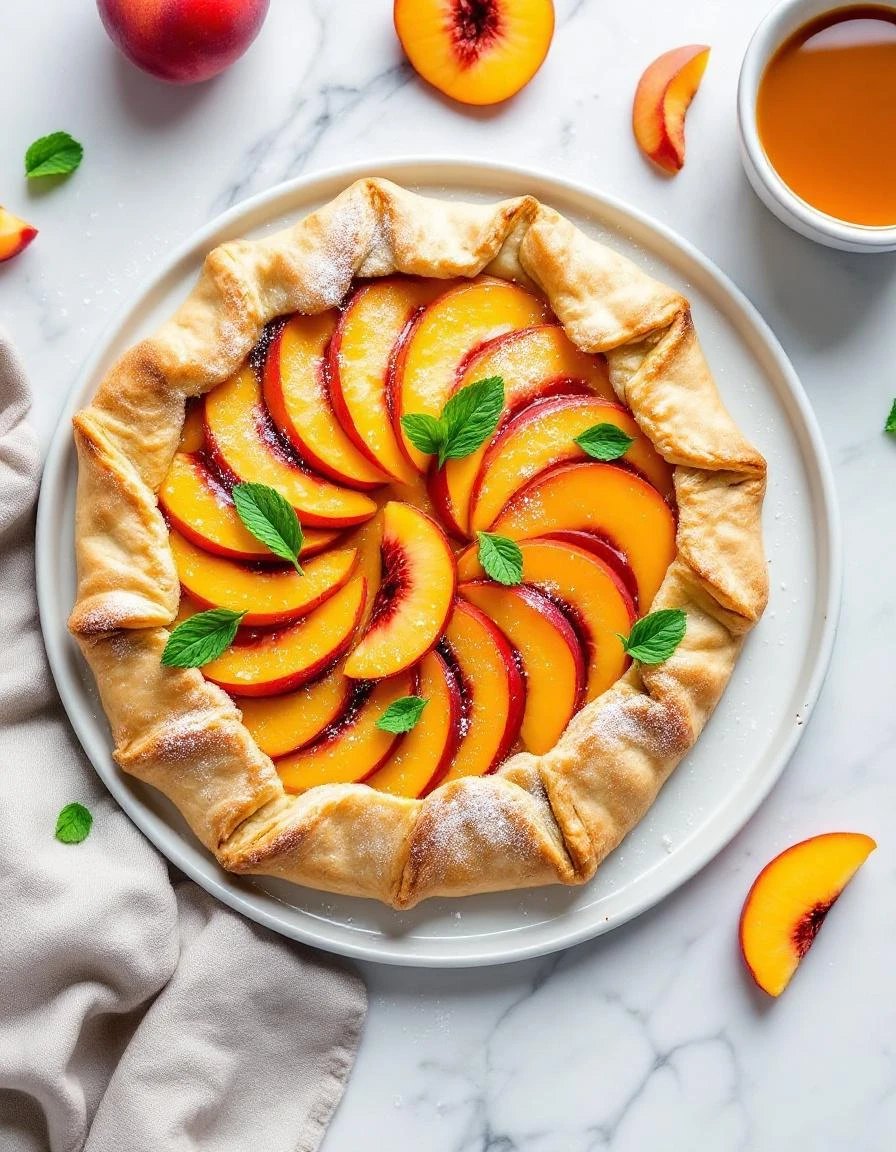
Peach Galette
Ingredients
Equipment
Method
- In a mixing bowl, combine the flour and a pinch of salt, then add the cold, cubed butter. Use your fingertips or a pastry cutter to work the butter into the flour until the mixture resembles coarse crumbs with some pea-sized pieces.
- Pour in the vanilla extract and lemon juice, then add cold water a tablespoon at a time, mixing gently until the dough just comes together. Be careful not to overwork it; the dough should be crumbly but hold when pressed.
- Gather the dough into a ball, flatten into a disk, wrap tightly in plastic wrap, and chill in the fridge for at least 1 hour. This helps relax the gluten and keeps the crust flaky.
- While the dough chills, prepare the peaches by slicing them into thin wedges and tossing with lemon juice to brighten their flavor and prevent browning. Set aside.
- Preheat your oven to 400°F (200°C). Line a baking sheet with parchment paper to prevent sticking.
- Remove the chilled dough from the fridge and place it on a lightly floured surface. Roll it out into a roughly 12-inch circle, about 1/8 inch thick, with a floured rolling pin. The edges can be uneven for that rustic look.
- Transfer the rolled dough onto the prepared baking sheet. Arrange the sliced peaches in the center, leaving about a 2-inch border around the edges. Drizzle with vanilla extract if using.
- Fold the edges of the dough over the peaches, pleating as you go to create a freeform crust. The center will remain open, showcasing the fruit.
- Brush the crust with the beaten egg using a pastry brush, then sprinkle with coarse sugar for a crunchy, sweet finish.
- Bake the galette in the preheated oven until the crust is golden brown and bubbling around the edges, about 40 minutes. The aroma of baked fruit and butter will fill your kitchen.
- Remove from the oven and let cool slightly before slicing. The flaky crust will crackle as you cut, revealing the tender, juicy peaches inside. Serve warm or at room temperature and enjoy!
Common mistakes and how to fix them
- FORGOT to keep dough cold, resulting in a tough crust. FIX by chilling ingredients and dough thoroughly.
- DUMPED too much peach juice, making crust soggy. FIX by draining peaches and blotting excess juice.
- OVER-TORCHED the crust edges, causing bitterness. FIX by shielding edges with foil halfway through baking.
- FORGOT to preheat oven, delaying browning. FIX by setting oven at least 20 minutes before baking.
Make-Ahead and Storage Tips
- Peach slices: Prep the peaches ahead by slicing and tossing with lemon juice. Store in an airtight container in the fridge for up to 24 hours to keep them fresh and oozy when baked.
- Dough: Make the crust a day before, wrap tightly, and chill in the fridge for at least 1 hour or overnight. Freezing for up to a month works too—just thaw before rolling.
- Assembling: You can assemble the galette a few hours ahead, keep it refrigerated uncovered until ready to bake, which helps the crust stay crisp and flaky.
- Flavour development: Letting the assembled galette sit in the fridge for 30 minutes before baking allows the flavors to meld and the crust to relax, resulting in a more tender bite.
- Reheating: Warm leftovers in a low oven (around 300°F) until the crust is crisp and peaches are warm. Check for a gentle crackle and a fragrant, buttery aroma as signs it’s ready.
FAQs
1. How should I serve a peach galette?
Peach galette is best served warm or at room temperature, allowing the buttery crust and juicy peaches to shine. The aroma of baked fruit and caramelized sugar will fill your senses as you cut into it.
2. How do I pick good peaches?
Use ripe, fragrant peaches that give slightly under pressure but don’t feel mushy. Their natural scent should be sweet and floral, with a tender, juicy bite.
3. When is the galette done?
Bake until the crust is golden and crisp, with a gentle crackle when you cut into it. The peaches should be bubbling and oozy, with a sweet, caramelized aroma wafting up.
4. Can I make this ahead?
You can prepare the dough a day ahead and keep it chilled. Slice peaches and keep them in the fridge for up to 24 hours before assembly. Reheat leftovers in a low oven until the crust feels crispy and peaches warm.
5. What does perfect baking smell like?
Use a sharp knife to cut through the flaky crust, feeling the satisfying crunch with each slice. The peaches should smell bright and sweet, with a slight caramel edge when baked.

I’m Mahek Manchanda, the curious heart behind Dramatically Stirring. Before this space existed, my life revolved around kitchens that were loud, demanding, and endlessly alive. I didn’t arrive at cooking through a single dramatic moment.