
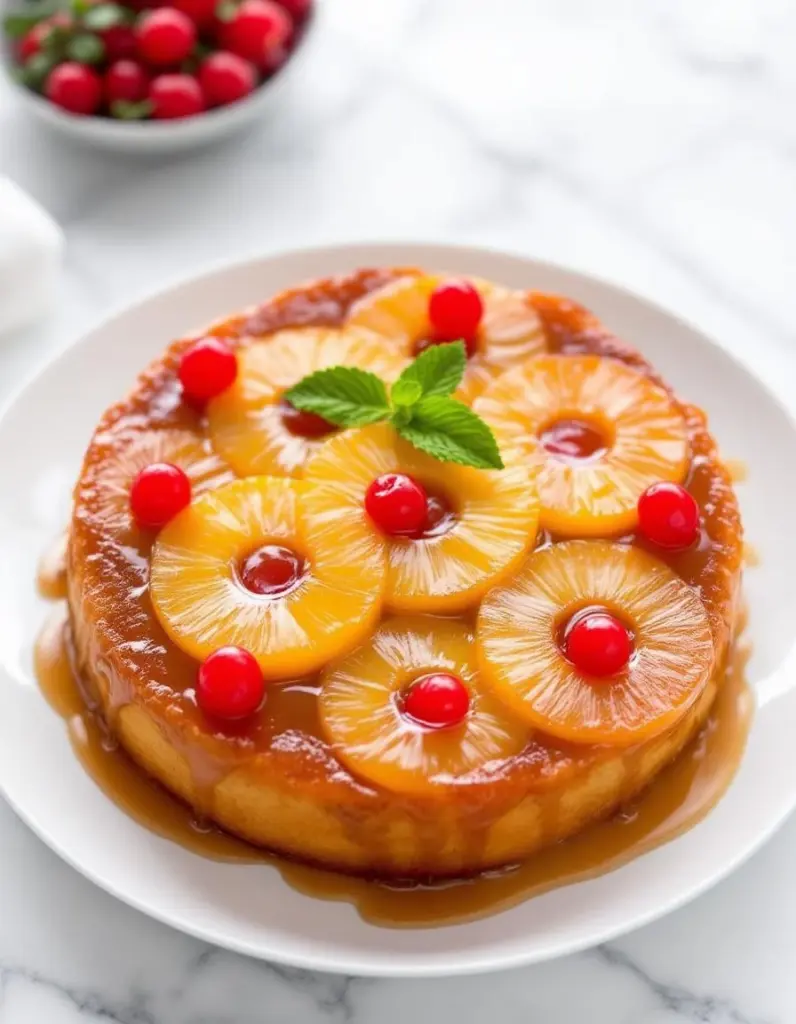
This cake starts with peeling back the foil and flipping that hot, sticky pineapple onto the batter, so get ready for a mess. The caramelized fruit sticks to the pan, so be gentle when flipping, and expect some syrup to drip.
Baking it involves a hot oven that makes the sugar bubble and brown, filling the kitchen with a sharp, toasted smell. Once out, the wait for it to cool and release from the pan is tense but worth it, revealing the glossy, caramel-topped pineapple.
The caramelized pineapple slices crackle softly as they hit the hot sugar, creating a satisfying sizzle and a sticky, smoky aroma that fills the kitchen.
What goes into this dish
- Brown sugar: I go heavy on the caramel layer, giving that rich, sticky sweetness that’s the backbone. Skip if you prefer less caramel, but it’s what makes the top shine and crackle when flipped.
- Pineapple slices: Fresh or canned, I like the juiciness and bright scent of ripe pineapple. If using canned, drain well—extra syrup can make the batter soggy. For a smoky twist, try grilling the slices first.
- Maraschino cherries: They add a pop of color and a hint of artificial sweetness. Swap for fresh cherries if you want real flavor, but then you miss the neon pop and that vintage vibe.
- Butter: I use plenty to help the sugar melt and turn golden. For a dairy-free version, coconut oil works but won’t caramelize quite the same, so watch the edges for a nutty aroma.
- Vanilla extract: Just a splash deepens the sweetness, balancing the caramel and pineapple. Skip if you’re out, but you’ll lose that warm scent that makes the cake feel cozy.
- Cake flour: I prefer cake flour for a tender crumb, but all-purpose works fine if you’re in a pinch. Just don’t overmix—tenderness depends on gentle folding.
- Eggs: They hold everything together, giving structure and moisture. For an egg-free take, applesauce or flaxseed can work, but the texture might get more dense and less fluffy.
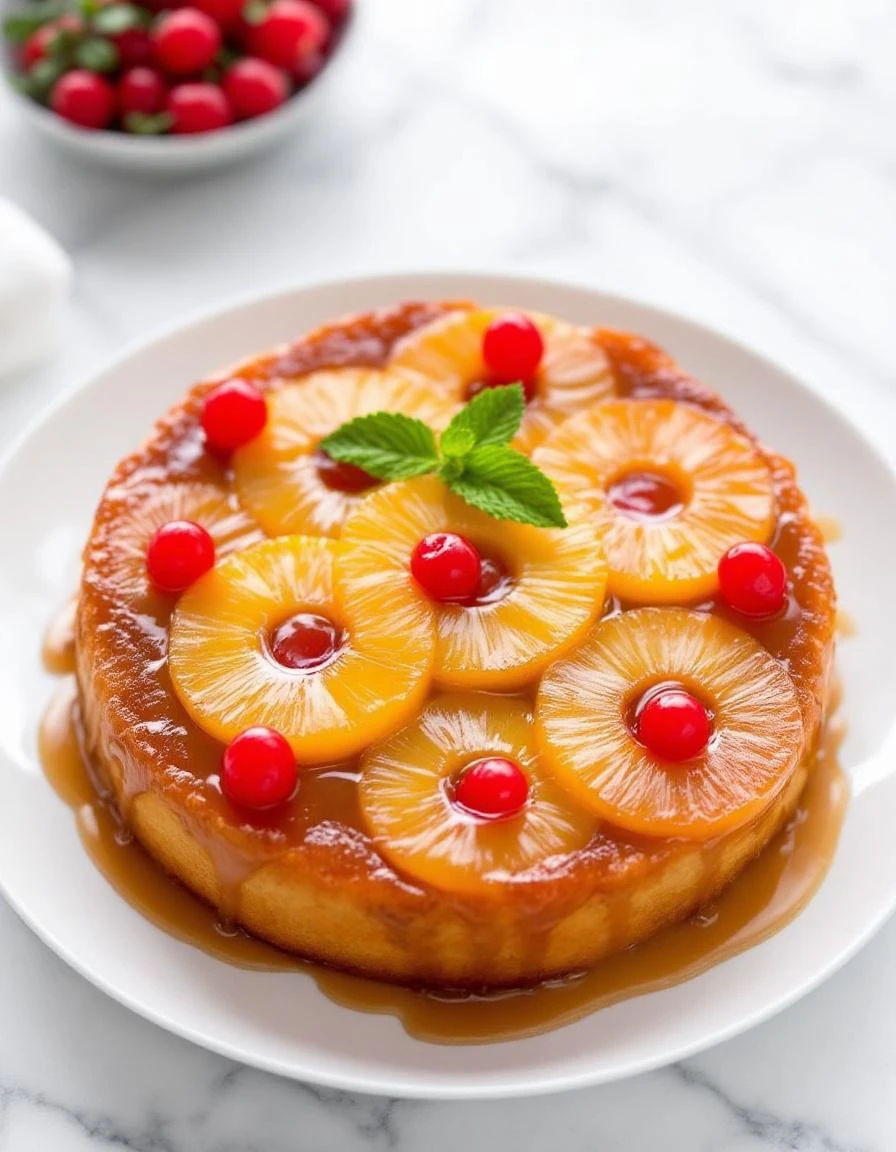
Caramelized Pineapple Upside-Down Cake
Ingredients
Equipment
Method
- Preheat your oven to 350°F (175°C). Melt butter in a 9-inch cake pan over low heat on the stove, then add brown sugar and stir until combined and bubbly. Spread the caramel evenly across the bottom of the pan.
- Arrange pineapple slices over the caramel layer in a single, snug layer, placing maraschino cherries in the centers if using. Carefully set the pan aside while you prepare the cake batter.
- In a mixing bowl, whisk together the cake flour, baking powder, and salt. In a separate bowl, beat the eggs, milk, and vanilla extract until well combined.
- Add the wet mixture to the dry ingredients and gently fold until just combined. Be careful not to overmix — the batter should be light and slightly fluffy.
- Pour the batter evenly over the pineapple slices in the pan, smoothing the top with a spatula. Place the pan in the oven and bake for about 40 minutes, or until the cake is golden and a toothpick inserted in the center comes out clean.
- Once baked, remove the cake from the oven and let it cool for about 10 minutes. Dipping the pan briefly in cold water around the edges can help loosen the caramel from the sides.
- Place a serving plate over the pan and carefully flip the cake in one confident motion. Gently lift the pan, revealing the caramelized pineapple topping with the glossy, crackling surface.
- Allow the cake to cool slightly before slicing. Serve warm or at room temperature, enjoying the sticky, caramelized fruit and tender cake beneath.
Common mistakes and how to fix them
- FORGOT to grease the pan: Use butter or parchment to prevent sticking, or the caramel will tear.
- DUMPED the pineapple too early: Wait for the caramel to set slightly for a cleaner flip.
- OVER-TORCHED the sugar: Keep an eye on the heat; burnt caramel adds bitterness, not flavor.
- MISSED the cooling step: Let the cake rest 10 minutes before flipping to avoid breakage.
Make-Ahead and Storage Tips
- Prepare the caramel and pineapple slices a day in advance; keep covered in the fridge overnight to deepen their flavor.
- The baked cake can be stored at room temperature for up to 24 hours or wrapped tightly and refrigerated for 2-3 days, which allows flavors to meld but may soften the pineapple a bit.
- Freezing the assembled cake (without flipping) for up to a month works well; thaw at room temperature before flipping and serving.
- Reheat slices gently in the oven at 300°F, watching for steam and softening, or microwave briefly until just warm—avoid overheating to keep the caramel from becoming too sticky.
FAQs
1. What does the caramelized pineapple feel like?
The pineapple slices crackle and release a sweet, smoky aroma as they hit the hot caramel, creating a satisfying crunch with a hint of charred sugar. When biting into the cake, the fruit is juicy and tender, contrasting the crisp top.
2. How do I handle different pineapple types?
If the pineapple is too watery, drain it thoroughly or pat dry to avoid soggy cake layers. Using fresh, ripe pineapple gives a brighter, juicier bite compared to canned, which can be more syrupy.
3. How do I know when it’s done?
Over-baking can turn the caramel bitter and harden the topping. Keep an eye on the edges for a golden hue and smell for that sweet, toasted scent—pull it out just before it darkens too much.
4. Any tips for flipping the cake?
Dipping the hot pan in cold water helps loosen the caramel from the sides. When flipping, do it swiftly and confidently to prevent the caramel from sticking or tearing apart.
5. How do I reheat leftovers?
Reheating in the oven at 300°F for about 10 minutes warms the cake evenly, softening the pineapple and reviving the caramel’s gooey texture. Listen for a gentle bubbling to know it’s ready.

I’m Mahek Manchanda, the curious heart behind Dramatically Stirring. Before this space existed, my life revolved around kitchens that were loud, demanding, and endlessly alive. I didn’t arrive at cooking through a single dramatic moment.