

Making gazpacho starts with a chaotic heap of tomatoes, cucumbers, and peppers on the cutting board. The sound of knife blades scraping against the rough skins, seeds squishing under pressure, and the splash of juices as everything gets chopped up is loud and messy.
Once everything’s in the blender, there’s a moment of quiet, then the whirring as the cold, chunky mixture turns into a smooth, pourable soup. You’ll need to taste and adjust the seasoning—sometimes a splash more vinegar, a pinch of salt—to get it just right.
The rough, gritty sound of chopping ripe tomatoes and cucumbers, the way the seeds pop and juice spills, and the messy splash of oil and vinegar mixing into the vibrant, chilled soup.
Essential Gazpacho Ingredients
- Ripe tomatoes: I go for deep red, slightly soft ones that squish easily and smell like summer. Swap for canned if fresh aren’t available, but fresh makes the soup brighter and juicier.
- Cucumbers: Crunchy, cool, and slightly watery—pick firm ones with a fresh scent. You can use English cucumbers for less seed, or zucchini if you want a milder flavor.
- Red bell peppers: Sweet, smoky, and bright—roast or leave raw for a crunch. Green peppers are a good substitute but add more bitterness, so balance with extra vinegar.
- Garlic: I use a couple of cloves, crushed until fragrant. Skip if you’re sensitive, but it adds a punch of sharpness that wakes up the entire bowl.
- Sherry vinegar: Bright, tangy, with a hint of sweetness—go for the real stuff, or lemon juice if you want a sharper bite. Skip the vinegar if you’re avoiding acidity.
- Olive oil: Good extra virgin, drizzle at the end for richness. If you’re out, a neutral oil can work, but it won’t have that fruity depth.
- Salt and pepper: Always taste first, then season. Kosher salt and freshly cracked pepper make a noticeable difference, but adjust to your taste buds.
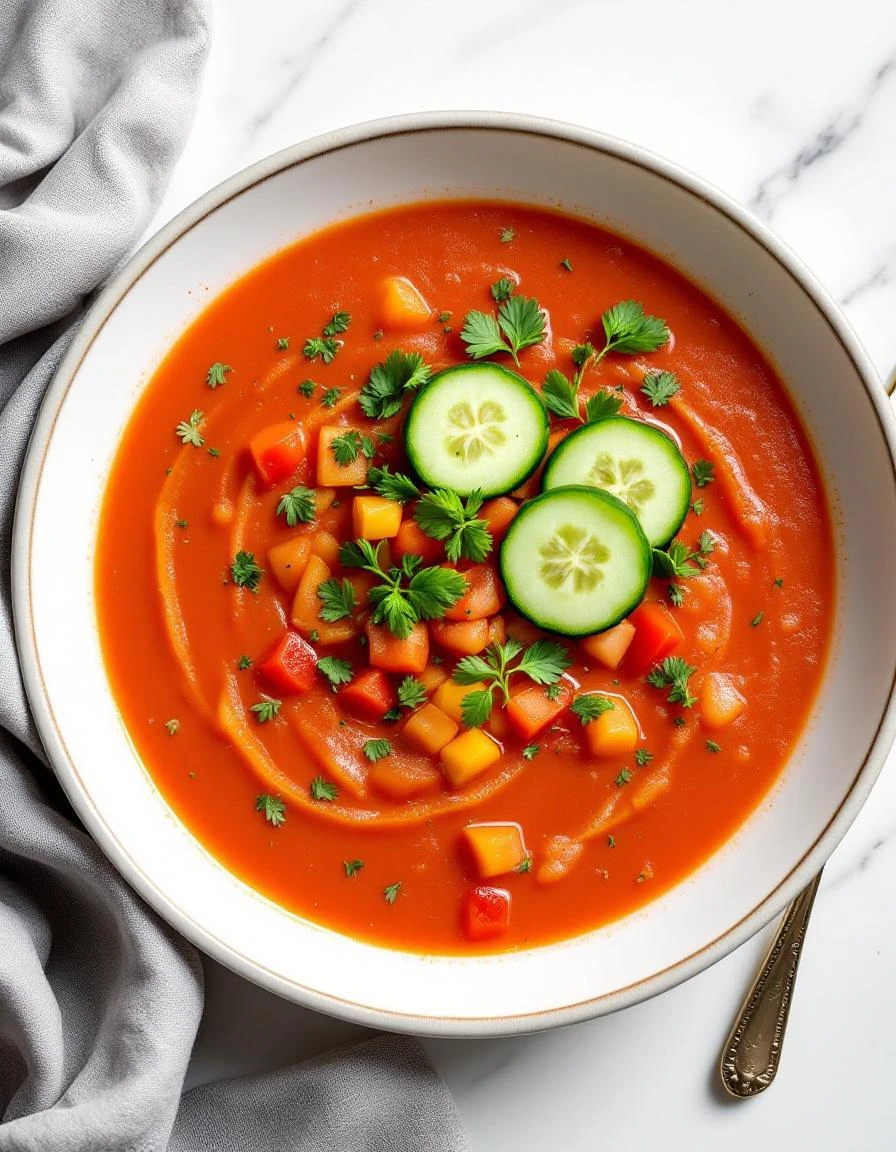
Classic Gazpacho
Ingredients
Equipment
Method
- Chop the tomatoes into rough chunks, squeezing out some of the seeds and juices into a bowl.
- Peel the cucumbers if desired, then dice them into small pieces, keeping them cool and crisp.
- Remove the stem and seeds from the red bell pepper, then roughly chop it into bits.
- Place the chopped tomatoes, cucumbers, bell pepper, and crushed garlic cloves into a blender.
- Pour in the sherry vinegar and olive oil, then blend on high until the mixture becomes smooth and slightly frothy, about 30 seconds.
- Taste the soup and season with salt and freshly cracked pepper, adjusting the acidity and saltiness to your liking.
- Pour the gazpacho into a bowl or pitcher, cover, and chill in the refrigerator for at least 1 hour to let flavors meld.
- Serve the cold gazpacho garnished with fresh herbs or a drizzle of olive oil if desired, and enjoy its refreshing, silky texture.
Common Gazpacho Mistakes and Fixes
- FORGOT to taste before blending? Always taste, then adjust seasoning and acidity.
- DUMPED hot liquids into the blender? Let them cool first to avoid splatter and warping.
- OVER-TORCHED the garlic? Use gentle heat to avoid bitterness and preserve aroma.
- MISSED the seed removal? Seeds can add bitterness; scoop them out for a smoother soup.
Make-Ahead and Storage Tips
- Chopped vegetables like tomatoes, cucumbers, and peppers can be prepped a day ahead. Keep them covered in the fridge to retain freshness.
- The blended soup can be made up to 24 hours in advance. Store in an airtight container, and give it a good stir before serving.
- Flavor intensifies as it sits—taste and adjust seasoning, especially vinegar and salt, after chilling.
- Freeze in small portions for up to 2 months if you want to make it ahead even further, but expect some texture change upon thawing.
- Reheat gently if needed—though traditionally served cold—by letting it come to room temperature first, then swirl in a bit more olive oil for freshness.
- Upon reheating, check for any separation or dullness in flavor. A splash of vinegar or lemon brightens it up instantly.
FAQs
1. What kind of tomatoes are best for gazpacho?
Use ripe, deep red tomatoes that squish easily and smell sweetly. If fresh aren’t available, canned peeled tomatoes work but lose that bright, juicy punch.
2. Can I substitute cucumbers?
Pick firm, crisp cucumbers with a fresh, cool scent. English cucumbers are less seedy, or zucchini can be a milder alternative.
3. What peppers work well in gazpacho?
Choose sweet, smoky red bell peppers—raw or roasted. Green peppers add bitterness, so adjust with extra vinegar if you use them.
4. How much garlic should I use?
Crush a couple of garlic cloves until fragrant; it adds sharpness. Skip if you prefer milder or if sensitive to garlic’s intensity.
5. What kind of vinegar is ideal?
Use sherry vinegar for a bright, tangy kick, or lemon juice for a sharper bite. Avoid if you’re sensitive to acidity.

I’m Mahek Manchanda, the curious heart behind Dramatically Stirring. Before this space existed, my life revolved around kitchens that were loud, demanding, and endlessly alive. I didn’t arrive at cooking through a single dramatic moment.