
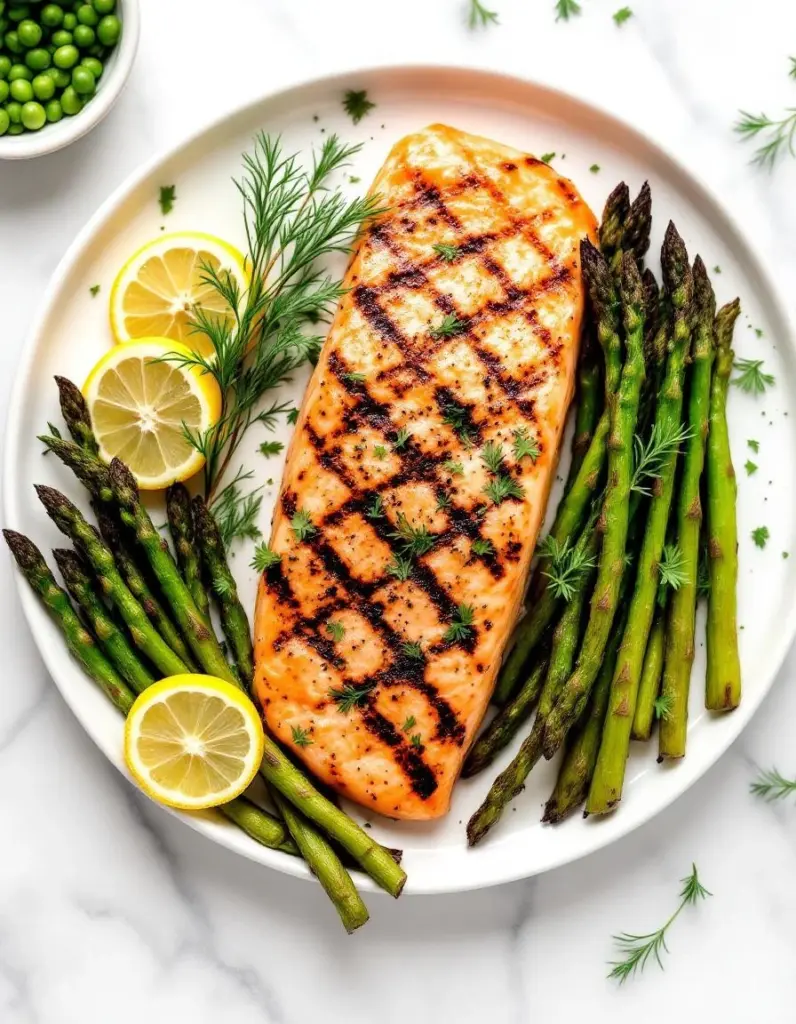
The key is hearing that sharp, immediate sizzle as the salmon hits the hot grill, then watching the skin crisp and brown without sticking. Asparagus should be snapped in half to find the tender spot, then laid out to char with a slight smoky bend. It’s about feeling the textures—firm but giving, crispy skin, tender veg—right there in your hands.
Prepping takes a minute—pat the fish dry, oil the veg, and season everything generously. Once on the grill, you’re flipping salmon once, watching for that caramelized crust, and turning the asparagus for even charring. It’s simple, but you need to stay attentive to avoid overcooking or losing the delicate freshness.
Listening to the sizzle of salmon hitting the hot grill, feeling the slight resistance of tender asparagus as it chars, the contrast between crispy skin and smoky veg—that sound and texture combo is what makes this dish real.
What goes into this dish
- Salmon fillets: I like skin-on for the crisp and flavor; pat dry so it sears well. Skip if you prefer skinless, but watch for sticking and reduce cook time.
- Asparagus: Look for firm, bright green spears; snap the woody ends easily. Thinner stalks cook faster, so adjust grill time accordingly.
- Olive oil: A good splash helps prevent sticking and adds smoky richness; use sparingly on the fish and veg. You can swap with avocado oil for a higher smoke point.
- Salt and pepper: Season generously—salty enough to enhance the fish and veg but not overpower. Try sea salt for texture or skip if on low-sodium diets.
- Lemon wedges: Brightens everything with a zing of citrus; squeeze just before eating. Lime can be a tangy substitute for a different twist.
- Garlic (optional): Minced and tossed with asparagus for extra flavor; skip if you prefer a more subtle herb profile or are sensitive to garlic’s aroma.
- Herbs (like dill or parsley): Adds freshness; sprinkle over just before serving. Dried herbs can work but lack the vibrant aroma of fresh.
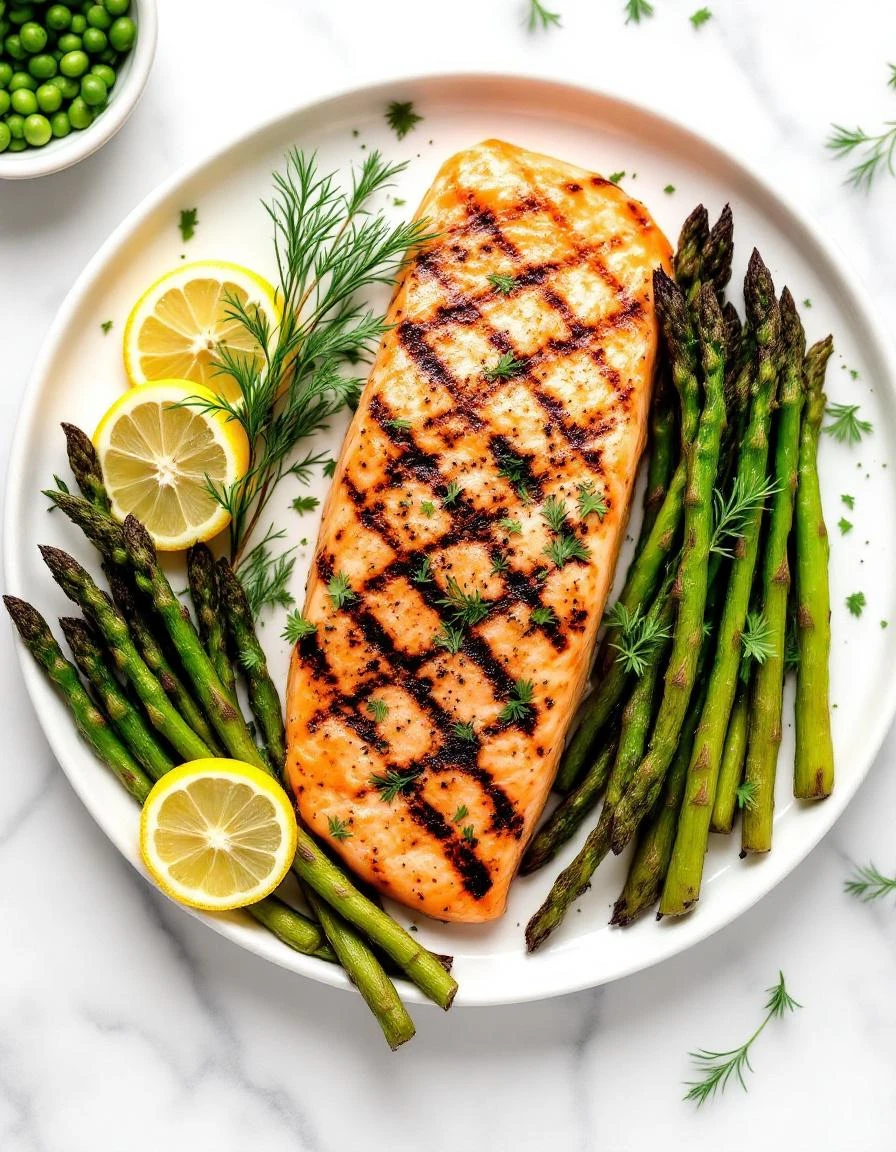
Grilled Salmon with Charred Asparagus
Ingredients
Equipment
Method
- Pat the salmon fillets dry with paper towels and brush lightly with olive oil, then season generously with salt and pepper on both sides. Set aside.
- Trim the woody ends off the asparagus, then toss them with a drizzle of olive oil, minced garlic if using, and a pinch of salt and pepper. Lay them out in a single layer on a plate or baking sheet for easy handling.
- Preheat your grill to high heat until it’s hot and starts to shimmer, creating that sharp sizzle when the fish hits the grate.
- Place the salmon fillets skin-side down on the grill, pressing gently to ensure full contact and prevent sticking. Close the lid and cook for about 4-5 minutes until the skin is crispy and golden brown.
- While the salmon cooks, lay the asparagus perpendicular to the grill grates, turning occasionally with tongs to develop an even, smoky char on all sides. Grill for about 4-6 minutes until tender but still bright green with slight charring.
- Use tongs to flip the salmon once it releases easily from the grill, revealing a caramelized crust. Continue cooking for another 2-3 minutes until the fish is just cooked through and opaque in the center.
- Remove the salmon and asparagus from the grill and transfer to a platter. Squeeze fresh lemon wedges over the salmon and asparagus for a bright finish. Garnish with chopped dill or parsley if desired.
- Serve immediately, enjoying the contrast of crispy, smoky skin on the salmon and tender, charred asparagus. Squeeze extra lemon juice over everything for a lively flavor boost.
Common mistakes and how to fix them
- FORGOT to oil the grill grates, causing sticking—always oil before heating.
- DUMPED the asparagus in cold water, losing flavor—blanch quickly for bright color and flavor.
- OVER-TORCHED the salmon skin, making it bitter—keep a close eye and flip early.
- UNDER-SEASONED the fish and veg, dulling flavor—be generous with salt and pepper.
Make-Ahead and Storage Tips
- Prepare the salmon fillets and trim the asparagus the day before; keep refrigerated separately in airtight containers.
- Salmon can be stored in the fridge for up to 24 hours; frozen for about a month if you need longer.
- Asparagus is best used within 1-2 days; over time, it loses snap and brightness, turning limp and dull.
- Season the fish and veg ahead of time with salt, pepper, and oil, but wait to grill until ready to cook.
- Reheat leftovers gently in a warm oven or skillet, watching for drying out; aim for just warm, with a hint of smoky aroma.
- Taste and adjust seasonings after reheating, as flavors can mellow or intensify, especially the lemon and herbs.
FAQs
1. How do I know the salmon is cooked right?
The salmon should feel firm but give slightly when pressed, with a crispy skin crackle—smoky and satisfying. Asparagus should be tender with a slight snap, still bright green and juicy.
2. What if the asparagus gets too charred?
Look for a golden crust on the skin, with the flesh opaque and flaky. The asparagus should be charred in spots but still vibrant and tender.
3. Can I use frozen salmon?
Use fresh salmon for the best flavor and moisture—avoid dry, old fillets. Freshness brings that oozy, buttery richness when grilled.
4. How do I prevent overcooking the fish?
Overcooking makes the fish dry and tough, with a crumbly texture. Keep an eye and flip once for even, gentle heat—avoid that squeeze of frustration.
5. Should I add lemon before or after grilling?
A squeeze of lemon right before serving brightens the smoky, crispy notes. Reheat leftovers gently in a skillet until warm and fragrant, avoiding dryness.

I’m Mahek Manchanda, the curious heart behind Dramatically Stirring. Before this space existed, my life revolved around kitchens that were loud, demanding, and endlessly alive. I didn’t arrive at cooking through a single dramatic moment.