
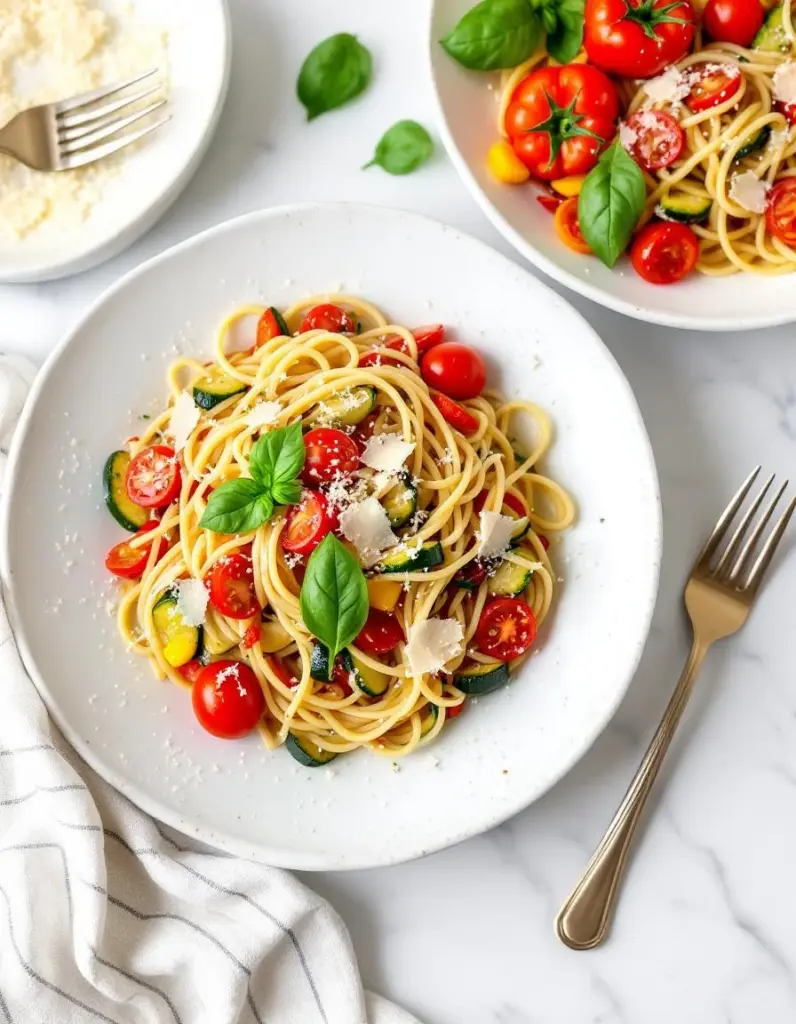
Pasta Primavera starts with boiling water sloshing around in a big pot, salt melting in and then the pasta slipping in with a splash. You give it a stir, then set a timer and start chopping vegetables—bell peppers, zucchini, cherry tomatoes—that will hit the pan soon enough.
The prep is messy—cutting boards cluttered, veggies in every direction—but once they hit the hot oil, the sound of the sizzle and the smell of garlic fill the kitchen, telling you everything’s coming together.
The gentle sizzle of vegetables hitting hot oil, releasing a fragrant pop and the occasional crackle of garlic, as everything begins to soften and mingle.
What goes into this dish
- Bell peppers: I love the sweet, slightly smoky flavor they bring when sautéed until just tender—skip if you’re not a fan of their crunch; try zucchini for a more tender bite.
- Cherry tomatoes: Burst with juicy, oozy insides when cooked—use larger tomatoes if that’s all you have, but cut them smaller for that pop of bright acidity.
- Zucchini: Mild and softens beautifully, soaking up flavors—sub in yellow squash or eggplant, just watch for longer cooking times, and keep an eye on the texture.
- Garlic: It sizzles and releases a fragrant, pungent aroma—skip if you’re sensitive, but consider shallots for a milder, sweeter note.
- Olive oil: The base for that gentle, fruity aroma and perfect for sautéing—try avocado oil for a higher smoke point or butter for richness, but adjust heat accordingly.
- Parmesan: Adds saltiness and umami—skip if dairy-free, or sprinkle nutritional yeast for a cheesy, nutty alternative with a similar savory kick.
- Lemon zest: Brightens everything with a fresh, citrusy aroma—omit if you dislike citrus, or substitute with a splash of lemon juice for more acidity.
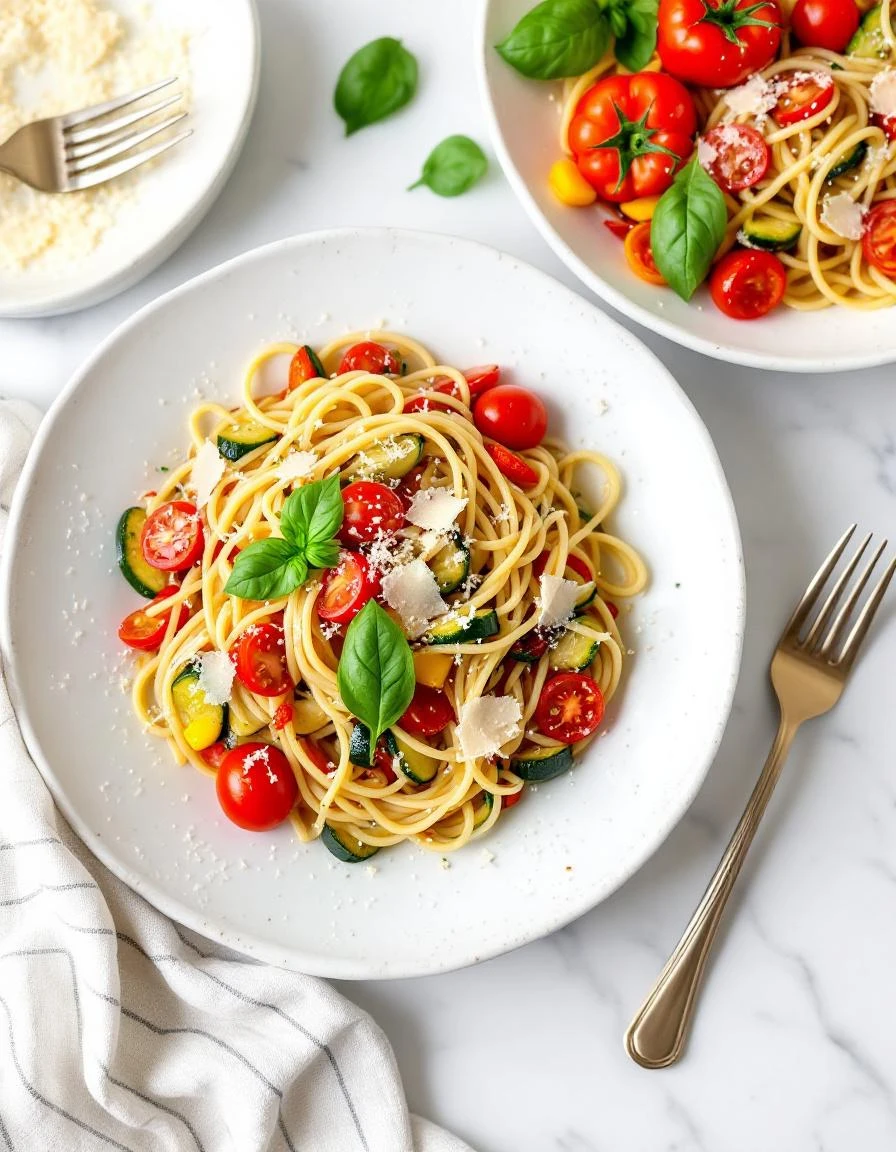
Pasta Primavera
Ingredients
Equipment
Method
- Bring a large pot of salted water to a boil, then add the pasta. Cook according to package instructions until al dente, then drain and set aside.
- While the pasta cooks, heat olive oil in a large skillet over medium heat until shimmering and fragrant.
- Add the minced garlic to the hot oil and sauté for about 30 seconds until it becomes fragrant and just begins to turn golden.
- Stir in the sliced bell peppers and zucchini, cooking for 5-7 minutes until they soften slightly and start to develop a little color.
- Add the halved cherry tomatoes and cook for another 2-3 minutes until they start to burst and release their juices, filling the pan with a bright aroma.
- Reduce heat to low and add the cooked pasta to the skillet, tossing everything together to combine and heat through.
- Sprinkle the grated Parmesan cheese and lemon zest over the pasta, tossing again to evenly distribute and melt the cheese slightly.
- Season with salt and freshly ground black pepper to taste, then give everything a final toss.
- Serve the Pasta Primavera hot, garnished with extra Parmesan and a squeeze of lemon if desired.
Common Pasta Primavera Mistakes and Fixes
- FORGOT to taste and adjust seasoning before serving; always do a quick flavor check.
- DUMPED too much pasta water in the sauce; reserve some to loosen and balance flavors.
- OVER-TORCHED the garlic; stir constantly and remove from heat promptly to prevent bitterness.
- MISSED the timing for adding vegetables; add in stages for perfect texture and color.
Make-Ahead and Storage Tips
- Cook and drain the pasta ahead of time; store in an airtight container for up to 24 hours in the fridge.
- Prep all vegetables—wash, chop, and measure—then keep in separate containers for quick assembly.
- The flavors deepen if you make the dish a day in advance; refrigerate for up to 24 hours, but expect milder brightness.
- Reheat gently in a skillet over low heat, adding a splash of water or broth; watch the veggies soften and pasta rewarm without drying out.
- Taste and adjust seasoning after reheating; lemon and cheese may need a brightening touch after sitting.
FAQs
1. How do I know when the pasta is done?
The pasta should be al dente, firm to the bite but cooked through, which gives it a slight resistance when you chew and a satisfying chewiness.
2. When should I drain the pasta?
Taste a piece—look for a tender inside with a slight bite, not mushy. The cooking water smells starchy and inviting.
3. How do I test if vegetables are cooked?
Use a slotted spoon or tongs to lift the veggies and pasta out, feeling the slight give when they’re tender but not overcooked, the aroma of garlic lingering.
4. How do I reheat leftovers without drying them out?
Reheat gently in a skillet, adding a splash of water or broth. You should hear a gentle sizzle, and the smell of fresh lemon brightens the air.
5. How can I brighten up leftovers?
Add a squeeze of lemon juice or a sprinkle of cheese after reheating. The dish should smell vibrant and taste lively, with a slight tang on your tongue.

I’m Mahek Manchanda, the curious heart behind Dramatically Stirring. Before this space existed, my life revolved around kitchens that were loud, demanding, and endlessly alive. I didn’t arrive at cooking through a single dramatic moment.