
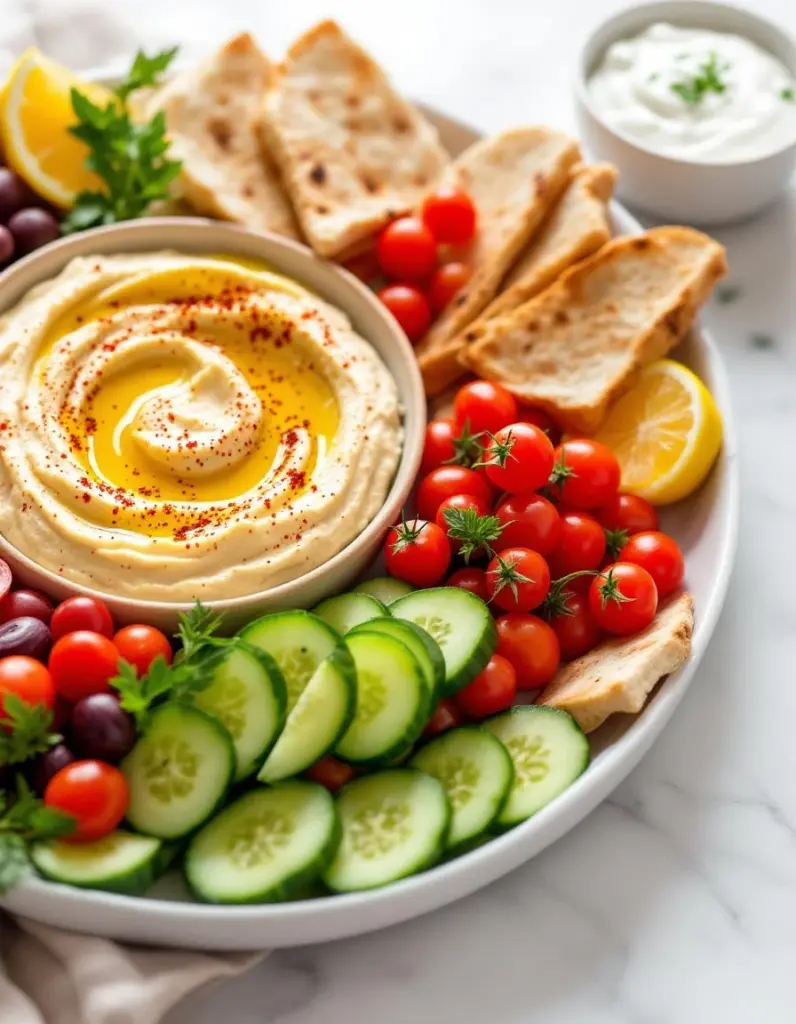
This platter comes together with a mess of small bowls—hummus smeared on pita, olives scattered, and feta crumbled over cucumber slices. The challenge is keeping everything from sliding around when you carry it to the table, so I line up the bowls in order of assembly.
Eating involves reaching in with your hands, tearing pita into rough pieces, and scooping up a bit of everything—crunchy, creamy, briny—each bite a little different, a little messy.
The satisfying rustle of pita bread being torn, revealing its warm, soft interior contrasted with the crunchy edges.
What goes into this dish
- Pita bread: I grab thick, fluffy pitas that tear easily—perfect for tearing into chunks. If yours are too thin, they tend to crumble; opt for the sturdy ones or lightly toast to crisp edges.
- Hummus: Creamy, garlicky, with a lemon-bright tang—spread it thick or dollop generously. Swap in roasted red pepper hummus for smoky sweetness or skip if you prefer a fresh veggie dip.
- Olives: Briny, squishy, with a hint of herbaceousness—scatter them generously. For variety, try Kalamata or Castelvetrano; skip if olives aren’t your thing or replace with pickled peppers.
- Feta cheese: Salty, crumbly, with a slight tang—crush it over the platter. Use goat cheese or ricotta for a softer, milder alternative or skip for dairy-free options.
- Cucumber: Crisp, cool, with a refreshing crunch—slice thick or thin depending on your preference. Radishes or cherry tomatoes can step in for crunch or color if cucumber isn’t available.
- Lemon wedges: Bright, zesty, with a sharp citrus aroma—squeeze over everything for a fresh lift. Lime works in a pinch, or skip if you prefer a milder flavor.
- Fresh herbs: Parsley, mint, or oregano—chop finely and sprinkle for that herbal punch. Dried herbs are a weak substitute; skip if you want a more subdued flavor.
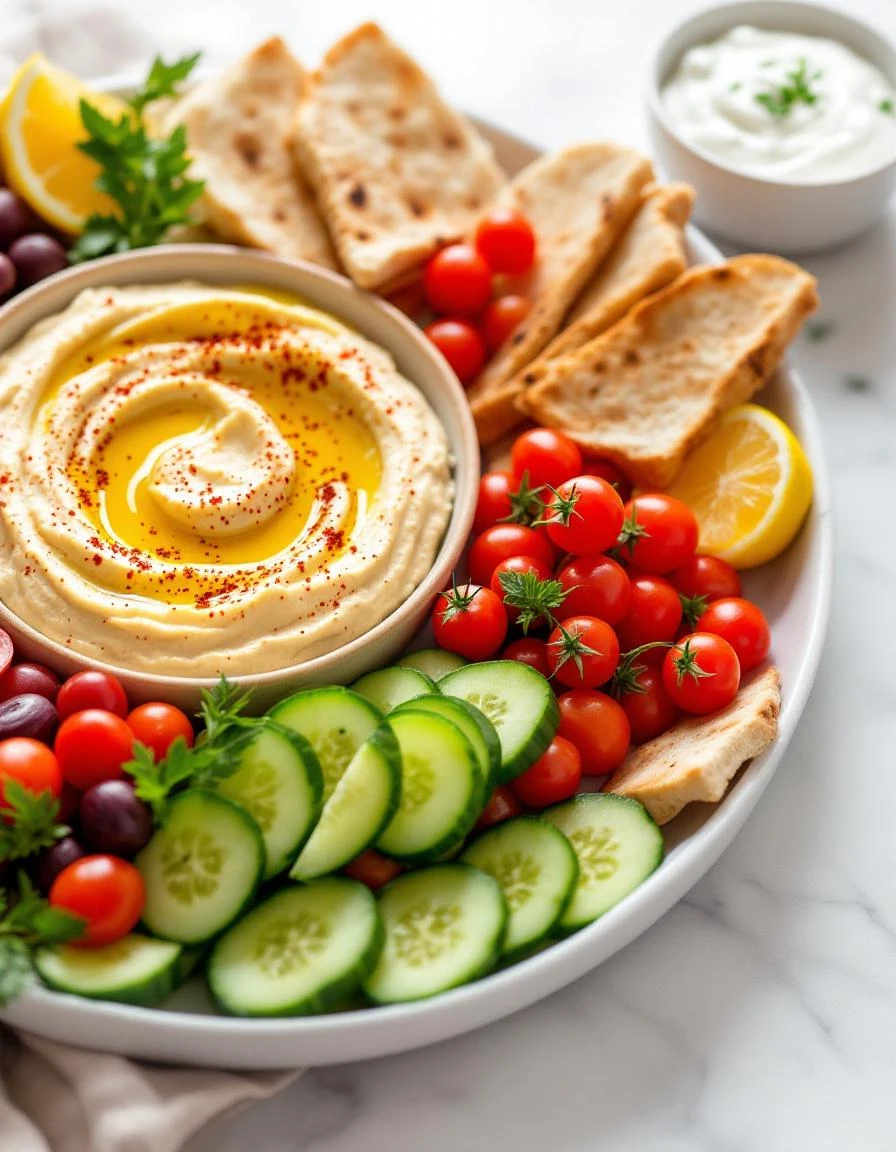
Mediterranean Mezze Platter
Ingredients
Equipment
Method
- Tear the pita bread into rough, bite-sized pieces, revealing its soft interior and slightly crispy edges. Arrange them on a serving platter.
- Spread the hummus into one or two small bowls, smoothing the surface and creating a creamy base that invites dipping.
- Slice the cucumber into thick or thin rounds, depending on your preference, and scatter them evenly over the platter for a refreshing crunch.
- Scatter the briny olives across the platter, distributing their squishy, herbaceous flavor evenly among the other ingredients.
- Crumble the feta cheese over the pita and vegetables, adding salty, crumbly bites to each scoop.
- Garnish the platter with chopped fresh herbs, sprinkling them over the top for a bright herbal punch.
- Place lemon wedges on the side, encouraging guests to squeeze fresh citrus over their bites for added brightness.
- Serve everything together, encouraging everyone to tear pita, scoop up hummus, and enjoy a messy, flavorful bite with a mix of crunchy, creamy, and briny textures.
Common Mistakes and How to Fix Them
- FORGOT to check the pita’s thickness? Use thicker bread or toast for crunch.
- DUMPED too much olive oil in the hummus? Adjust by adding more chickpeas or lemon juice.
- OVER-TORCHED the feta? Keep an eye to prevent burning or drying out.
- MISSED the lemon squeeze? Brighten flavors just before serving for freshness.
Make-Ahead and Storage Tips
- Prepare the hummus, chop herbs, and slice vegetables a day ahead—store in airtight containers in the fridge for up to 24 hours. Flavors deepen overnight.
- Assemble the platter just before serving; pita can be toasted and kept in a paper bag for a few hours, staying crispy if kept dry.
- Olives and feta can be made a day ahead; keep separately in sealed containers in the fridge for up to 2 days. Flavors will meld and intensify.
- Refrigerate any leftovers in airtight containers; consume within 2 days to keep textures fresh and flavors bright.
- Reheat toasted pita briefly in a hot oven or toaster oven—just enough to regain crispness, but watch closely to avoid burning.
- Flavors may mellow slightly after a day, but the vibrant lemon and herbs still shine through, making leftovers still worth it.
FAQs
1. How do I pick good olives?
Look for olives that feel firm with a slight give when pressed. They should smell briny and fresh, with no sour or moldy odors. If they smell off, skip them.
2. What’s the best feta texture?
Feta should be crumbly but moist, with a tangy, salty aroma. If it’s dry and crumbly, it might be too old. For creamier feta, gently mash it with a fork before adding.
3. How can I fix runny hummus?
Hummus should be smooth, creamy, and slightly thick, with a garlicky, lemony smell. If it’s watery or grainy, stir in a splash of olive oil or lemon juice to freshen it up.
4. How do I toast pita perfectly?
Crispness comes from properly toasted pita. Watch it closely in the oven or toaster—look for golden edges and a fragrant, toasted aroma. Over-toasted pita tastes bitter and dry.
5. How can I tell if herbs are fresh?
Use fresh herbs with a bright, fragrant smell—parsley should smell grassy, mint should be cool and sharp. Dried herbs often taste dull and dusty, so fresh is best for vibrancy.

I’m Mahek Manchanda, the curious heart behind Dramatically Stirring. Before this space existed, my life revolved around kitchens that were loud, demanding, and endlessly alive. I didn’t arrive at cooking through a single dramatic moment.