
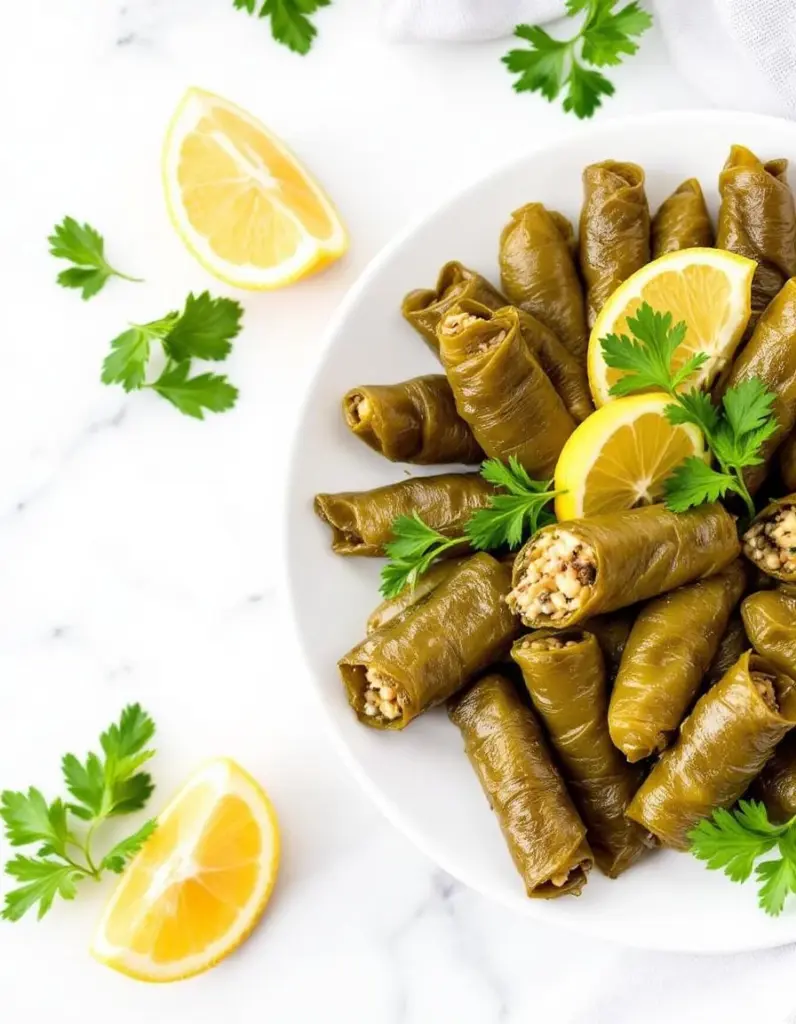
Peeling grape leaves is a messy affair, especially if you’re not used to the slimy, earthy texture as they come apart. I always keep a damp towel nearby to wipe my hands quick, because they get sticky fast. There’s a certain satisfaction in separating each leaf without tearing it.
Stuffing them involves a lot of pinching and folding, like tucking in a tiny package. It’s a slow process, but the faint scent of grape and herbs wafts up as you go, making it feel like a small, deliberate ritual.
The gentle, satisfying rip of peeling grape leaves from their tightly packed cluster, each one releasing a faint, earthy scent as it separates.
Key ingredients and swaps
- Grape leaves: I pick firm, bright green leaves with a glossy sheen, feeling their slightly sticky surface. If yours are too dry or torn, soak in warm water for a few minutes to soften or choose fresh ones from a specialty store.
- Rice: I use short-grain rice, it’s stickier and holds the filling together better. Swap for medium-grain if that’s what you’ve got, but skip long grains—they’ll be too loose once cooked.
- Herbs: Fresh dill and mint brighten up the filling with a bright, herbal aroma. Dried herbs can work, but reduce the quantity by half to avoid overpowering the delicate grape leaf flavor.
- Onion: Finely chopped onion adds a savory base. If you’re out, shallots are a mild alternative, but skip onion powder—it won’t give that subtle sweetness and aroma.
- Lemon: Fresh lemon juice gives a zingy, bright acidity. Bottled lemon juice is okay in a pinch, but it lacks the fresh citrus punch that wakes up the filling.
- Olive oil: Drizzle a good splash over the filling for richness. If you’re out, a light vegetable oil works, but skip butter—it’s too heavy and masks the freshness.
- Salt & pepper: Essential for seasoning, I taste as I go. For a smoky undertone, add a pinch of smoked paprika—just a hint, don’t overdo it.
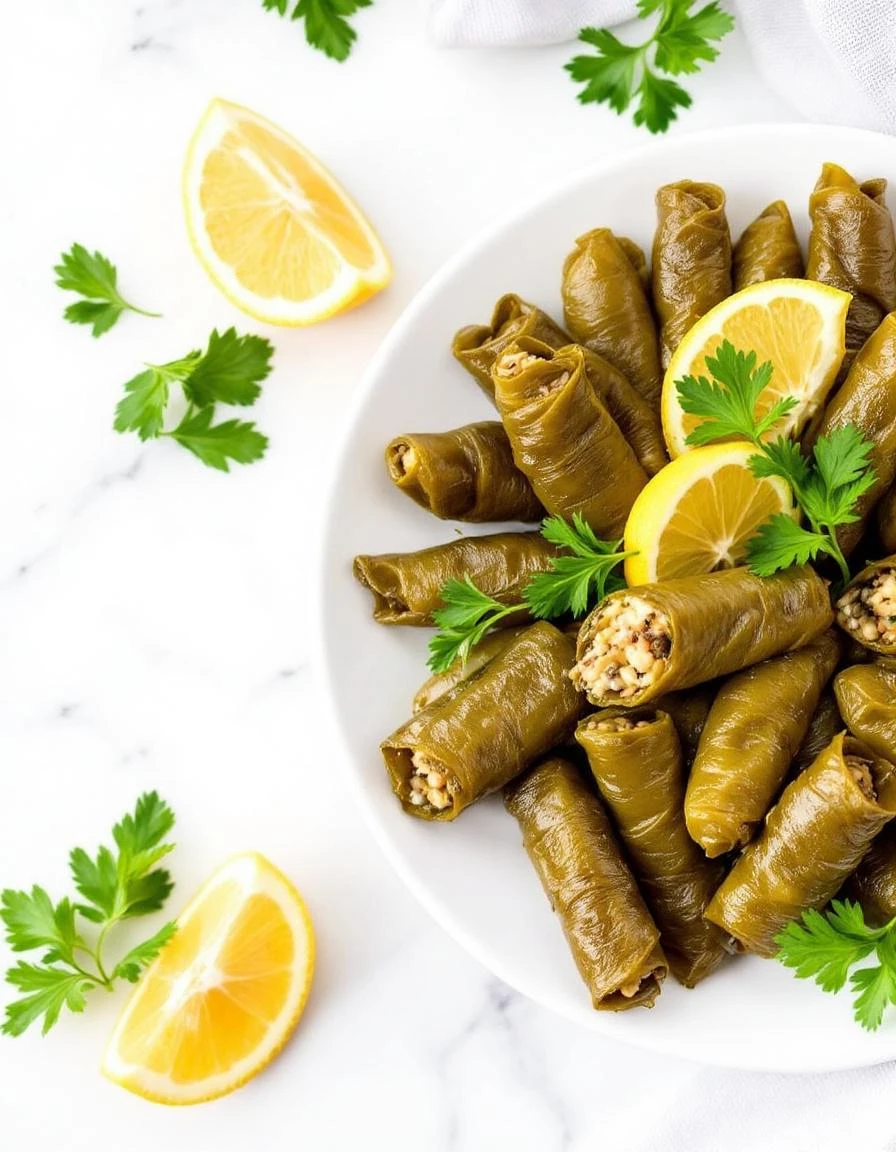
Stuffed Grape Leaves
Ingredients
Equipment
Method
- Gently peel the grape leaves from their clusters, feeling for their slightly sticky, firm texture. Keep a damp towel nearby to wipe your hands as they get sticky. Set aside the leaves once separated.
- Rinse the short-grain rice until the water runs clear, then drain well. Finely chop the dill, mint, and onion, and set aside.
- In a mixing bowl, combine the rice, chopped herbs, onion, a splash of olive oil, lemon juice, and season with salt, pepper, and a pinch of smoked paprika if using. Mix thoroughly until the filling is evenly combined.
- Lay a grape leaf flat on your work surface, vein side up. Place about a teaspoon of filling near the stem end.
- Fold in the sides of the leaf and gently tuck the filling inside, then roll tightly from the stem end to form a small, neat package. Repeat with remaining leaves and filling.
- Arrange the stuffed grape leaves seam side down in a large pot, packing them snugly in a single layer. Add enough water or broth to just cover, then drizzle a little olive oil over the top.
- Bring the liquid to a gentle simmer over medium heat, then cover the pot and reduce to low. Let cook for about 45 minutes, or until the leaves are tender and the rice is cooked through.
- Once cooked, remove from heat and let sit for a few minutes. Serve warm or at room temperature, drizzled with extra olive oil or lemon if desired. Enjoy the tender, herb-infused bites!
Common mistakes and how to fix them
- FORGOT to taste the rice before wrapping; adjust seasoning accordingly.
- DUMPED too much lemon juice; balance acidity with a drizzle of olive oil instead.
- OVER-TORCHED the grape leaves; keep an eye and remove from heat early.
- TOO TIGHTLY rolled the leaves; leave a bit of slack for even cooking and presentation.
Make-Ahead and Storage Tips
- You can peel and stuff the grape leaves a day ahead, then keep them covered in the fridge. They’ll stay fresh for up to 24 hours.
- For longer storage, arrange the stuffed leaves in a single layer in a container, cover with plastic wrap, and freeze for up to 3 months. Thaw overnight in the fridge before reheating.
- The flavors deepen and meld after a day or two in the fridge, making them a little richer but also more tender. The leaves might release a faintly more earthy aroma.
- Reheat gently in a covered skillet with a splash of water or broth. Check for steaming and a slight bounce when you press, avoiding overcooking and mushiness.
FAQs
1. How do I pick the right grape leaves?
Use firm, vibrant green leaves. They should feel slightly sticky and not brittle. Rinse if needed before stuffing.
2. What’s a sign the filling is seasoned right?
Add a pinch more lemon juice if the filling feels dull. The bright tang should make your nose tingle.
3. How do I know when they’re done?
Cook until the leaves are tender and the rice is soft but not mushy. You’ll hear a gentle simmer and see the rice swell.
4. How long can I keep stuffed grape leaves?
Store leftovers in an airtight container in the fridge for up to 3 days. The flavors mellow and the leaves might release a faint earthy scent.
5. How do I reheat without losing texture?
Reheat gently in a skillet with a splash of water or broth. The aroma of herbs and lemon will reawaken, and the leaves should steam tender again.

I’m Mahek Manchanda, the curious heart behind Dramatically Stirring. Before this space existed, my life revolved around kitchens that were loud, demanding, and endlessly alive. I didn’t arrive at cooking through a single dramatic moment.