
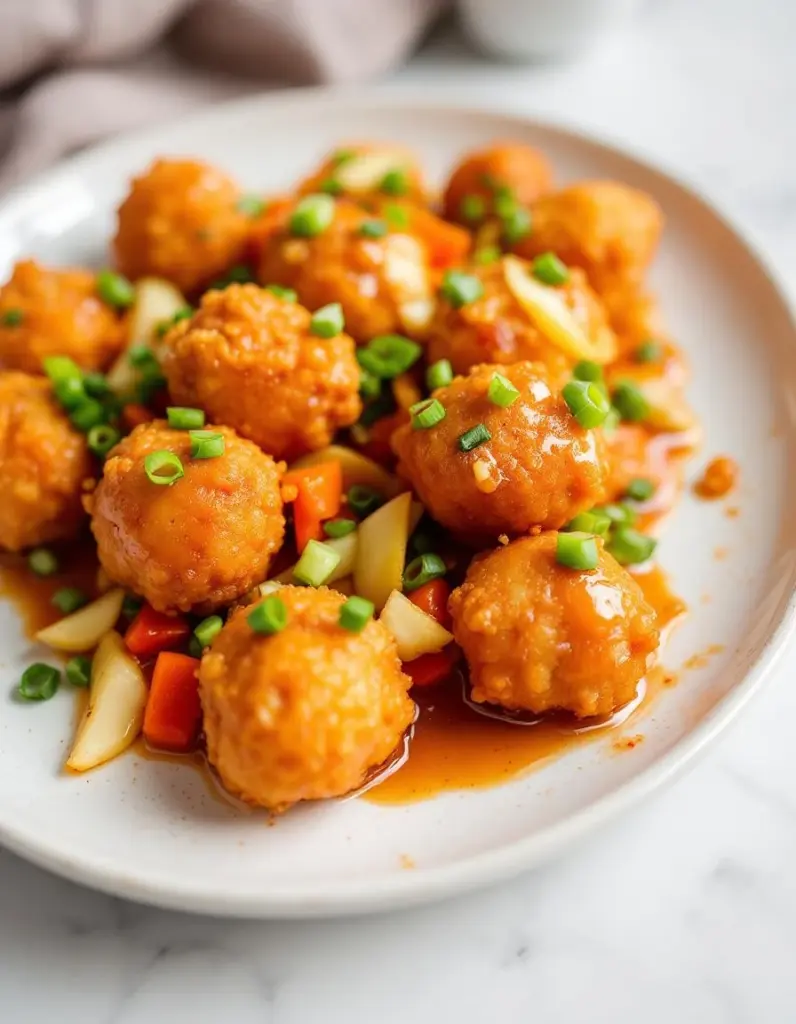
Making vegetable Manchurian is all about the mess of batter and chopping, right there in the kitchen. You get your vegetables chopped, coated, fried—splatters and all—and the aroma of garlic and ginger filling the air.
Then comes the sticky, tangy sauce, which you toss everything into, watching the vegetables soak up the flavors and get glossy. It’s hands-on, loud, with oil splatters that stick to your sleeves and a kitchen smelling of spice and soy.
The satisfying crunch of the battered vegetable balls as they hit the hot oil, followed by the sizzle and pop that fill the kitchen, is what keeps me hooked. It’s a messy, noisy process—clattering spoons, splattering oil, and that unmistakable aroma of spices awakening.
What goes into this dish
- Carrots: I prefer thin julienne strips—crisp and sweet, they add a nice color pop. Swap with zucchini if you want a softer bite, but skip the sweetness. The crunch should bite through with a satisfying snap.
- Cabbage: Finely shredded, it soaks up the sauce and stays crisp if you don’t overcook. Use kale for a sturdier, slightly bitter alternative, or skip if you want less texture contrast.
- Bell Peppers: I go for red or yellow, for their bright color and sweet aroma, especially when they hit the hot oil. Green works too but adds a sharper, more vegetal note—skip if you dislike that punch.
- Soy Sauce: The backbone of flavor—salty, umami, with that smoky aroma. Tamari is a gluten-free swap that’s thicker and richer, but skip if you need a lighter soy flavor. It’s what makes the sauce glossy and bold.
- Ginger & Garlic: Fresh, pungent, and fiery—add more if you want that reviving kick. Dried ginger or garlic powder can be a quick substitute but won’t deliver the same bright aroma. Smash and mince for the best punch.
- Cornstarch: For the batter, it crisps up beautifully—use rice flour for a lighter crunch, especially if you’re allergic to wheat. Skip if you prefer a softer ball, but it’ll lose some of that satisfying crunch.
- Chili Sauce: I use Sriracha or any chili garlic sauce—adds heat and a smoky undertone. Sweet chili can be a milder, sticky alternative. Adjust to your spice tolerance, but don’t skip the heat for that punch.
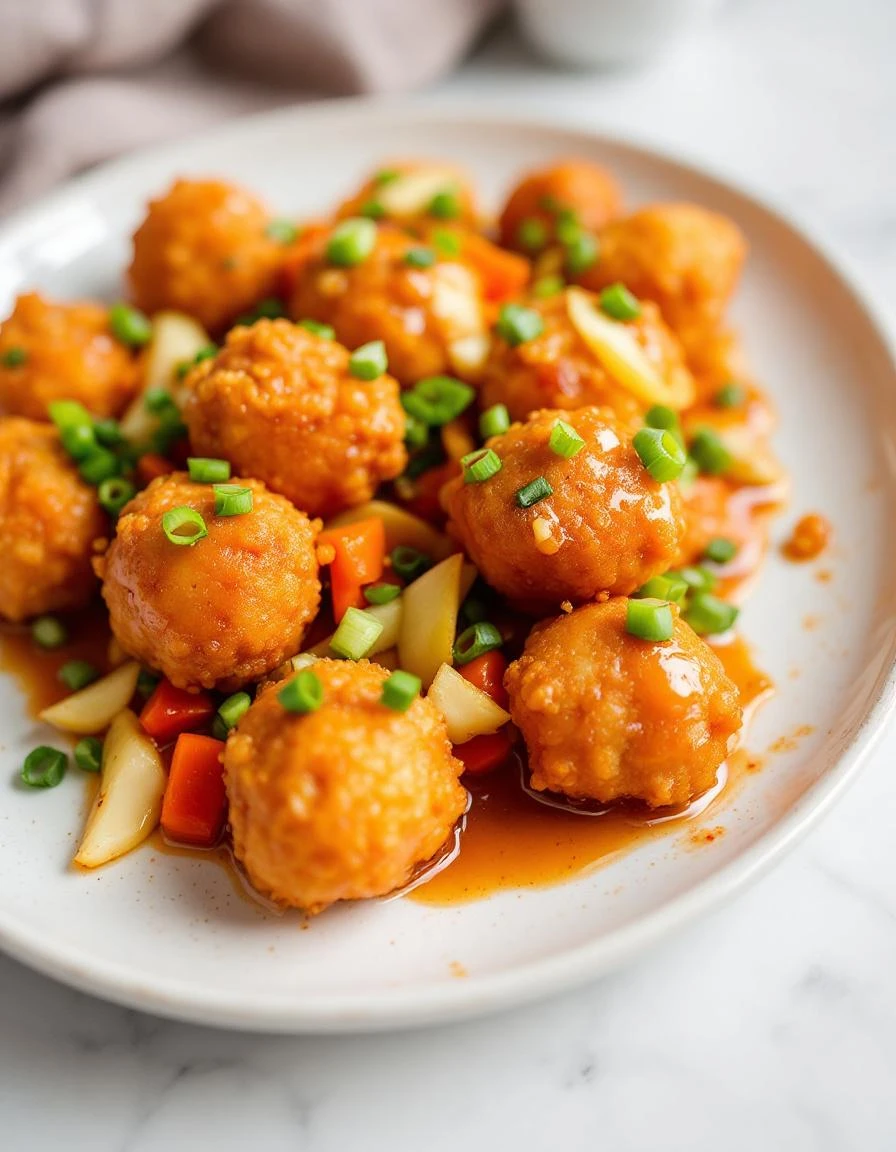
Vegetable Manchurian
Ingredients
Equipment
Method
- Start by preparing your vegetables: julienne carrots, finely shred cabbage, and dice or thinly slice bell peppers. Place them in a large mixing bowl.
- In a separate small bowl, whisk together cornstarch, water, salt, minced garlic, and ginger until you get a thick, sticky batter.
- Pour the batter over the chopped vegetables and toss gently until all pieces are evenly coated. The mixture should hold onto the veggies without dripping.
- Heat oil in a deep frying pan or deep fryer over medium heat until it reaches about 350°F (175°C). You can test it by dropping a small batter piece—if it sizzles and rises to the surface, it's ready.
- Using a spoon or your hands, carefully drop spoonfuls of the battered vegetable mixture into the hot oil. Fry in batches to avoid overcrowding, and cook until golden brown and crispy, about 4-5 minutes.
- Use a slotted spoon to remove the fried balls and place them on a plate lined with paper towels to drain excess oil. Repeat until all the mixture is used.
- In a large pan or wok, heat a tablespoon of vegetable oil over medium heat. Add minced garlic and ginger, and sauté until fragrant, about 30 seconds.
- Pour in soy sauce and chili sauce, stirring to combine and heat until bubbling and slightly thickened, about 2 minutes.
- Add the crispy vegetable balls to the sauce and toss gently to coat them thoroughly. Continue cooking for another 2-3 minutes until the sauce is glossy and sticky, and the balls are heated through.
- Transfer the vegetable Manchurian to a serving dish, garnished with chopped green onions if desired. Serve hot, with a side of steamed rice or noodles.
Common Mistakes and How to Fix Them
- FORGOT to dry vegetables thoroughly—use a towel to prevent splattering oil.
- DUMPED too much batter—keep it light for crispier, less greasy balls.
- OVER-TORCHED the oil—keep it at medium heat to avoid burning the batter.
- MISSED flipping the balls—turn them early for even crispiness and prevent sticking.
Make-Ahead and Storage Tips
- You can prep the vegetable chopping and batter coating a day ahead—keeps kitchen chaos manageable.
- Fried veggie balls stay crisp for about 2 hours at room temperature, but best eaten fresh for maximum crunch.
- The sauce can be made up to 24 hours in advance; store in a sealed jar in the fridge, where flavors deepen overnight.
- Refrigerated vegetable balls will soften over time—reheat in hot oil or oven until they regain some crispness, checking for texture and aroma.
- Freezing cooked balls is possible for up to a month—thaw in fridge, then reheat with a quick fry to revive crunch.
FAQs
1. How do I get the batter right?
The batter should be thick enough to coat the vegetables without dripping off, almost like a sticky paste you can hold onto. It helps the crunch stay intact when frying.
2. What’s the right temperature for frying?
Fry the balls in hot oil, around 350°F (175°C). They should sizzle immediately and turn golden within a few minutes, feeling crispy and firm when you lift them out.
3. How can I make the sauce flavorful?
Use fresh garlic and ginger for a punchy aroma. Their fiery scent should fill the kitchen as you cook, with hints of spice and earthiness lingering in the air.
4. Can I make this ahead?
Store leftovers in an airtight container in the fridge for up to 2 days. Reheat in hot oil or oven until the balls are crispy and the sauce is bubbling again.
5. How do I store leftovers?
Yes, the vegetable balls can be frozen for up to a month. Thaw in the fridge and reheat in a hot oven or skillet until they regain their crunch and warmth.

I’m Mahek Manchanda, the curious heart behind Dramatically Stirring. Before this space existed, my life revolved around kitchens that were loud, demanding, and endlessly alive. I didn’t arrive at cooking through a single dramatic moment.