
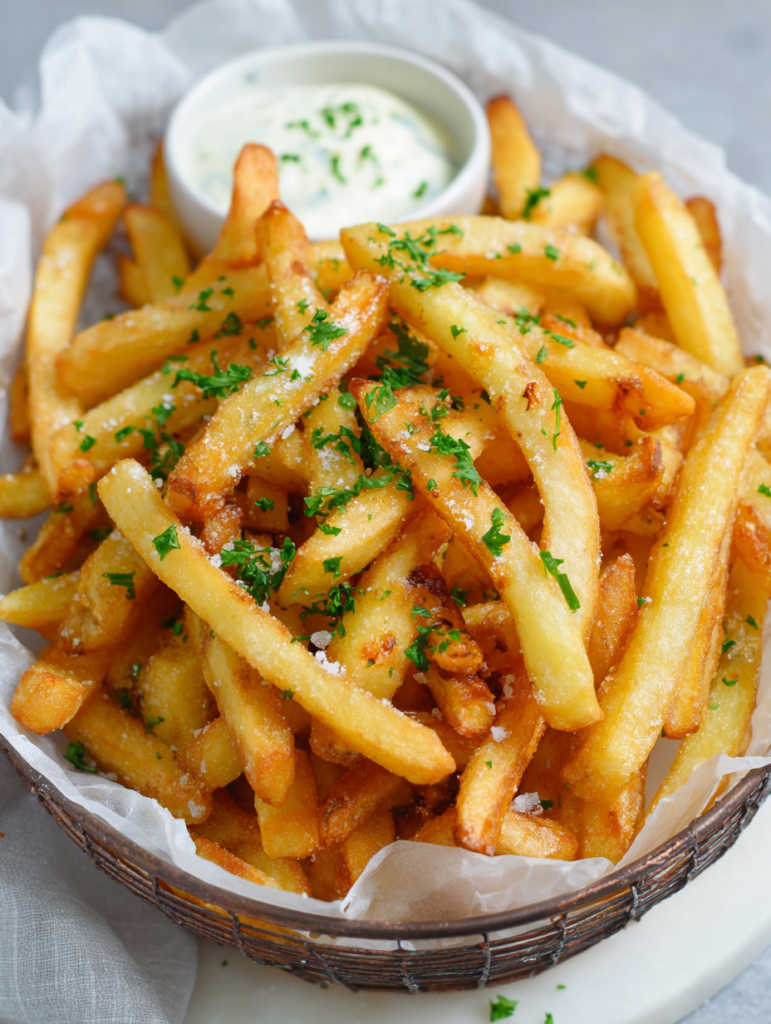
Getting that perfect French fry texture isn’t just about throwing potatoes in hot oil. It’s about understanding the magic of double-frying—crisp on the outside, tender inside—just like those from a classic French boutine. I’ve messed around with different methods for years, and honestly, it’s the temperature control that makes or breaks the batch.
There’s a certain satisfaction in slicing potatoes just right, then watching them bubble up to that golden hue. It’s not fancy, but every step feels like a small ritual—waiting for the oil to heat, listening for that crackle, and then biting into that first crispy fry that’s almost too good to share. It’s a simple joy that reminds me why I started cooking this way in the first place.
Focusing on achieving the perfect crispiness through a double-fry technique, emphasizing the importance of temperature control and timing to create fries that are golden on the outside and tender inside, just like the ones from a classic French boutine.
The story behind this recipe
- Growing up, I remember my dad dragging me into the kitchen, peeling potatoes with a grin, saying, ‘Today, we make real fries.’ That moment stuck with me—simple, noisy, messy—but rooted in that satisfying promise of crispy perfection.
- Over the years, I’ve tried a lot of methods, but nothing beats the ritual of double-frying. Watching those potatoes bubble, smelling that oozing starchy aroma, and finally biting into a hot, crackly fry—it’s pure, honest joy. It’s a reminder that good things take patience and a little bit of chaos.
- The best fries come from Russet potatoes—starchy and sturdy enough to hold their shape through double-frying.
Ingredient breakdown
- Russet potatoes: I find these starch-heavy spuds yield that fluffy interior and crispy exterior. Swap for Yukon Gold if you prefer a creamier bite, but expect less crunch.
- Vegetable oil: I use neutral oil with a high smoke point—canola or peanut—because they handle heat without smoking out the kitchen. For a different twist, try grapeseed oil for a clean flavor.
- Salt: I like adding flaky sea salt right after frying; it clings better and gives a satisfying crunch. Fine salt is fine, but it can melt into the oil if added too early.
- Vinegar (optional): A splash of vinegar in the water bath can help remove excess surface starch, making fries crisper. Skip if you prefer a more traditional approach, but try it for a surprising texture boost.
- Optional seasonings: Paprika, garlic powder, or cayenne—add these after frying for an extra flavor punch. Fresh herbs can also be stirred in just before serving for brightness.
- Cold water: Soaking sliced potatoes in cold water for at least 30 minutes removes surface starch and promotes crispiness. Don’t skip this step unless you’re in a rush; the fries will be less crunchy.
- Paper towels: For draining and cooling, they absorb excess oil and prevent sogginess. Keep a stack handy and pat the fries dry after frying for maximum crunch.
Spotlight on key ingredients
Potatoes & Salt:
- Russet potatoes: I find these starch-heavy spuds yield that fluffy interior and crispy exterior. Swap for Yukon Gold if you prefer a creamier bite, but expect less crunch.
- Vegetable oil: I use neutral oil with a high smoke point—canola or peanut—because they handle heat without smoking out the kitchen. For a different twist, try grapeseed oil for a clean flavor.
- Salt: I like adding flaky sea salt right after frying; it clings better and gives a satisfying crunch. Fine salt is fine, but it can melt into the oil if added too early.
Oil & Vinegar:
- Oil temperature: Watching the oil’s shimmer and listening for the crackle helps me gauge when it’s just right—around 130°C (265°F) for the first fry, hotter for the second.
- Vinegar (optional): A splash in the water bath can help remove surface starch, making fries crisper. It’s a small step that makes a noticeable difference in texture.
Notes for ingredient swaps
- Dairy-Free: Olive oil or coconut oil can replace traditional vegetable oil, but expect a slightly different flavor and maybe a tad less crispness.
- Gluten-Free: Use cornstarch or rice flour mixed with a bit of potato starch for extra crunch—gluten-free but still crispy.
- Lower Fat: Air frying is an option, but you’ll lose some of that classic fry texture. For traditional frying, try a spray of high-heat oil to cut down on oil absorption.
- Sweet Potatoes: Swap in sweet potatoes for a sweeter, denser fry. They take longer to cook and won’t crisp quite the same, but they’re a tasty variation.
- Herbs & Seasonings: Fresh herbs like rosemary or thyme can be added after frying for aroma, but they burn easily if added before frying.
- Vinegar: A splash of apple cider vinegar instead of white vinegar can add a fruity brightness, especially good if you like a tangy edge.
- Salt: Fine sea salt dissolves quickly, but flaky sea salt adds a satisfying crunch and bursts of saltiness with each bite.
Equipment & Tools
- Sharp knife or mandoline: To cut potatoes evenly for uniform frying.
- Deep, heavy-bottomed pan or Dutch oven: To maintain stable oil temperature and prevent splattering.
- Thermometer: To monitor precise oil temperatures.
- Slotted spoon: To safely remove fries from oil without excess splatter.
- Paper towels: To drain excess oil and keep fries crispy.
Step-by-step guide to French Fries
- Select Russet potatoes; peel and cut into evenly sized sticks about 1/4 to 1/2 inch thick. Soak in cold water for at least 30 minutes to remove surface starch and increase crispiness.
- Drain potatoes and pat thoroughly dry with paper towels. Excess moisture causes splattering and sogginess during frying.
- Heat a generous layer of vegetable oil in a deep, heavy-bottomed pan or Dutch oven to 130°C (265°F). Use a thermometer for accurate temperature control.
- Fry the potatoes in batches; add them carefully to the hot oil. Fry for 4-5 minutes until they are just tender and slightly pale. This is the first, low-temperature fry to cook through.
- Remove fries with a slotted spoon and drain on paper towels. Let them rest for 10-15 minutes; this helps develop the crust during the second fry.
- Increase oil temperature to 180°C (355°F). Once hot, return the fries to the oil in batches. Fry for an additional 2-3 minutes until golden and crispy, listening for a crackling sound.
- Monitor color and smell—fries should be deeply golden and smell toasty. If they darken too quickly, reduce heat slightly. Over-browning indicates oil temperature is too high.
- Remove fries, drain on fresh paper towels. Immediately sprinkle with flaky sea salt while still hot for maximum flavor adherence.
- Let rest for a minute, then serve hot. For extra crunch, toss with optional seasonings like paprika or garlic powder just before plating.
Drain fries on paper towels, sprinkle immediately with salt, and serve hot. Resting briefly helps develop texture and ensures maximum crunch.
How to Know It’s Done
- Fries are golden-brown and crispy outside, tender inside.
- Internal temperature reaches around 95°C (203°F) during second fry.
- Oil crackles loudly when fries are added, but no excessive splattering occurs.
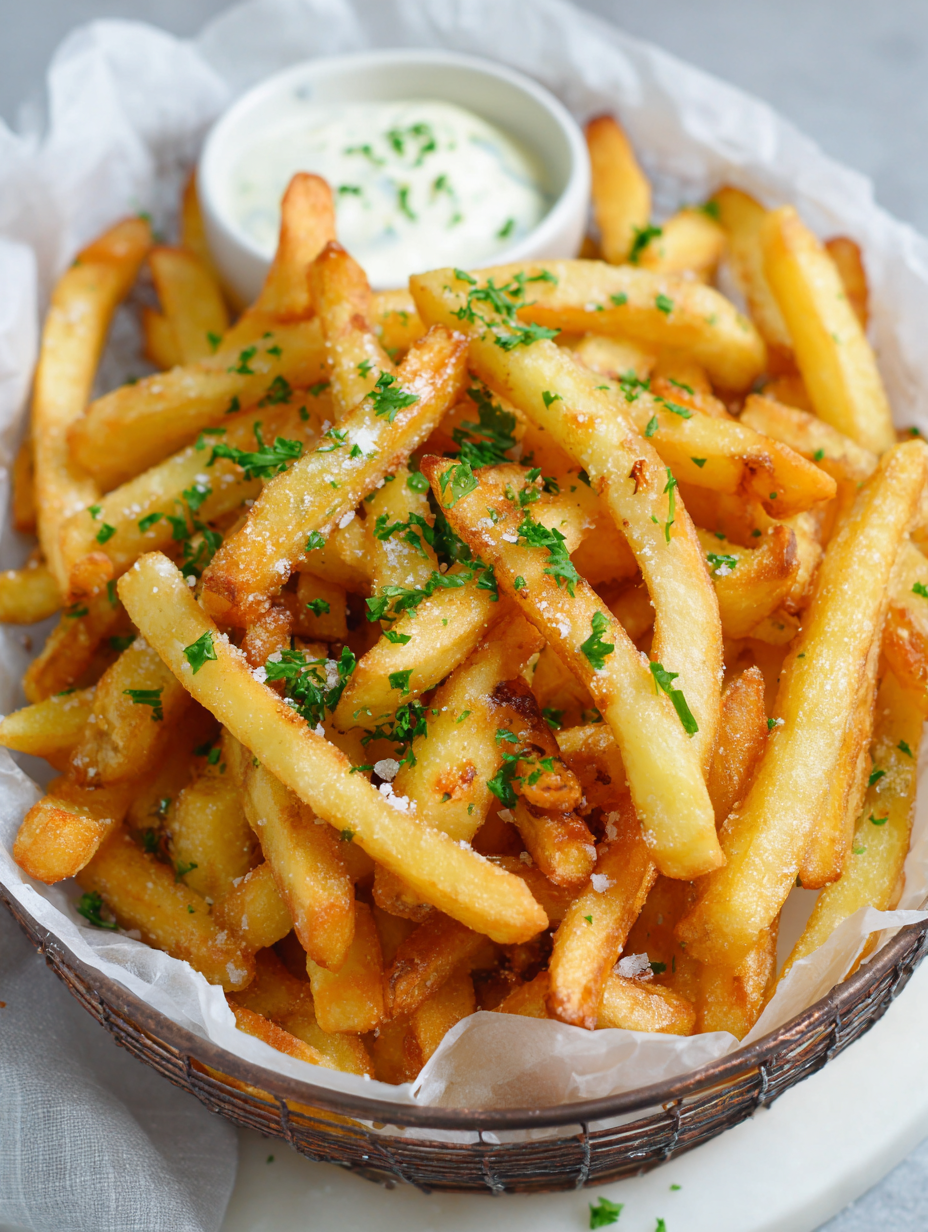
Classic Double-Fried French Fries
Ingredients
Equipment
Method
- Begin by peeling the potatoes and slicing them into uniform sticks about 1/4 to 1/2 inch thick. Place the cut potatoes into a bowl of cold water, adding vinegar if you like, and soak for at least 30 minutes to remove surface starch and promote crispiness.
- Drain the potatoes thoroughly and pat them completely dry with paper towels. Reducing surface moisture is key to avoiding splatter and achieving maximum crunch during frying.
- Heat your oil in a deep pan or Dutch oven over medium heat until it shimmers and reaches about 130°C (265°F). Use a thermometer to keep a close eye on the temperature; this is the ideal temperature for the first fry.
- Add a batch of sliced potatoes carefully into the hot oil. Fry for 4-5 minutes, stirring gently, until they are just tender and slightly pale in color. You’ll hear a gentle bubbling and see the fries start to firm up.
- Using a slotted spoon, remove the fries from the oil and drain on paper towels. Let them rest for about 10-15 minutes; this helps develop a crust during the second fry.
- Increase the oil temperature to around 180°C (355°F). Once hot, carefully add the fries back into the oil in small batches. Fry for an additional 2-3 minutes, watching for a deep golden color and listening for a crackling sound—these are signs they’re crispy and ready.
- Remove the fries with a slotted spoon, drain on fresh paper towels, and immediately sprinkle with flaky sea salt while they're still hot. This helps the salt stick and enhances flavor.
- Allow the fries to rest for a minute to settle before serving. For the best crunch, serve immediately while still warm and crispy. Enjoy as a perfect accompaniment or as a snack on their own.
Notes
Pro tips for perfect fries
- Double fry for crunch: Start with a lower temp to cook through, then crank it up for that blisteringly crisp exterior.
- Dry thoroughly: Pat potatoes completely dry after soaking; moisture causes splatter and soggy fries.
- Monitor oil temp: Use a thermometer and keep a close eye—temperature swings are the enemy of crispy fries.
- Don’t overcrowd: Fry in small batches; overcrowding drops oil temperature and leads to greasy, limp fries.
- Salt while hot: Sprinkle flaky sea salt immediately after frying to help it cling and enhance flavor.
- Use the right potato: Russets are best for crisp, fluffy fries—starchy, sturdy, reliable in double frying.
- Rest before final fry: Let the cut potatoes sit after the first fry; this helps develop a better crust and crisper texture.
Common French Fries Mistakes & Fixes
- FORGOT to dry potatoes thoroughly; fix by patting with paper towels to prevent splattering.
- DUMPED potatoes into hot oil too quickly; wait for oil to shimmer and crackle first.
- OVER-TORCHED fries; lower heat slightly and remove when golden, not dark brown.
- USED cold oil; heat gradually to avoid uneven frying and oil splatter.
Quick fixes and pantry swaps
- If fries are greasy, splash with hot oil to re-crisp quickly.
- When fries are soggy, patch with paper towels and re-fry briefly.
- Splash a bit of vinegar if fries stick together or clump during frying.
- DUMPED fries into cold oil—heat oil gradually to avoid splattering and uneven cooking.
- Shield overcooked fries with a quick burst of high heat to crisp edges again.
Prep, store, and reheat tips
- Peeling and cutting potatoes ahead of time keeps prep quick; store in cold water to prevent browning, and use within 24 hours.
- Blanched fries can be kept in the fridge for up to 24 hours; reheat in hot oil for crispiness and a fresh crunch.
- Frozen par-cooked fries are convenient—freeze in a single layer, then fry directly from frozen for near-instant crispy results.
- Reheating fries in a 200°C (390°F) oven for 5-7 minutes restores some crunch; avoid sogginess by spreading them out on a baking sheet.
- Overnight storage in an airtight container can lead to a softer texture; best enjoyed within a day for optimal crispness and flavor.
Top questions about French Fries
1. What type of potatoes are best?
Choose starchy potatoes like Russet—they hold up well and get crispy. Waxy potatoes won’t give that crunch.
2. Should I soak the potatoes before frying?
Soak sliced potatoes in cold water for at least 30 minutes to remove excess starch and enhance crispiness.
3. Why do I need to double fry?
Double frying at different temperatures creates that perfect crispy exterior and tender inside—crucial for authentic fries.
4. How do I control the oil temperature?
Use a thermometer to keep the oil at around 130°C (265°F) for the first fry, then crank it up to 180°C (355°F) for the second.
5. How should I finish and serve the fries?
Drain fries on paper towels immediately after frying, sprinkle with salt while hot, and serve instantly for best crunch.
6. How can I prevent soggy fries?
For extra crispiness, avoid overcrowding the pan and fry in small batches—this keeps the oil hot and fries crispy.
7. What oil is best for frying?
Use neutral oils with high smoke points like canola or peanut oil for a clean, crisp fry without smoky flavor.
8. When should I add salt?
Add flaky sea salt immediately after frying while fries are still hot, so it sticks and enhances flavor.
9. What if my fries are greasy or limp?
If fries become greasy, splash hot oil over them to re-crisp, or reheat in the oven for a crispy finish.
10. Can I prepare fries ahead of time?
Refrigerate cut potatoes in water for up to 24 hours, then drain and pat dry before frying for best results.
There’s something satisfying about the simple act of frying potatoes until they’re perfectly golden and crispy. It’s a kind of nostalgic comfort that’s hard to match, especially when you get that crackle and aroma just right. These fries are a reminder that good flavor often comes from patience and attention to detail.
Whenever I make these, I’m reminded why I started cooking in the first place—small rituals that turn an ordinary moment into something special. They’re great for sharing, but honestly, I often find myself sneaking a few bites before anyone else gets to the table. Sometimes, that’s the best part of the whole process.

I’m Mahek Manchanda, the curious heart behind Dramatically Stirring. Before this space existed, my life revolved around kitchens that were loud, demanding, and endlessly alive. I didn’t arrive at cooking through a single dramatic moment.